Best time to visit Saint-Malo: weather, sea and tides month by month
Updated on 28 September 2026
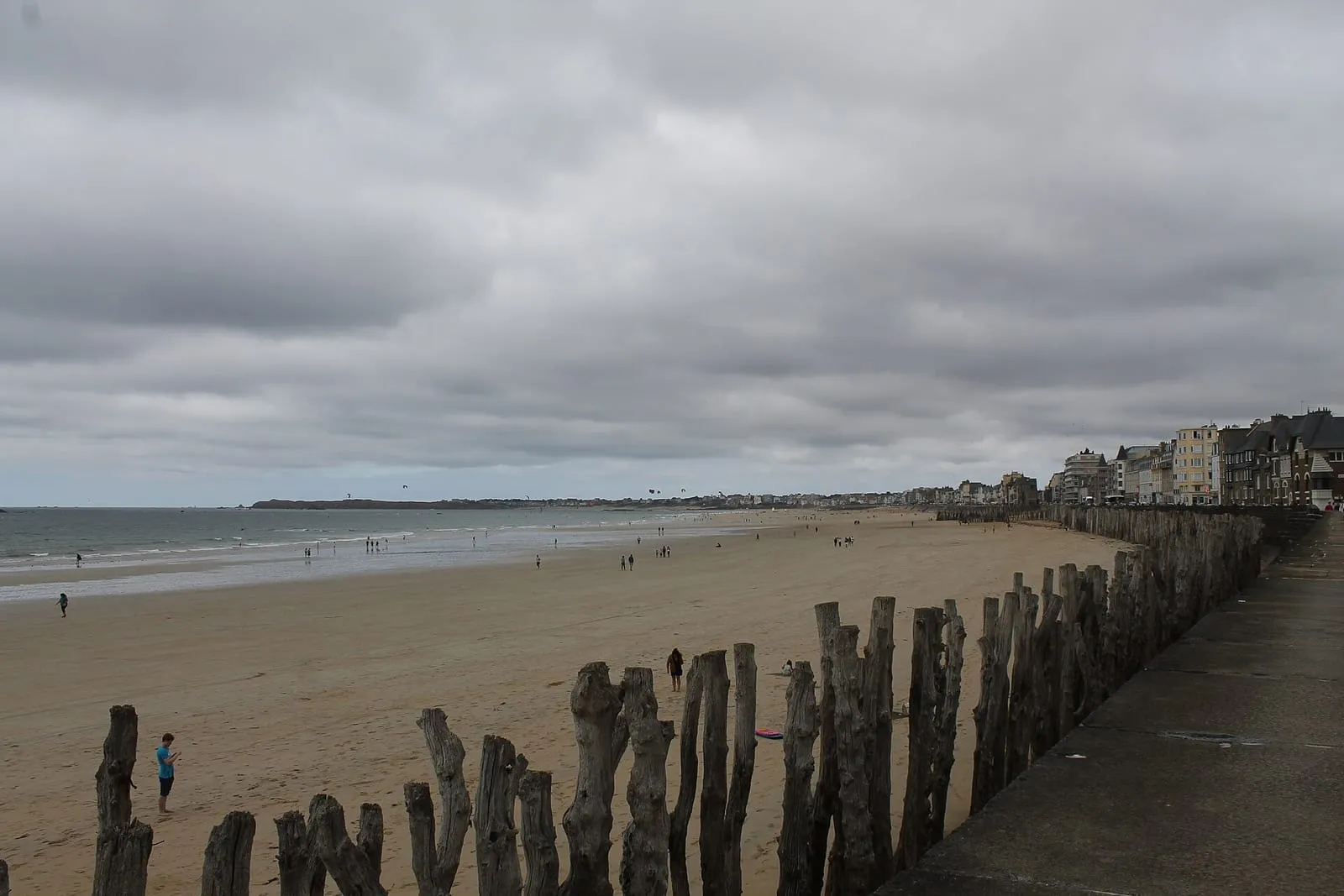

Saint-Malo has no bad season, but each part of the year suits a different kind of trip. Summer brings swimming and crowds, autumn brings the big tides and the festivals, winter brings storms and an almost empty town. To help you choose, I cross-check four things below: the measured climate, the sea temperature, the tide calendar and the calendar of major events.
The climate in figures
The nearest Météo-France station with complete climate normals is Dinard-Pleurtuit, just across the Rance. Its 1991-2020 climate sheet describes a very mild oceanic climate: an annual mean of 11.9 °C, winters without real cold and summers without serious heat.
| Month | Average low / high | Rain days (≥ 1 mm) | What’s on |
|---|---|---|---|
| January | 3.8 / 9.1 °C | 11.8 | Frequent gales, quiet town |
| February | 3.6 / 9.8 °C | 11.3 | Winter spring tides, Route du Rock winter edition in late February or early March |
| March | 4.9 / 12.2 °C | 10.1 | Spring equinox tides |
| April | 6.2 / 14.5 °C | 10.4 | More big coefficients, Easter holidays |
| May | 9.1 / 17.3 °C | 9.0 | Étonnants Voyageurs at Whitsun, French bank holidays |
| June | 11.8 / 20.2 °C | 8.4 | Longest days, moderate crowds |
| July | 13.6 / 22.1 °C | 7.6 | Driest and sunniest month, peak season begins |
| August | 13.7 / 22.3 °C | 9.0 | Route du Rock in mid-August, busiest weeks |
| September | 11.8 / 20.3 °C | 9.4 | Sea at its warmest, autumn equinox |
| October | 9.7 / 16.5 °C | 13.1 | Quai des Bulles, big coefficients, rain returns |
| November | 6.5 / 12.4 °C | 14.0 | Wettest month, Route du Rhum in some years |
| December | 4.2 / 9.7 °C | 13.8 | Storms, winter spring tides |
Three points stand out from the sheet. July is the driest month (46 mm) and the sunniest (about 220 hours of sunshine). October, November and December get the most rain, between 81 and 89 mm a month. Wind follows the same curve: on average, a little over 9 days with gusts of at least 58 km/h in January and December, against 2 in July. Whatever the month, pack a warm layer and a proper waterproof: evenings on the ramparts can feel cool even in August, and a shower can blow in from the sea with little warning.
Sea temperature
I don’t publish monthly sea temperature figures. The numbers found online come from models of varying accuracy, and half a degree makes little difference to how the water feels. The pattern is what matters. The Channel warms slowly: the water stays cold until May, becomes swimmable for most people from July, and peaks between late August and September. It then cools steadily until late winter, its coldest period.
In practice, the first half of September often gives you warmer water than early July, with far fewer people on the sand. Our beaches page explains where to swim depending on the tide.
Spring tides follow the seasons
Saint-Malo lives with one of the largest tidal ranges in Europe, and the big coefficients are not spread evenly through the year. The highest come around the equinoxes, in March-April and September-October. Spring tides return roughly every two weeks for the rest of the year, with somewhat lower coefficients.
To pick your dates, the spring tide calendar lists upcoming episodes with their coefficients. Each season puts on a different show:
- In spring and autumn, the highest coefficients uncover the widest stretch of foreshore. This is the best time for shore fishing and for walking out to the Grand Bé or Fort National at low tide.
- In summer, summer spring tides often come with calm weather: long low tides and swimming at high water, but rarely any waves over the sea wall.
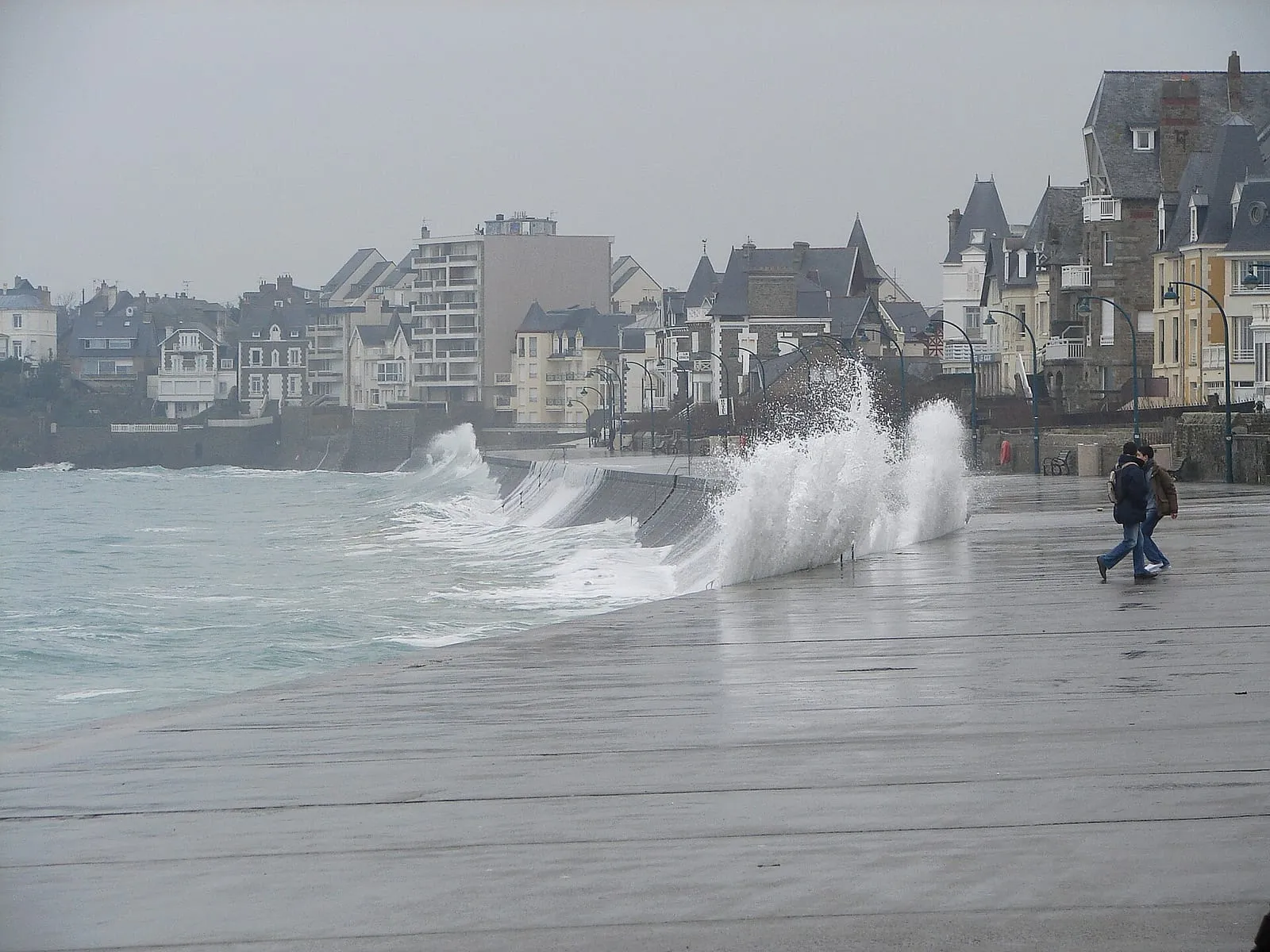
- In winter, coefficients are a little lower, yet swell from Atlantic depressions regularly sends the sea crashing over the Sillon sea wall. Our page on winter spring tides covers this in detail.
Whatever the season, check the official SHOM tide times before any outing on the foreshore. The tide comes in fast across the bay, and a high coefficient makes it faster still.
The events that shape the year
A handful of annual events change crowd levels, prices and parking noticeably:
- Étonnants Voyageurs, an international book and film festival, takes place every year over the Whitsun weekend (23 to 25 May in 2026). Programme at etonnants-voyageurs.com.
- La Route du Rock has two editions: the winter one in late February or early March, and the summer one in mid-August at the Fort de Saint-Père (12 to 15 August in 2026). Dates at laroutedurock.com.
- Quai des Bulles, a comics and projected-image festival, fills the Palais du Grand Large every October (9 to 11 October in 2026). Details at quaidesbulles.com.
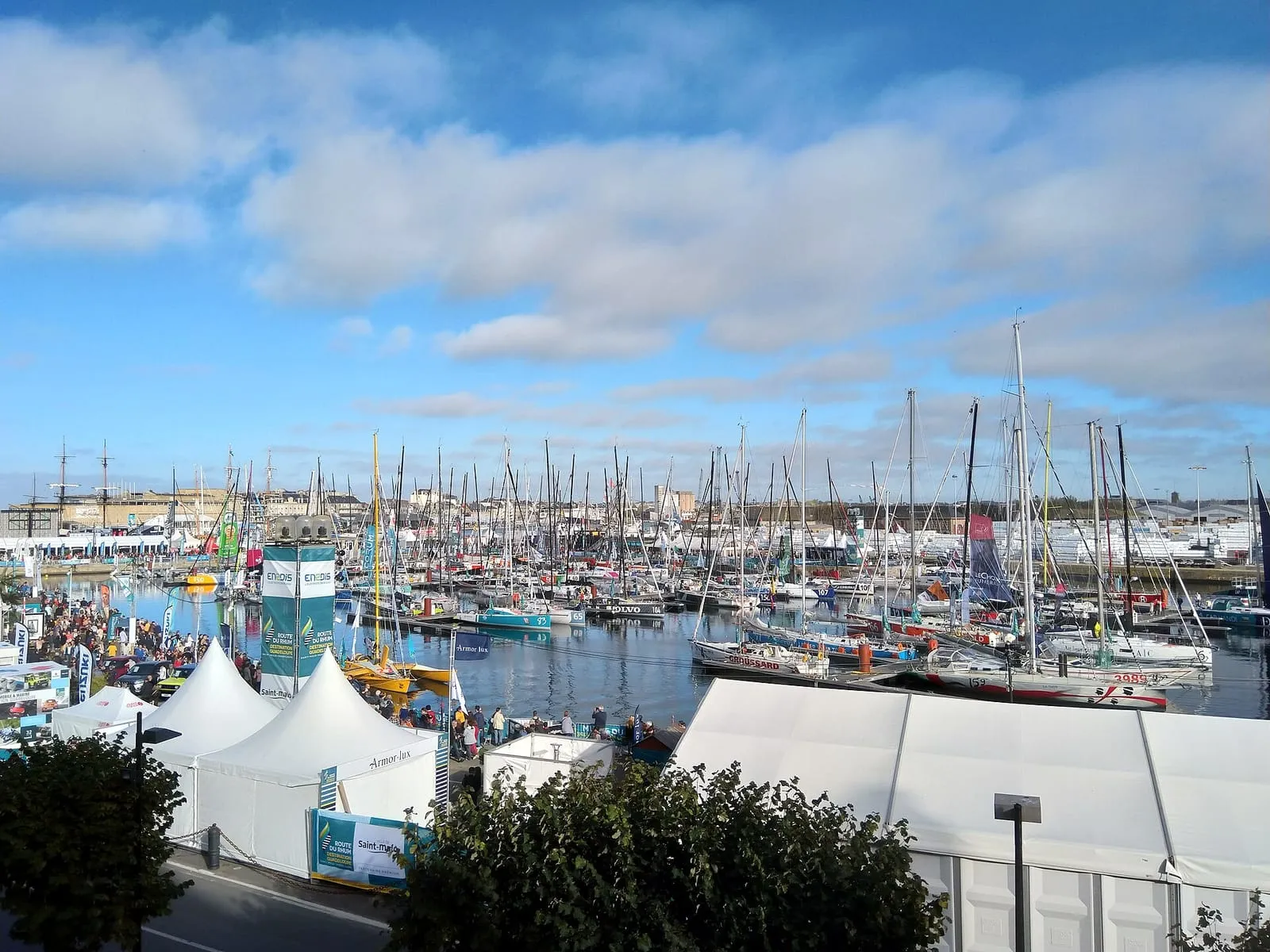
- The Route du Rhum sets off from Saint-Malo every four years in early November. In 2026 the race village opens on 20 October and the start is on 1 November; the next edition will be in 2030. See our Route du Rhum 2026 page and routedurhum.com.
If one of these events is the reason for your trip, book early. If it isn’t, check the dates so you can avoid them.
Crowds, season by season
July and August are the busiest months by far. The walled city, the Sillon beaches and the causeway to the Grand Bé are packed in the afternoon, car parks near the ramparts fill up, and accommodation charges its highest rates. A spring-tide weekend has the same effect at any time of year, especially at the equinox, because people come specifically to see it.
May and June stay busy on bank-holiday weekends and at Whitsun, and are calmer midweek. The Whitsun weekend also brings Étonnants Voyageurs, so rooms in the walled city go early that week.
The shoulder season, from mid-September to early November, is my favourite time. The sea is still mild, the equinox tides arrive, café terraces stay open and you can walk through Intra-Muros without elbowing your way along.
Winter, from November to February, empties the town on weekdays. Some restaurants and shops may close for a few weeks, but hotel rates drop and the storms offer something summer never does. Waves breaking over the sea wall should be watched from a safe distance, behind shelter, never from the promenade, and always in line with the wave and flooding alerts. For wet days, we have gathered our ideas on the page Saint-Malo in the rain.
In short, depending on what you want
- Swimming and beach days: mid-July to mid-September, with September ahead for water temperature and space on the sand.
- Big tides and the foreshore: March-April and September-October, ideally a high-coefficient episode on a weekday.
- Waves and storms: November to February, when a spring tide coincides with a westerly gale.
- A quiet town and lower prices: January, February and November outside Route du Rhum years.
- Festivals: Whitsun, mid-August and October.
Written and kept up to date by a Saint-Malo local in love with this coast. The story behind this guide

.jpg)
Check the official tide times on maree.shom.fr ↗
Frequently asked questions
What is the best month to visit Saint-Malo?
September is the best all-round choice: average highs still around 20 °C at Dinard according to Météo-France, the sea at its warmest of the year, the equinox spring tides and far fewer visitors once French schools go back. June is the other good option, with long days and slightly smaller crowds than July.
What is the weather like in Saint-Malo in summer?
Mild rather than hot. The Météo-France climate sheet for Dinard (1991-2020) gives an average high of about 22 °C in July and August, with around 220 hours of sunshine in July. Days reaching 30 °C do happen but are rare, less than one a month on average.
Is the sea warm in Saint-Malo?
No, the Channel stays cool all year. The water warms slowly through spring, peaks at the end of summer, between late August and September, then cools until late winter. Most people swim from July to September, and those who feel the cold prefer the end of the season.
When are the biggest tides in Saint-Malo?
The highest coefficients of the year come around the equinoxes, in March-April and September-October. Spring tides also return roughly every two weeks for the rest of the year, with lower coefficients. Exact dates are on our spring tide calendar, and tide times on the SHOM website.
Is Saint-Malo worth visiting in winter?
Yes, if you like a restless sea and quiet streets. Gales are more frequent from November to February, and when a storm meets a spring tide, waves break over the Sillon sea wall. Watch from a safe distance, behind shelter. It is also the easiest season to find a sea-view room.