Water sports in Saint-Malo: kayaking, sailing, sand yachting and diving by the tide
Updated on 28 September 2026
_Vue_sur_la_cit%C3%A9_corsaire_de_Saint-Malo_et_le_Grand_B%C3%A9_depuis_la_plage_du_Prieur%C3%A9.jpg)
In Saint-Malo, you plan a day on the water by opening the tide tables before the weather forecast. The tidal range reaches 12 to 13 metres on the biggest tides, so the same stretch of water changes twice a day. The bay where you paddle at high water turns into a field of rocks and currents a few hours later, and the sands where the land yachts race only exist at low tide.
Below are the activities on offer around the town, who runs them, and the stage of the tide that suits each one. Check the official SHOM tide times before any outing: this site does not publish tide times.
Kayak and paddleboard: high-water slack
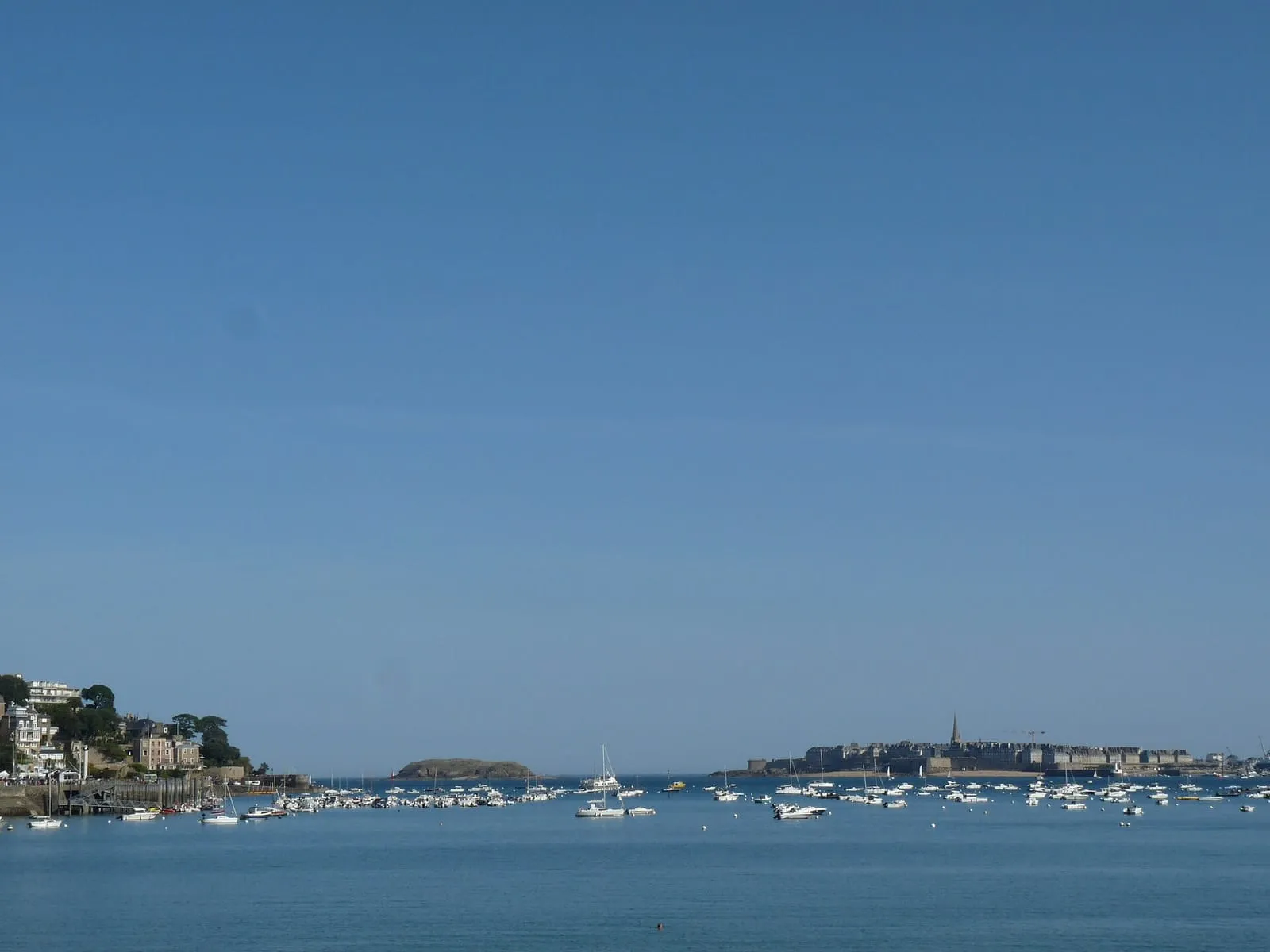
Sea kayaking is the most direct way to see the ramparts, the Grand Bé and the Vauban forts from the water. Roc’n Roll Kayak Malouin, a recognised French canoe-kayak school affiliated with the FFCK, launches in summer from Bon-Secours beach, just below the walled town, with state-qualified instructors. On the menu: a two-hour trip past the forts, running until sunset; a half day from Saint-Servan to Dinard across the mouth of the Rance; and a full day out to Cézembre and the Grand Jardin lighthouse. Prices and dates are on rocnrollkayak.fr.
The Société Nautique de la Baie de Saint-Malo (SNBSM), founded in 1848, also rents out equipment for unguided use at two sites. At Bon-Secours you can take a kayak or a catamaran; at Rothéneuf there are windsurfers, dinghies, kayaks and paddleboards. The Rothéneuf site opens in July and August on hours that follow the tide, which sums up the local constraint rather well.
The time to get on the water is around high-water slack. The sea then covers the rocks in the bay, the current eases, and the Bon-Secours sea pool disappears underwater. At mid-tide the flood or the ebb runs hard between the islets and off the Rance, and a paddleboard soon becomes difficult to bring back. For the reason why, understanding the tides explains the rule of twelfths.
Dinghy sailing and coastal rowing
The SNBSM spreads its activities over several bases: Les Sablons (its headquarters, on the Bajoyer quay), Bon-Secours and Rothéneuf for dinghy sailing, the Naye for coastal rowing, and the Sablons marina for keelboats. Optimists, dinghies, catamarans, windsurfers and J80s are all on the programme, as year-round lessons or holiday courses (snbsm.com).
On the Sillon, the Surf School is a sailing club and school based at the Hoguette beach end, approved by the French Sailing Federation. It takes children from age 3 at its beach club and from age 6 on windsurfers and catamarans, and also offers wingfoiling and sand-yachting tasters. Despite the name, sailing remains its speciality (surfschool.org).
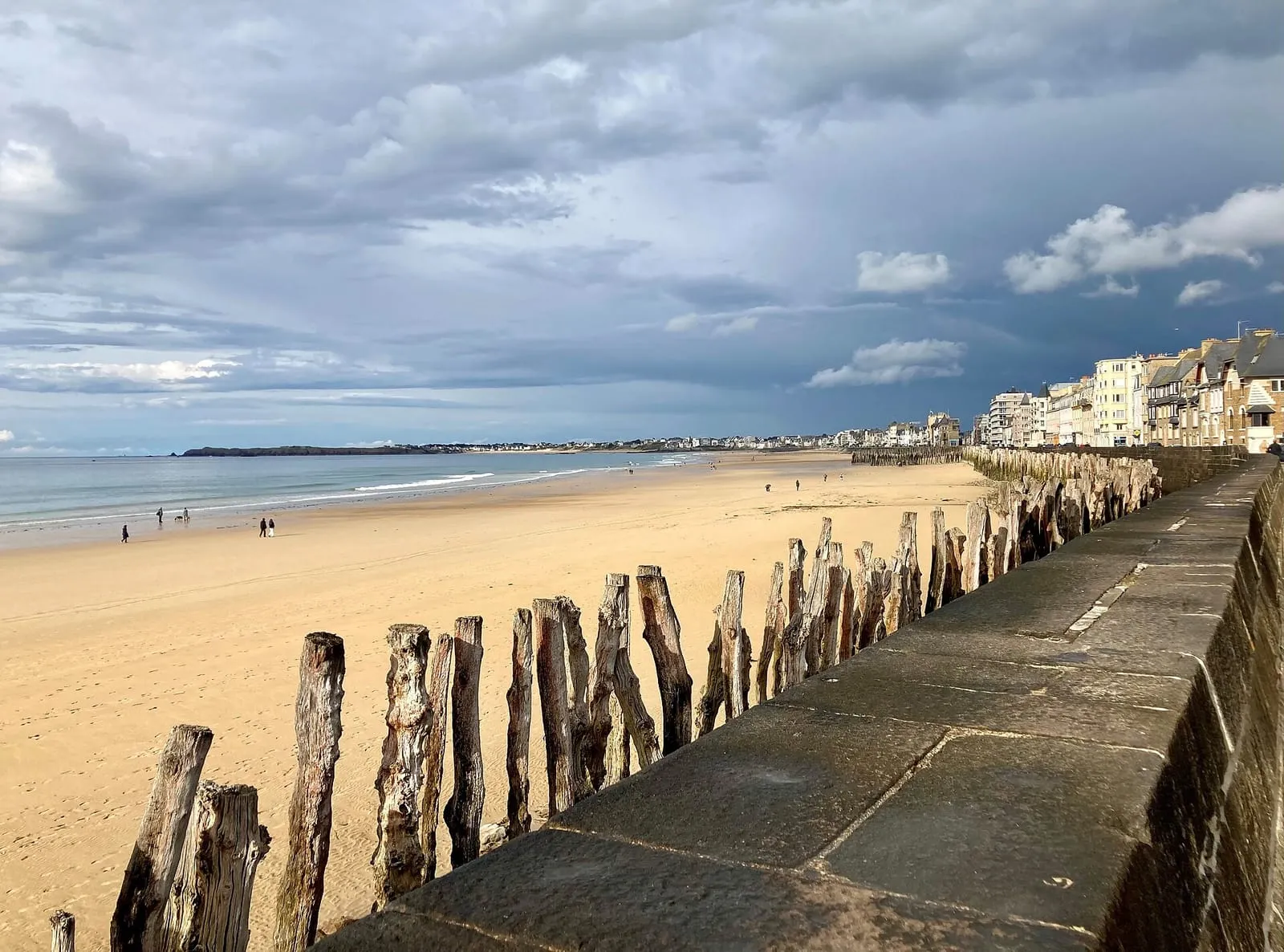
The tide matters here too. At low water the Sillon uncovers hundreds of metres of sand, and the walk from the sea wall to the water’s edge grows accordingly. The schools schedule their sessions around this; ask for the exact time when you book.
Sand yachting: low water at Cherrueix
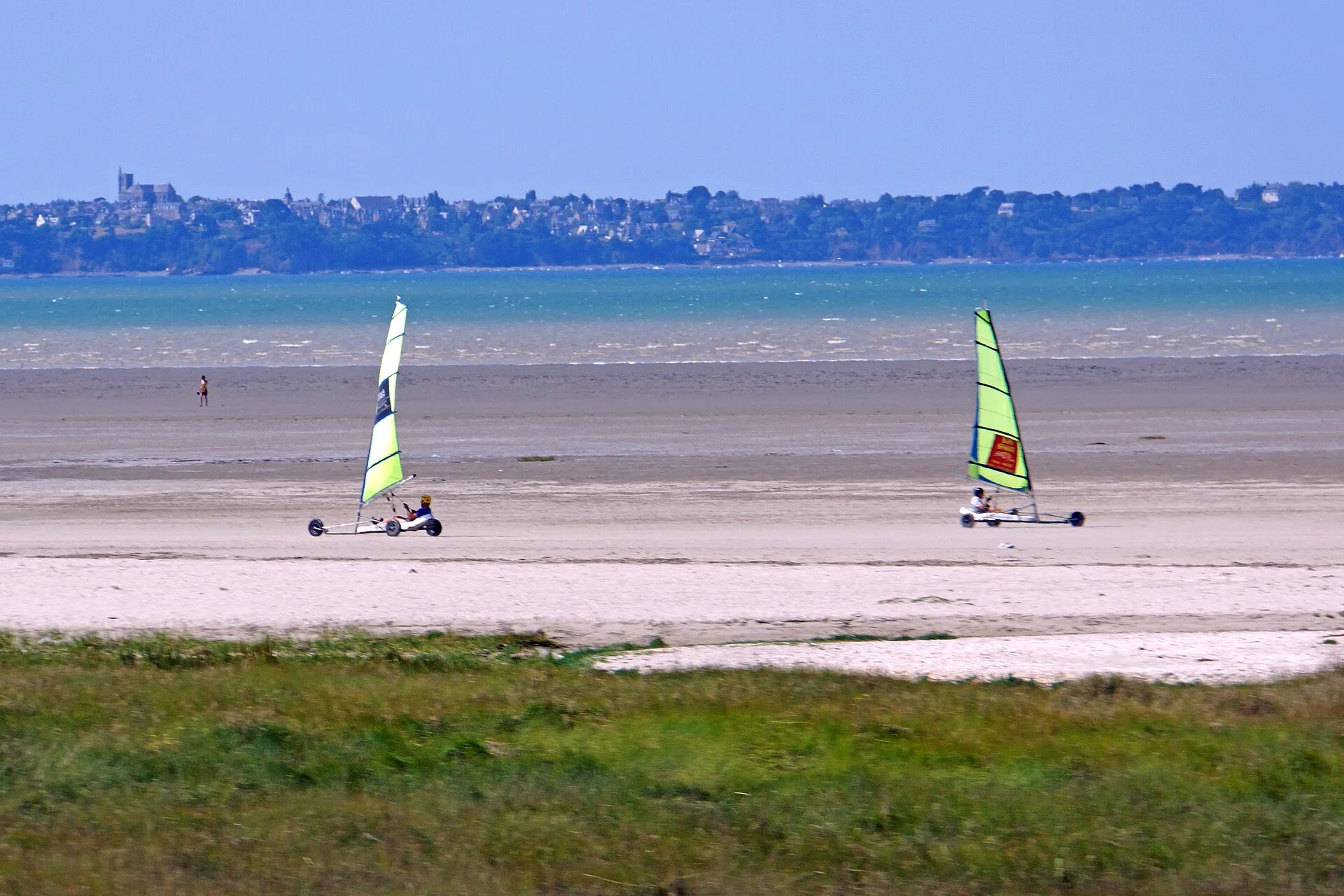
For sand yachting, head east out of Saint-Malo to Cherrueix, on the bay of Mont-Saint-Michel. At low tide the sea draws back from a huge expanse of flat sand with nothing to block the wind. The Char en Baie centre is open all year for beginners and improvers, and also runs wing-speed sessions (charenbaie.fr).
The club itself points out that neap tides leave a large area to sail on, because the sea comes less far up the beach. On big spring tides the usable surface shrinks faster, and sessions stay close to low tide. Never head out alone onto the sands: the tide comes back quickly in the bay.
Surfing and bodysurfing on the Sillon
The Sillon only gets rideable waves when a west-northwest swell reaches into the bay, ideally with a south-easterly wind. The rest of the time the beach stays flat. Nautisurf Saint-Malo, a club affiliated with the French lifesaving and surfing federations, runs surfing, bodysurfing and sea aquajogging around the Saint-Malo area (nautisurfstmalo.com).
Local surfers also drive over to Longchamp, the main surf spot in Saint-Lunaire, west of Dinard, where the Surf Harmony school sits on the sea wall (surfharmony.com).
Surfable waves and dangerous waves are two different things. When a big tide coincides with a heavy swell and strong wind, the sea pounds the Sillon wall and the backwash makes the water unusable. On those days nobody goes in, and the sea is something to watch from a safe distance, behind shelter, never from the edge of the wall. The high tide page explains how those waves build.
Sea walking: in the water all year
Sea walking, known in French as longe-côte, means walking in a group through water up to the waist or chest, wearing a wetsuit. The Sports Mer Santé association runs sessions all year on the Hoguette and Sillon beaches, meeting at its hut on Rochebonne beach; you arrive thirty minutes before getting in, with no booking needed. Times and prices are on sportsmersante.fr.
Of everything on this page, it is the easiest activity to join, and the one people most readily keep up through the winter.
Diving: the wrecks of the bay
Centuries of shipping have left their mark on the seabed around Saint-Malo. The Saint-Malo Plongée Émeraude centre, on the Naye quay, lists more than twenty accessible wrecks between 18 and over 40 metres. Among them are the British steamer Fetlar, sitting upright in around twenty metres of water, the German escort ships Walter Darré and Hinrich Hey, sunk in July 1944 near the Minquiers, and the cargo ship RO 21, broken up on the Courtils rocks (saintmaloplongee.com).
The club picks each site according to diver level, weather, currents and tide. In practice, dives take place around slack water, when the current slows down.
Guided boat trips
To see the coast from the sea without paddling, Compagnie Corsaire has been running boat trips since 1904. It offers ninety-minute guided cruises around the bay of Saint-Malo, towards Cap Fréhel or the bay of Cancale, plus crossings to Cézembre, Chausey and up the Rance to Dinan (compagniecorsaire.com). Its sea bus to Dinard runs seasonally. Other trips can be booked here: https://www.getyourguide.com/en-us/saint-malo-l35279/cruises-boat-tours-tc48/
Safety: what the bay does not forgive
- Currents. Between the islets, in the channels and at the mouth of the Rance, the tidal stream can run faster than a paddler. Go out at slack water and stay close to shore.
- The shipping channel. Ferries and cargo ships use the approach channel to the port; they manoeuvre slowly and cannot steer round you. Cross quickly, as a group, and never in front of their bow.
- A buoyancy aid, every time, even on a paddleboard in flat water.
- Swell and offshore wind. Stay ashore when the swell is building or the wind is blowing out to sea.
- The forecasts. Check the official SHOM tide times and the Météo-France marine forecast before any outing. In an emergency at sea in France, dial 196 to reach the coastguard.
The clubs listed here take care of these rules for you, which makes them the best option for a first time. For activities on the sand rather than in the water, the beaches page lists the beaches and the tidal crossings on foot.
Written and kept up to date by a Saint-Malo local in love with this coast. The story behind this guide
.jpg)
.jpg)
Check the official tide times on maree.shom.fr ↗
Frequently asked questions
Where can I go sea kayaking in Saint-Malo?
In summer the Roc'n Roll Kayak Malouin club launches from Bon-Secours beach, below the walled town, for guided two-hour trips along the ramparts and forts, and longer outings towards Dinard and Cézembre. The Société Nautique de la Baie de Saint-Malo also rents kayaks at Bon-Secours and Rothéneuf. Check prices and times on their websites.
Where can I try sand yachting near Saint-Malo?
On the sands at Cherrueix, in the bay of Mont-Saint-Michel, where the Char en Baie centre is open all year. The yachts run on sand uncovered by the tide, so sessions follow low water, and neap tides often leave the most room. The Surf School on the Sillon also runs sand-yachting taster sessions.
Can you paddleboard in Saint-Malo?
Yes. The SNBSM rents single and XL paddleboards at its Rothéneuf site in July and August, with opening times set by the tide. The water there is more sheltered than the main bay. With an offshore wind or a building swell, stay on the beach.
Are there wrecks to dive in Saint-Malo?
Yes. The Saint-Malo Plongée Émeraude centre, on the Naye quay, lists more than twenty wrecks in its area, from 18 to over 40 metres, including the steamer Fetlar and the 1944 escort ships Walter Darré and Hinrich Hey. Each dive site is chosen according to diver level, weather, currents and tide.
What stage of the tide is best for kayaking in Saint-Malo?
Around high-water slack, when the current eases and the sea covers the rocks in the bay. At other times the flood and ebb run hard between the islets and at the mouth of the Rance. Check the official SHOM tide times before you set off.