Route du Rhum history and winners, 1978 to 2022
Updated on 23 October 2026
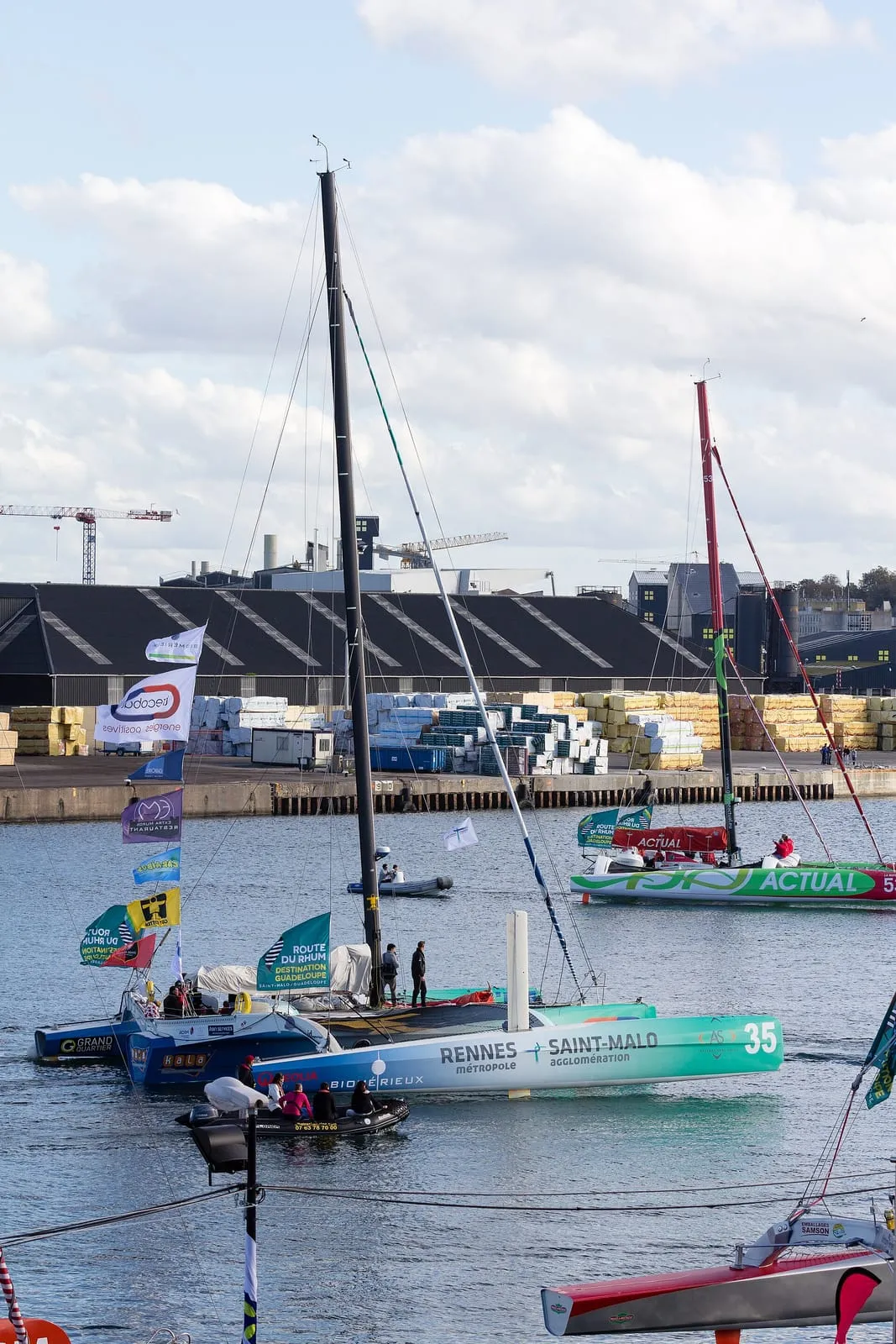

Since 1978, the Route du Rhum has left Saint-Malo for Guadeloupe every four years. Over twelve editions, the boats have grown from 11 to 32 metres, and the race time has fallen from 23 days to under 7. The race also built its legend on a few defining moments, two of them losses at sea. Here is the full roll of winners, and the editions that mattered. The next edition starts on 1 November 2026.
The full list of winners
Overall ranking: the first boat into Pointe-à-Pitre, all classes combined.
| Year | Winner | Boat | Race time |
|---|---|---|---|
| 1978 | Mike Birch | Olympus Photo | 23 d 6 h 59 min |
| 1982 | Marc Pajot | Elf Aquitaine | 18 d 1 h 38 min |
| 1986 | Philippe Poupon | Fleury Michon VIII | 14 d 15 h 57 min |
| 1990 | Florence Arthaud | Pierre 1er | 14 d 10 h 08 min |
| 1994 | Laurent Bourgnon | Primagaz | 14 d 6 h 28 min |
| 1998 | Laurent Bourgnon | Primagaz | 12 d 8 h 41 min |
| 2002 | Michel Desjoyeaux | Géant | 13 d 7 h 53 min |
| 2006 | Lionel Lemonchois | Gitana 11 | 7 d 17 h 19 min |
| 2010 | Franck Cammas | Groupama 3 | 9 d 3 h 14 min |
| 2014 | Loïck Peyron | Banque Populaire VII | 7 d 15 h 08 min |
| 2018 | Francis Joyon | IDEC Sport | 7 d 14 h 21 min |
| 2022 | Charles Caudrelier | Maxi Edmond de Rothschild | 6 d 19 h 47 min |
Times come from Wikipedia, cross-checked against the organisers for the 2022 record. Laurent Bourgnon remains the only two-time overall winner. Every winner has sailed a multihull.
1978: 98 seconds and a shipwreck
The race was born of a disagreement. The English single-handed transatlantic race had just capped boat sizes; the Route du Rhum, launched by Michel Etevenon, set no limit. The very first edition outdid the script. Canadian Mike Birch, on an 11-metre trimaran, pipped Michel Malinovsky’s big monohull Kriter V after more than 23 days at sea. The margin was 98 seconds. Nobody has finished closer since.
The same edition gave the race its tragic side: Alain Colas vanished off the Azores with his trimaran Manureva in mid-November 1978. He was never found.
1986: the loss of Loïc Caradec
Eight years later, the race lost another sailor. Loïc Caradec disappeared with his big catamaran Royale. It was Florence Arthaud who found the boat empty. In 2026, his son Tanguy Caradec is on the start line, in the vintage monohull class (the 2026 fleet).
1990: Florence Arthaud, the only woman to win
Aboard the trimaran Pierre 1er, Florence Arthaud won the race in just over 14 days. Thirty-six years later, she remains the only woman to have won overall. The 2026 edition has eleven women on the start line.
2002: Ellen MacArthur and the trimaran carnage
The 2002 edition was sailed in very harsh weather: most of the ORMA trimarans retired. Michel Desjoyeaux won, and Britain’s Ellen MacArthur finished second overall on the monohull Kingfisher, first in her class. A monohull on the overall podium is rare in this race: the previous one was Kriter V, in 1978.
2006 to 2014: the age of the giants
With the big trimarans, race times collapsed. Lionel Lemonchois went under eight days in 2006. Franck Cammas won in 2010 on Groupama 3. In 2014, Loïck Peyron stepped in at the last minute for an injured Armel Le Cléac’h at the helm of Banque Populaire VII, and won. It was the same trimaran, renamed: it would win again in 2018 as IDEC Sport. In 2026 Alexia Barrier sails it, the first woman entered in the Ultim class.
2018: seven minutes after seven days
The tightest duel of the modern era. Francis Joyon, aged 62, on IDEC Sport, crossed the line 7 minutes 8 seconds ahead of François Gabart, after more than seven days of racing. Joyon is back in 2026, in the vintage multihull class.
2022: under seven days
Charles Caudrelier set the race record: 6 days 19 hours 47 minutes. The start had been postponed by three days because of the weather, a first in the race’s history. The edition was also marked by grief: two members of the organising team, Alex Picot and François Naveilhan, died in an accident at the finish. Of 138 starters, 103 reached Pointe-à-Pitre.
Saint-Malo, the starting port
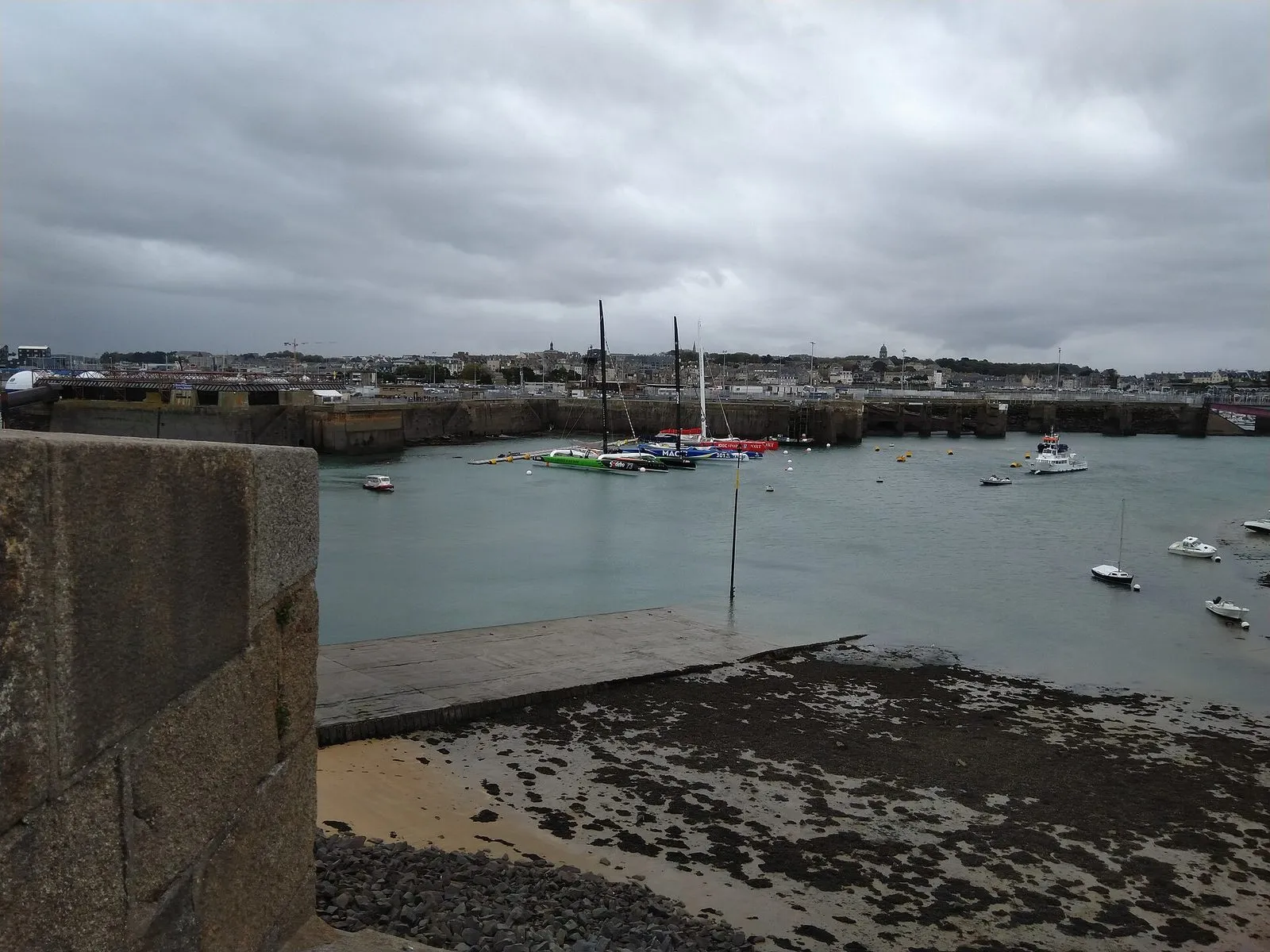
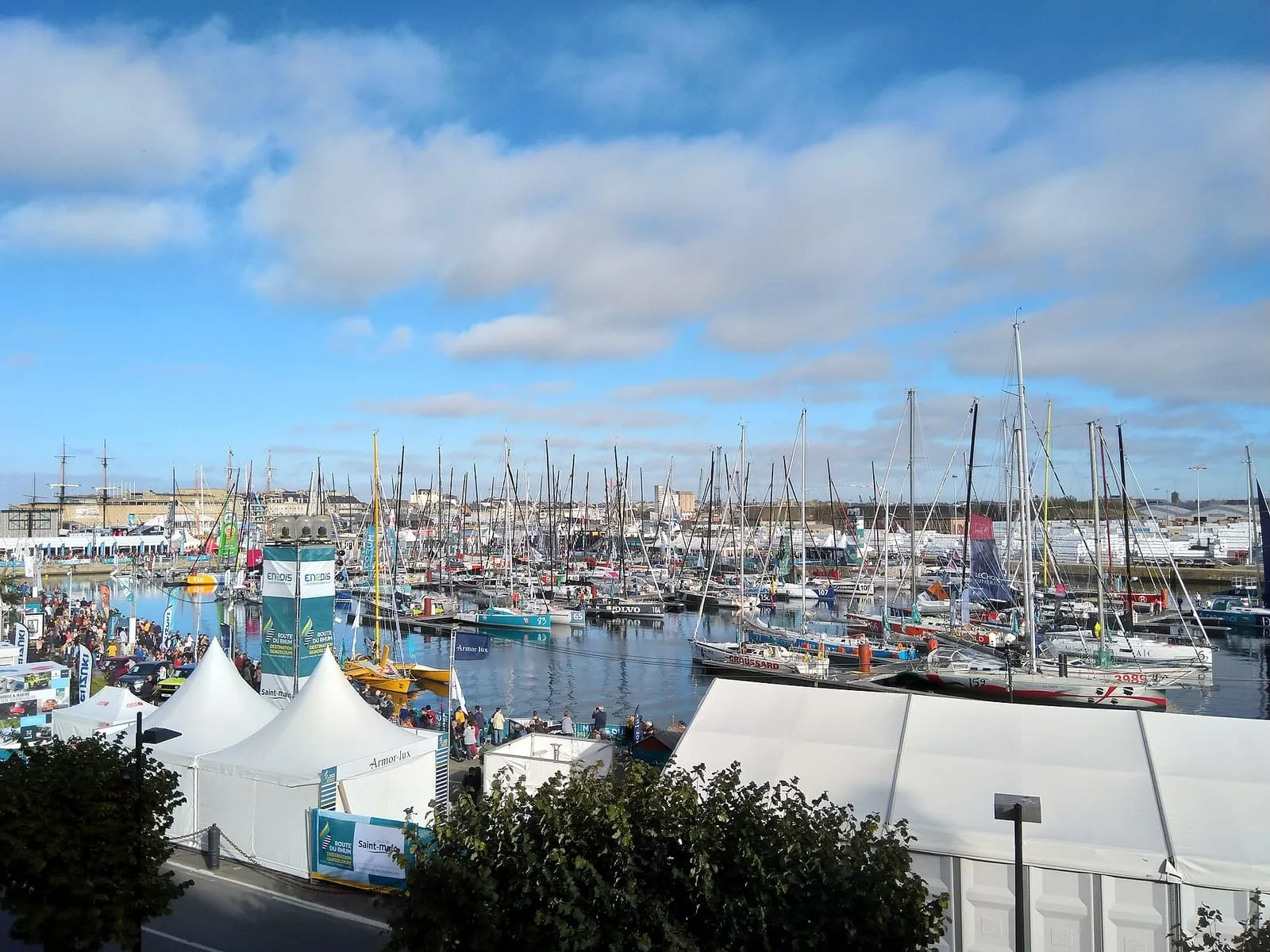
Since 1978 it has always been Saint-Malo. The race suits a town that long lived off the open sea: privateers, the great Newfoundland cod fishery, trade with the islands. The ramparts overlooking the race village are the ones the shipowners once walked; the story is told on our Saint-Malo corsair history page.
Written and kept up to date by a Saint-Malo local in love with this coast. The story behind this guide


Frequently asked questions
Who won the first Route du Rhum?
Canadian sailor Mike Birch, in 1978, aboard Olympus Photo, a small 11-metre trimaran. He beat Michel Malinovsky's monohull Kriter V by 98 seconds after more than 23 days of racing: the smallest margin in the event's history.
What is the Route du Rhum record?
6 days 19 hours 47 minutes 25 seconds, set by Charles Caudrelier aboard Maxi Edmond de Rothschild in 2022. It was the first time the race had been completed in under seven days.
Has a woman ever won the Route du Rhum?
Yes: Florence Arthaud in 1990, aboard the trimaran Pierre 1er. She remains the only woman to have won overall. In 2002, Ellen MacArthur finished second overall and first among the monohulls.
Why is it called the Route du Rhum?
Because it links Brittany to the French West Indies along the old rum trade route, rum being Guadeloupe's signature product, and Guadeloupe being where the race finishes. For several editions its official name has been the Route du Rhum – Destination Guadeloupe.