A spring tide weekend in Saint-Malo: the full plan
Updated on 23 October 2026
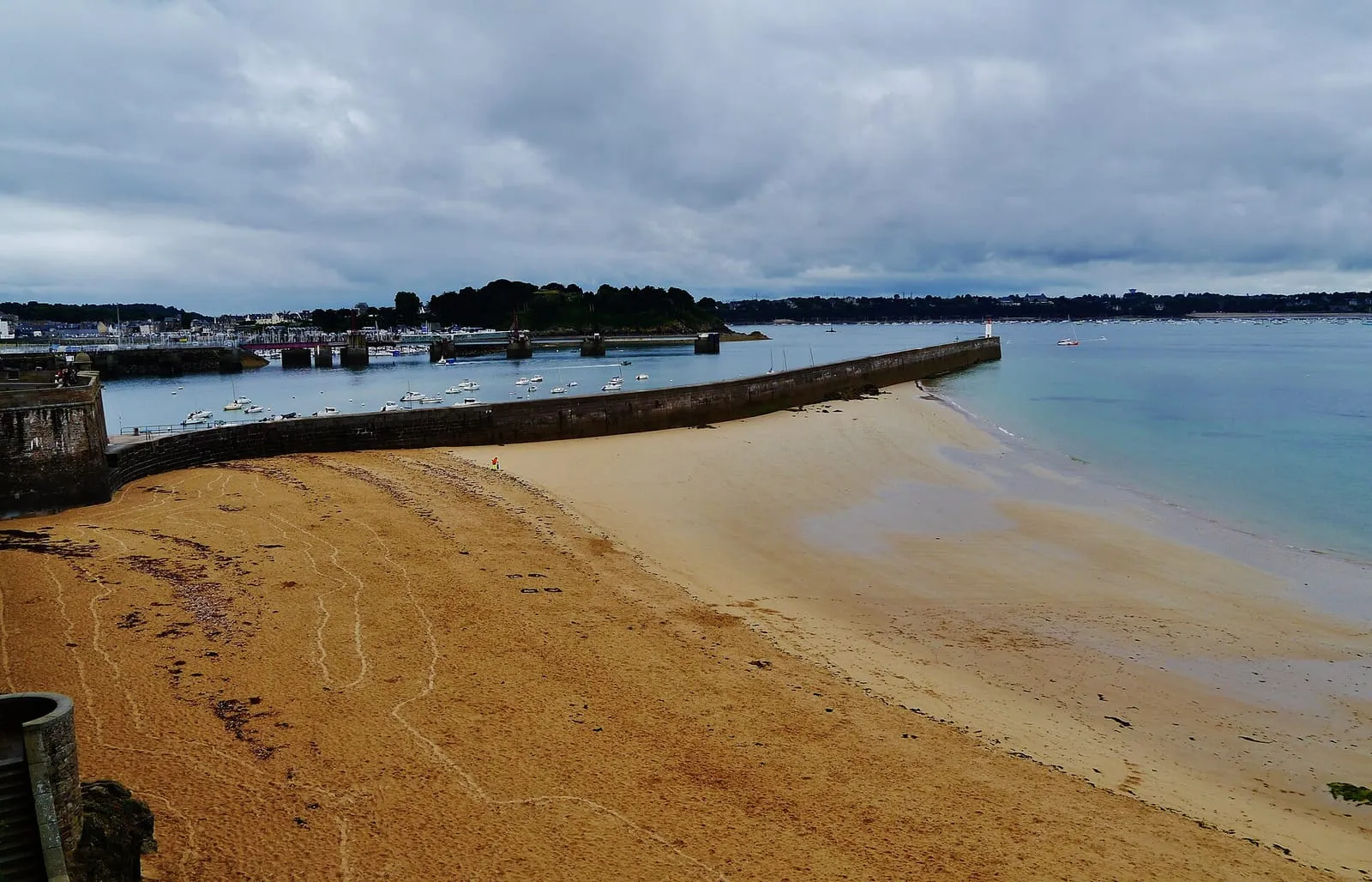

Over a spring tide weekend, the bay of Saint-Malo runs through two high waters and two low waters every twenty-four hours, with twelve metres between them. Forty-eight hours on site is therefore enough to see everything: the sea wall under the waves, the walk to Grand Bé, a foraging session and the ramparts at sunset. What remains is picking the right dates and building the days around the tide table, not the other way round.
Which weekend in 2026
The calendar below lists every episode. Two weekends stand out: 11–13 September (coefficient 102, Friday to Sunday) and 20–22 March (the tail of the spring equinox episode, coefficient 104); the August episode (13–15, coefficient 102) also catches a Saturday. A coefficient of 95 already does the job nicely if those dates are taken.
The season changes the mood more than the show: September gives you the light and a town handed back to its locals, March the low sun and the empty terraces, August a swim between two tides, and winter, outside the “official” spring tide weekends, the best wave lottery of all. The spring equinox and autumn equinox pages cover the two headline dates in detail.
Building the days
Two hours before high water, take up position: the Sillon wall from your window, or the ramparts. The flood rings the Fort National, climbs the beach, comes looking for the dyke. If swell joins in, check our “will the sea leap the wall?” index. Watch the spray from a distance, behind shelter.
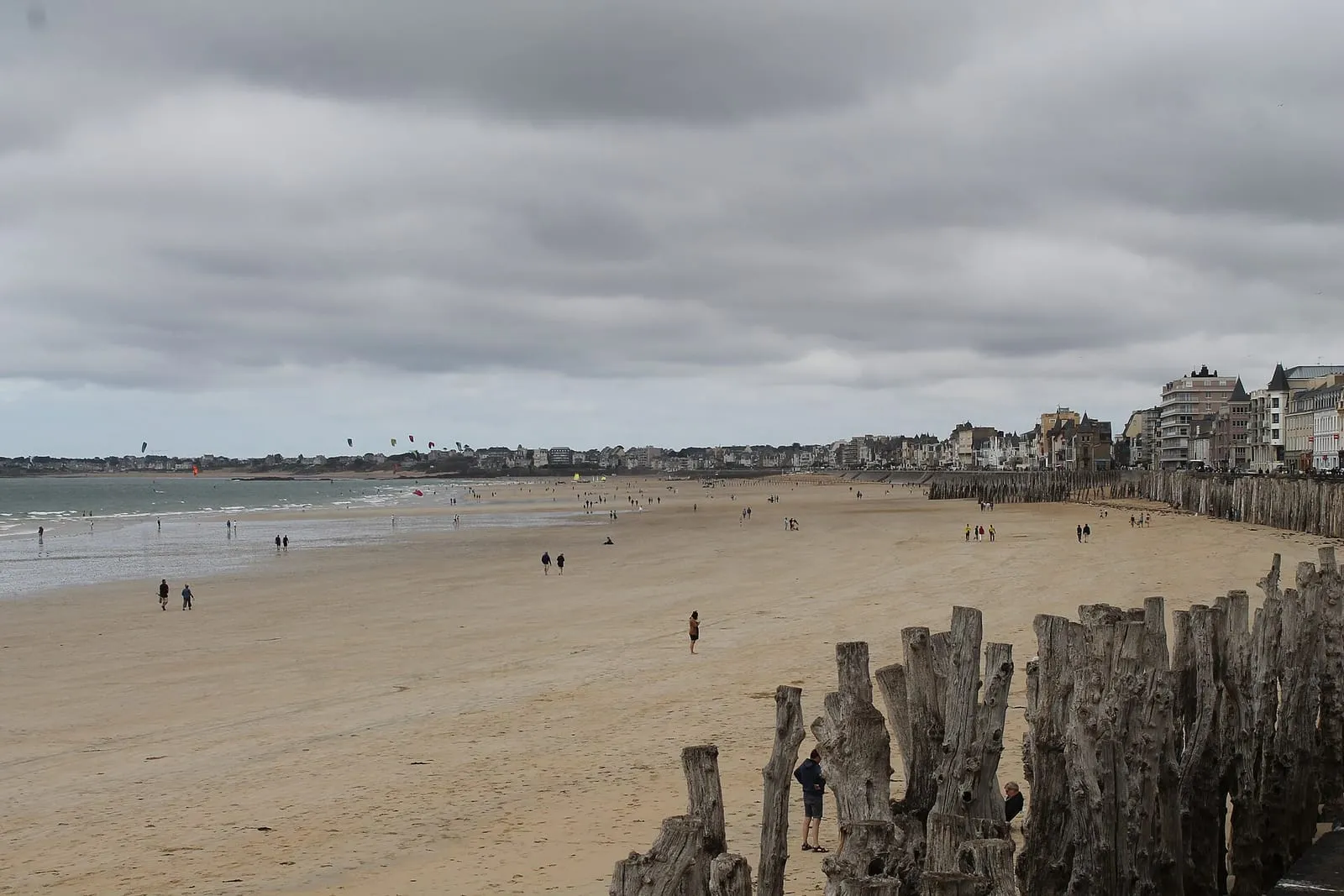
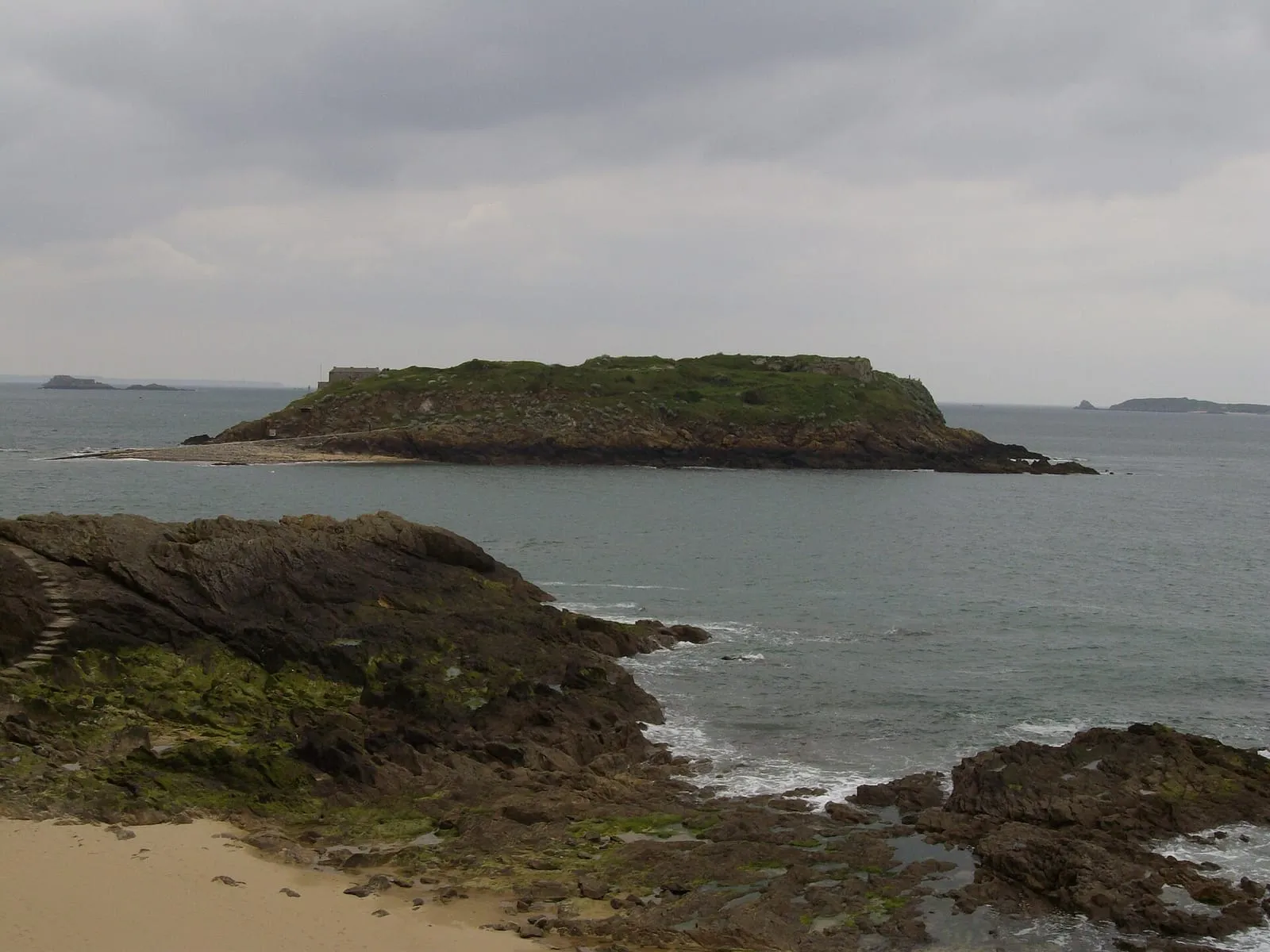
Around low water, head out on foot: Grand Bé, foraging towards Rochebonne, or simply the beach grown immense. Count on two useful hours and keep a margin for the way back.
In between: Intra-Muros, a seafood platter, a boat trip around the bay or a thalasso in Paramé. The slack hours fall conveniently.
The shape of a spring-tide day, in tide hours
The exact times shift every day (check the official SHOM tide tables) but the score never changes. Writing HW for high water and LW for low water:
- HW − 1 h → HW + 1 h: the show. The sea at its highest, waves if the swell is in, the best posts filling up fast. The window not to miss, morning and evening.
- HW + 2 h → LW: the ebb. The sea falls, the beach reappears metre by metre, the time for long walks on the Sillon and photographs in the low light.
- LW − 1 h → LW + 1 h: low-tide country. Island crossings, foraging, foreshore to the horizon. Out on the ebb, back at the turn.
- LW + 2 h → HW: the flood. The sea returns at walking pace: you head back up to the wall, warm up, and pick your post for the next high water.
Two full cycles every twenty-four hours: a well-timed weekend lets you play this score four times, changing posts as you go.
The worked example: Friday evening to Sunday
Friday evening. Arrive before the evening high water if the times allow: drop the bags, then a first face-to-face with the tide from the promenade (well back) or from the room. That is the warm-up; dinner can wait for the ebb.
Saturday. The pivot day. Morning high water from the ramparts, facing Fort National; then down to the map of places that low water opens: Grand Bé and Petit Bé if the crossing window is right, the Rochebonne foreshore otherwise. Back up with the flood, a late lunch, an afternoon in the walled city or at the thalasso, and the evening high water from a new post: the breakwater seen from the Alet headland, or Dinard’s Clair de Lune promenade via the sea bus.
Sunday. A variation at sea or on the sands, weather deciding: a boat trip around the bay, a foraging session framed by the midday low water, or the full circuit of the ramparts. One last look at high water, then the evening train. The tide carries on without you.
The whole thing takes ten minutes to set up the night before, SHOM times in hand: note Saturday’s four key hours (HW, LW, HW, and the time of the turn) and the rest follows.
Where to put your bags
For a weekend, the main criterion is wasting no time on travel. Sea-facing on the Sillon, the high waters can be watched from the room, the dawn one included. Intra-Muros gives you the evenings inside the walls. The Grand Hôtel des Thermes adds a heated seawater pool between tides. Either way, book the room early: these weekends are among the most requested dates of the year.
Written and kept up to date by a Saint-Malo local in love with this coast. The story behind this guide


The next spring tides
- 27–29 October 2026100autumn
- 25–27 November 202697autumn
- 25–27 December 202699winter
See the full spring tide calendarAdd these dates to my calendar (.ics)
Dates and coefficients are indicative. Always check the official SHOM tide times before heading onto the foreshore. Official tide times (SHOM) ↗
Will the sea leap the wall?
Waves over the Sillon sea wall: our index for 27–29 October 2026
Show unlikely
The sea will most likely stay calm along the wall on this date. The spring tide is still a great sight at low tide.
What drives this index
- Tide coefficient100
- Swell (significant height)1.2 m (W)
- Swell period14 s
- Wind48 km/h (SW)
Best window of the episode: 27 October 2026. Index computed on 23 October 2026.
A qualitative, heuristic estimate, not a guarantee: nature does what it wants. Swell and wind forecasts: Météo-France (Licence Ouverte).
Compare places to stay
| Accommodation | Area | Tide advantage | Price | Book |
|---|---|---|---|---|
| Hôtel Le Nouveau Mondehotelsea view | Sillon · €€€20 m from the sea wall | Tide advantage : Directly facing the Sillon sea wall: upper-floor sea-view rooms overlook the waves at high water, front-row seats for the spring tide show. | €€€ | BookHotel website ↗ |
| La Maison des Armateurshotel | Intra-Muros · €€€420 m from the sea wall | Tide advantage : In the very heart of the walled town: no sea view from the rooms, but the rampart walk, the town's best spring tide balcony, is two minutes away. | €€€ | BookHotel website ↗ |
| Grand Hôtel des Thermeshotelsea view | Paramé · €€€20 m from the sea wall | Tide advantage : The seafront grande dame, thalasso spa included: watch the spring tide from the heated seawater pool, then from your room. | €€€ | BookHotel website ↗ |
Frequently asked questions
Which 2026 dates fall on a weekend?
The clear winner is the autumn equinox episode: Friday 11 to Sunday 13 September 2026 (coefficient 102), a full weekend of spring tides. The March episode (20–22, coefficient 104) also covers a weekend on its final days, and the August one (13–15, coefficient 102) catches a Saturday. Book early: these are the most requested dates of the year.
Are two days enough to “see” a spring tide?
Yes, perfectly: each day brings two high waters and two low waters. Over 48 hours you live the full cycle four times: enough for the sea wall show at high tide, the walk out to Grand Bé and a shore-foraging session at low tide.
Can the weekend work without a car?
Very well, in fact: the TGV puts Paris about 2.5 hours from Saint-Malo, the station is a twenty-minute walk from the walled city, and the whole seafront (Sillon, ramparts, Bon-Secours) is walkable. To vary the viewpoints, the sea bus crosses to Dinard in about ten minutes. You only miss a car for the far headlands, Grouin or Cap Fréhel.
What if it rains, or there is no swell?
A spring tide is spectacular even in calm weather. It is the waves breaking over the wall that depend on swell, not the tide itself. On a grey day: ramparts, thalasso spa, crêperies and maritime museums fill the gaps between tides better than anywhere.