Saint-Malo at high tide: when the sea takes over
Updated on 26 October 2026
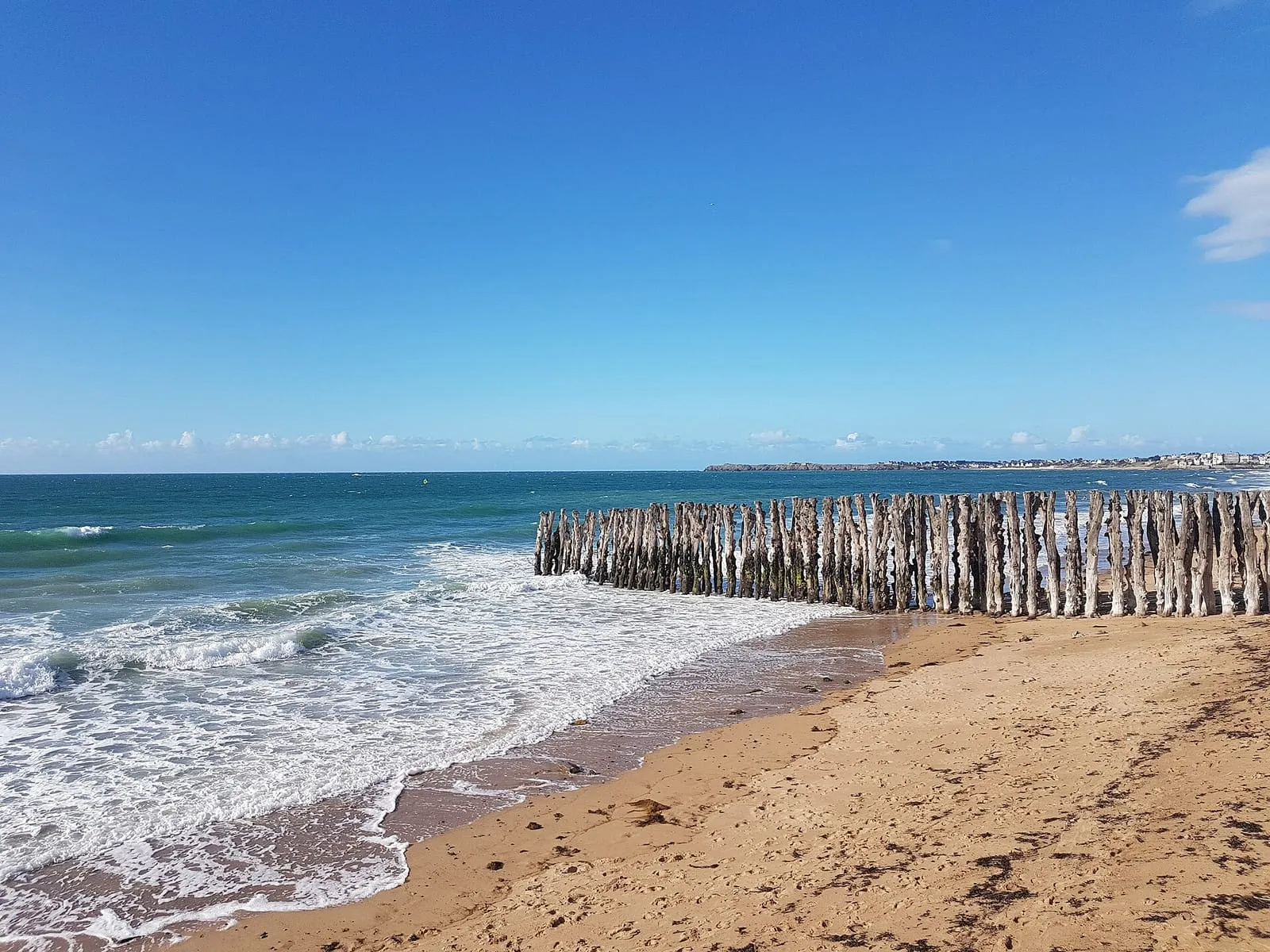

At low tide, Saint-Malo spreads out; at high tide, it gathers itself in. The sea takes back the foreshore, cuts off the islets, climbs to the foot of the ramparts. The corsair city becomes what it always was: a fortified rock set in the Channel. Twice a day, at hours that slide from one day to the next, high water offers its own list of things to do.
The ramparts, high-water version
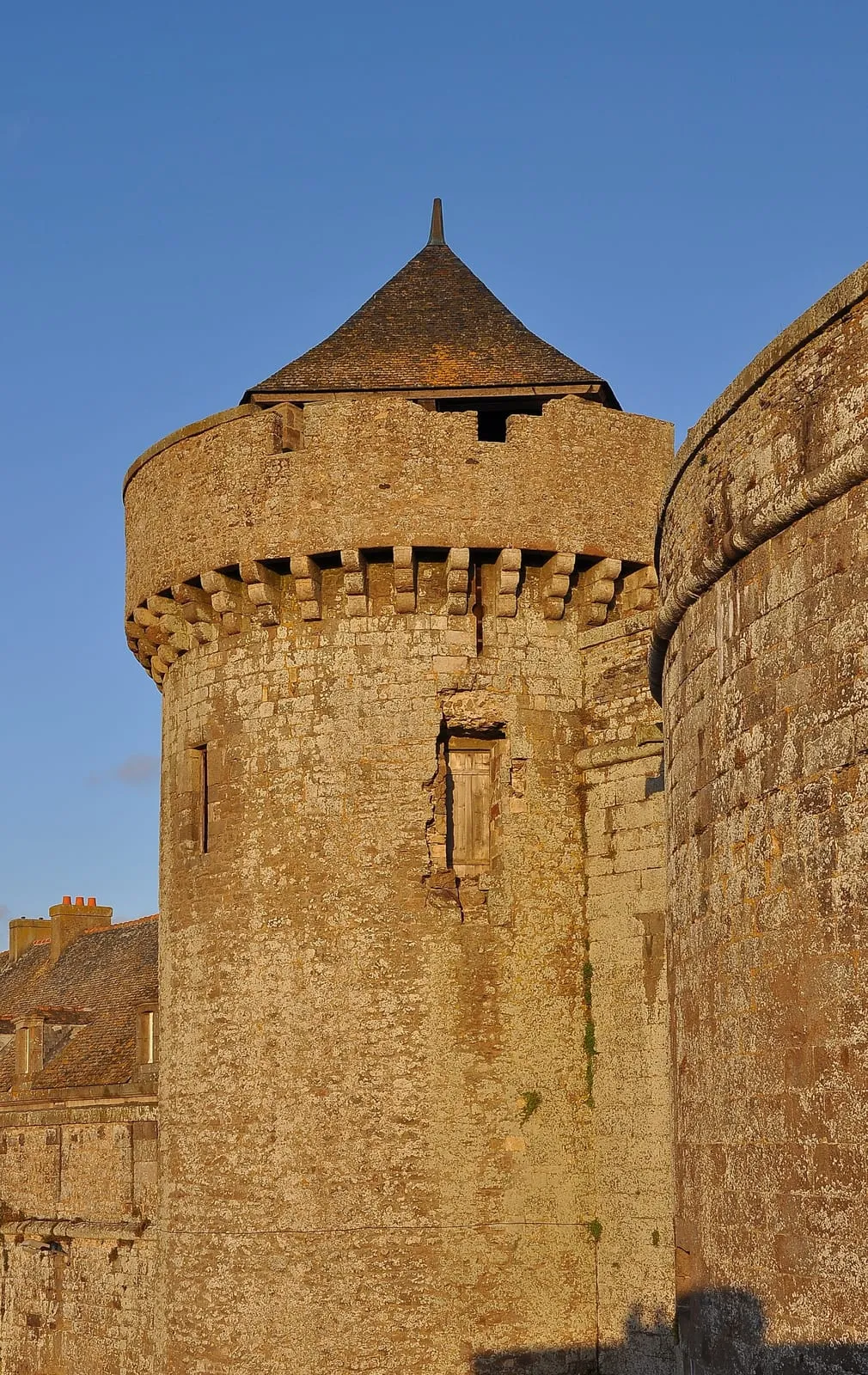
The circuit of the ramparts makes full sense at high tide: the sea laps directly below the walls, the islets float, cut off from the world, and one glance explains why the town was never taken from the sea. On big coefficients the level grazes the top of the sea walls, and if swell joins in, the sea leaps in front of you. Allow an hour, spray included.
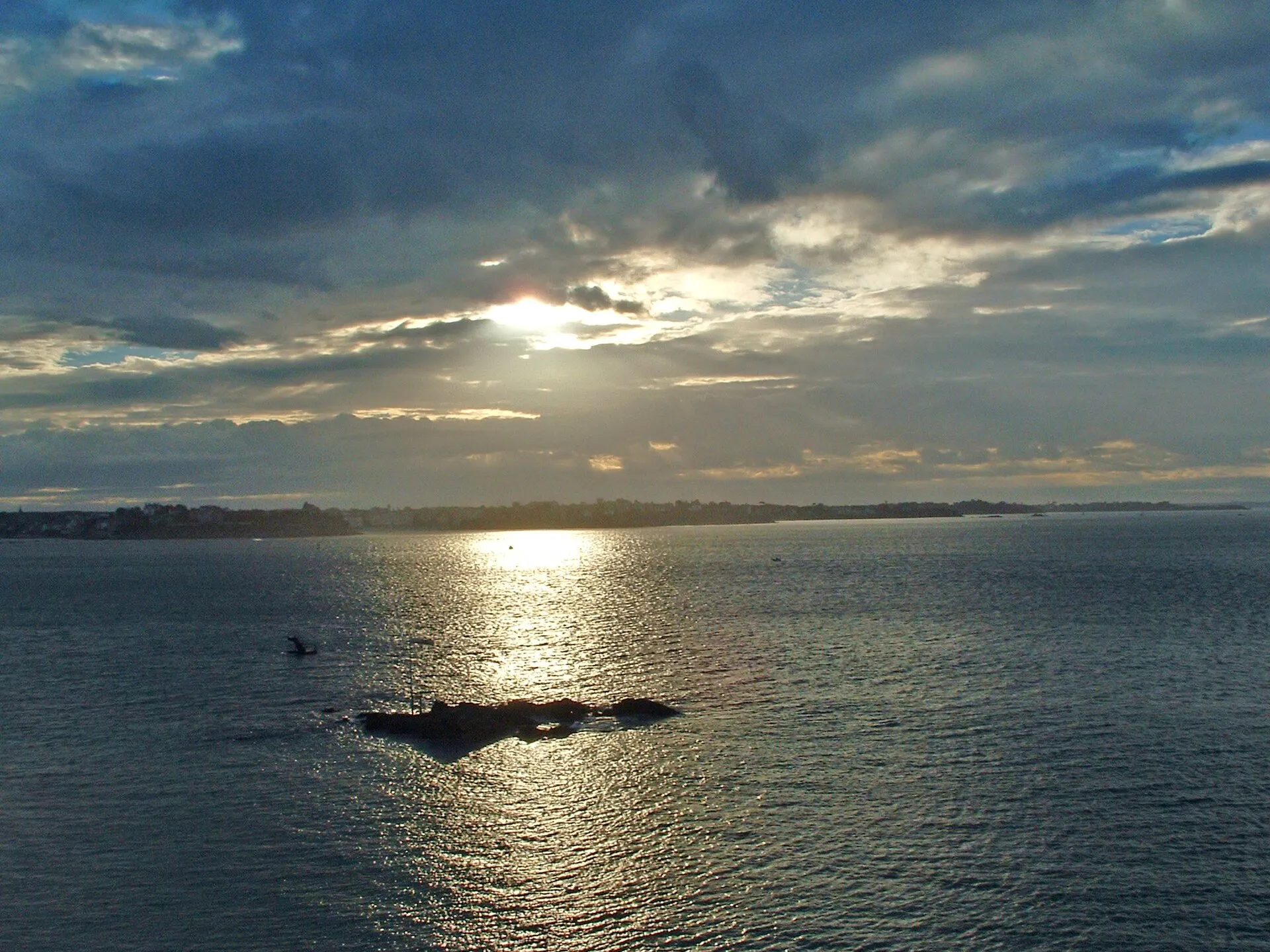
The direction matters: setting off from the Saint-Vincent gate towards the castle keeps the sea on your right and the morning sun at your back. In the evening it is the other way round, with the setting sun over the roadstead on the Dinard side. On spring tide days, the best moment is the half-hour before high water, as the flood reaches for its last centimetres against the walls.
The rising-tide swim
Locals don’t swim “at high tide” but on the rising tide: the water coming back over sun-warmed sand gains two or three degrees, and the end of the flood is the best bathe of the day. At high water on a big coefficient the beaches shrink to a ribbon below the walls: pick the sheltered coves, Bas-Sablons or the Môle, and move away from the structures as soon as waves start coming over.
High water is also the hour of sea wading (longe-côte) and open-water swimmers, who find depth close to shore again, provided they stay within the lifeguarded zones in season and never swim below the sea walls when the swell is working.
Out on the water at slack
High-water slack, the short hour when the sea has stopped rising and not yet begun to fall, is the slot for kayaks, paddleboards and small sailboats: the roadstead is full, the currents ease off while the tide turns, and rounding the Grand Bé or Fort National by sea gives a viewpoint the low-water walkers will never know. Rentals and guided outings run in season near Bas-Sablons and the Sillon; keep clear of the harbour channels and the cargo traffic, buoyancy aid on, and call it off without argument in formed swell or a steady westerly. If you would rather leave the helm to a professional, guided boat trips tour the roadstead from Saint-Malo and Dinard.
The port at slack water
High water is also the port’s hour: it is around slack that the Naye lock opens its gates and yachts and tour boats move in and out of the basins, while the ferries berth in the outer harbour, with no lock. From the Alet headland or the breakwater in calm weather, this tide-timed ballet is worth a long look. It is the same one that has set the rhythm of Saint-Malo life, by the tide table, for centuries.
The time of high water shifts every day: check the official SHOM tide times before planning your day, and the calendar to see whether a big coefficient will raise the stakes. And the everlasting rule: when the tide is rising, you linger neither on the foreshore nor on the island causeways.
Written and kept up to date by a Saint-Malo local in love with this coast. The story behind this guide


The next spring tides
- 27 – 29 October 2026100autumn
- 25 – 27 November 202697autumn
- 25 – 27 December 202699winter
See the full spring tide calendarAdd these dates to my calendar (.ics)
Check the official tide times on maree.shom.fr ↗
Frequently asked questions
What is there to do in Saint-Malo at high tide?
The circuit of the ramparts, with the sea at the foot of the walls; a swim, best on the rising tide over sun-warmed sand; the show of a big-coefficient high water from the observation posts; or simply watching the port work at slack water, when the boats pass the lock. At high water the town becomes what it always was: a rock in the sea.
Can you swim at high tide in Saint-Malo?
Yes, and the end of the rising tide is actually the best moment: the water has come back in over sun-warmed sand and gained two or three degrees. At high water on a big coefficient the beaches shrink to a ribbon: prefer the sheltered coves, Bas-Sablons or the Môle, and move away from the sea walls as soon as swell starts sending waves over them.
Can you kayak or paddleboard in Saint-Malo?
Yes, and high-water slack is the best window: the roadstead is full, the currents ease off while the tide turns, and the circuit of the islets is a calm one. Rentals and guided outings run in season near Bas-Sablons and the Sillon. Keep clear of the harbour channels, wear the buoyancy aid, and call it off in formed swell or a steady westerly.
Are the tidal islands reachable at high tide?
No: the Grand Bé, the Petit Bé and Fort National are true islands at high water, which is precisely their charm and their danger. The causeways only uncover around low water. If the sea has cut off your way back, never try to swim across: wait for the next low water and signal your situation.
What time is high tide in Saint-Malo?
The time shifts by about an hour each day, with two high waters every 24 hours. This page shows the next spring tide episodes; for the exact time of today's high water, check the official SHOM tide times, the only authoritative source for tide predictions.