Getting to Saint-Malo: train, car, plane, ferry and the right tide
Updated on 31 July 2026

.jpg)
Saint-Malo is a happy end of the line: the railway stops fifteen minutes’ walk from the ramparts, the road runs out at the harbour basins, and the ferries berth at the foot of the walled city. Getting there is easy: a direct TGV from Paris, toll-free dual carriageways, two airports close by, sea links to England and the islands. That leaves the date to choose. This page runs through every way of travelling, then explains how to time your arrival for an episode in the spring tide calendar.
By train: the direct Paris–Saint-Malo TGV
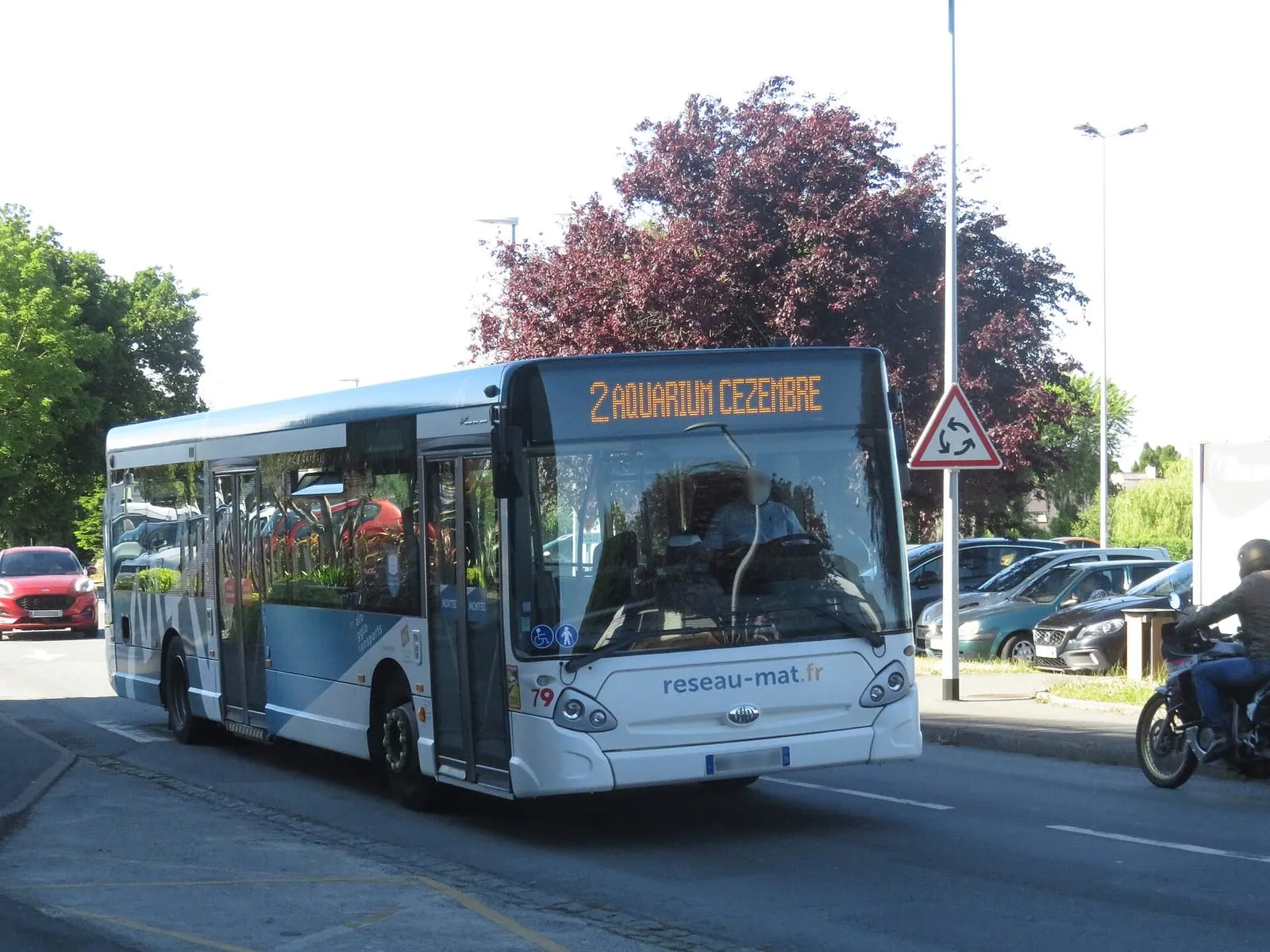
This is the simplest arrival, and the most elegant. Direct TGVs link Paris Montparnasse to Saint-Malo in around 2 h 20; other trains involve a change at Rennes, from where a regional train reaches the coast in under an hour. Timetables and frequencies shift with the day and the season: check and book on sncf-connect, and book early for summer Fridays and spring tide weekends, which sell out fast. Saint-Malo station sits right in town: allow fifteen minutes on foot, dead straight towards the sea, to pass the Porte Saint-Vincent, wheeled suitcase and all. The MAT city buses take over if it rains. Arriving by rail settles the trickiest question of the whole stay, parking, before it is even asked, and lets you step off the train and climb onto the ramparts within the same half hour.
By car: toll-free roads, tricky parking
Breton roads hold a rare advantage in France: they are toll-free. From Paris and Normandy, the A84 then the N176 bring you to the town’s doorstep across the Rance estuary; from Rennes, the dual carriageway swallows the run in about an hour. Allow on the order of four good hours from Paris, depending on traffic and stops. The difficulty begins on arrival: the walled city is a tight grid of narrow streets, and its few parking spaces are stormed on busy days: summer, holiday weekends, spring tides. The sound reflex is not to drive in at all. Paid car parks ring the harbour and the beaches, the town opens park-and-ride sites with shuttles on the big weekends, and Saint-Malo’s official website sets out the current arrangements. Once the car is parked, everything happens on foot, and the town is all the better for it.
By plane: Rennes and Dinard, the two airports
The nearest airport is Dinard–Pleurtuit, just across the Rance, some fifteen kilometres away by road: its services are few and largely seasonal, mostly turned towards the British Isles. Check the current schedules directly with the airlines. Rennes airport, about an hour’s drive away, offers a wider spread of French and European destinations; from there you reach Saint-Malo by hire car, or via Rennes station and the regional train. For a long-haul trip, the most efficient combination is usually to land in Paris and catch the direct TGV: over the whole journey, the train delivers you to the town centre without a single extra transfer.
By coach and bus: Saint-Malo without a car
Long-distance coaches connect Saint-Malo to Paris and several major cities, at low fares and in considerably more time than the rail line: a budget option rather than a comfortable one. At regional scale, Brittany’s BreizhGo network ties Saint-Malo to Rennes, Dinard, Dinan and Cancale, with beefed-up summer frequencies. In town, the MAT city buses serve the station, the walled city, the Sillon sea wall, Paramé and Rothéneuf. A car-free stay in Saint-Malo is therefore no feat at all: the town is walked along the sea, the surroundings are reached by coach or train, and the map places everything that matters, bus stops and landing stages included.
By sea: England, the Channel Islands and Dinard
Saint-Malo remains a passenger port: the ferries berth at the Naye terminal, a few hundred metres from the ramparts. Regular sailings cross the Channel from the south of England (several hours at sea, by day or overnight depending on the rotation) and, chiefly in the warm season, fast boats serve Jersey and Guernsey: our page on the ferry to Jersey covers that crossing, which turns the ramparts into a departure point for the islands. Companies and their programmes change from one year to the next, so check and book directly with whoever operates the routes. Finally, a shuttle boat links the Cale de Dinan, below the ramparts, to Dinard in about ten minutes’ crossing: less a means of transport than a first outing to sea, worth fitting in on the very first evening if the weather allows.
Arriving on the right tide
Before booking anything, open the spring tide calendar. If your dates are flexible, aim for an episode with a coefficient of 90 or more, and build the journey so you are in town before high water: just time to drop the bags, and you climb onto the ramparts to watch the sea at its highest around the city. Watch it from a safe distance, behind shelter, whenever the wind throws waves over the sea wall. Tide times change every day and from port to port: check the official SHOM tide tables before any outing, all the more if you plan to walk across to the Grand Bé at low tide. To go further, our spring tide weekend plan lays out two full days set to the rhythm of the sea, accommodation included.
Written and kept up to date by a Saint-Malo local in love with this coast. The story behind this guide



Check the official tide times on maree.shom.fr ↗
How long does the train take from Paris to Saint-Malo?
About 2 h 20 on the direct TGVs from Paris Montparnasse; other trains involve a change at Rennes, from where a regional train reaches Saint-Malo in under an hour. Timetables shift with the day and the season, so check and book on sncf-connect. Spring tide weekends and summer Fridays sell out fast.
Can you walk from the station to the walled city?
Yes, and it is the best way to arrive: allow about fifteen minutes on foot, straight towards the sea, wheeled suitcase and all, up to the Porte Saint-Vincent. The MAT city buses cover the same run if the weather turns.
Do you need a car in Saint-Malo?
Not for the town itself: station, ramparts, beaches and the Sillon sea wall all sit within walking distance, with city buses as backup. A car becomes useful for day trips to Cancale, Cap Fréhel or the bay of Mont-Saint-Michel, but the regional BreizhGo coaches cover a good share of those runs, especially in summer.
Where should you park near the walled city?
Avoid driving into the walled city at all: its few spaces vanish as soon as the town fills up. Paid car parks ring the harbour and the beaches, and on the big weekends the town runs park-and-ride sites with shuttles. Check Saint-Malo's official website for the current arrangements.
How do you get from Rennes to Saint-Malo?
The regional train links Rennes to Saint-Malo in under an hour, with regular departures all day: the simplest option, including from Rennes airport via the main station. By car, the toll-free dual carriageway covers the run in about an hour; regional coaches round out the choice.