Saint-Malo spring tide calendar: all the dates
Updated on 25 October 2026


This page is the site’s reference for spring tide dates in Saint-Malo: the full calendar of the year, episode by episode, with each episode’s maximum coefficient. The next upcoming episode is highlighted in the table. The two headline events have their own pages: the spring equinox and the autumn equinox.
One important point: this calendar gives dates and coefficients, not times. High and low water times change every day and should only be read at the official source: the SHOM widget embedded further down this page.
Reading the coefficient
The tidal coefficient is a number between 20 and 120, published by SHOM, measuring the amplitude of the water’s movement: the higher it is, the higher the sea rises and the lower it falls. In the bay of Saint-Malo, home to some of the strongest tidal ranges in Europe, the translation is immediate:
- 90 and above: spring tide territory, where the foreshore uncovers widely and shore foraging comes into its own;
- 95 and above: the island crossings lengthen and rarely emerged banks appear; this is the threshold we use to list an episode in the calendar;
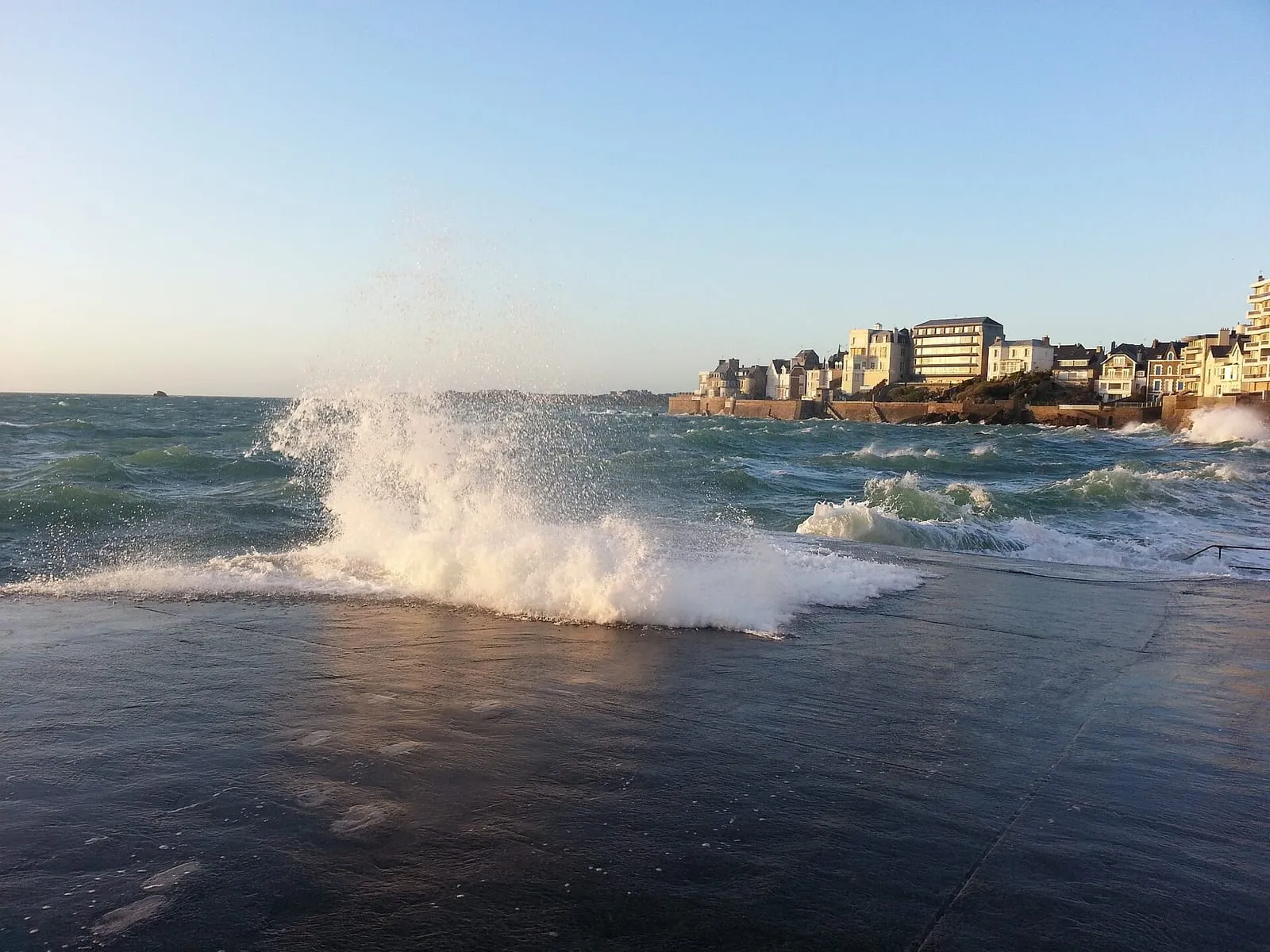
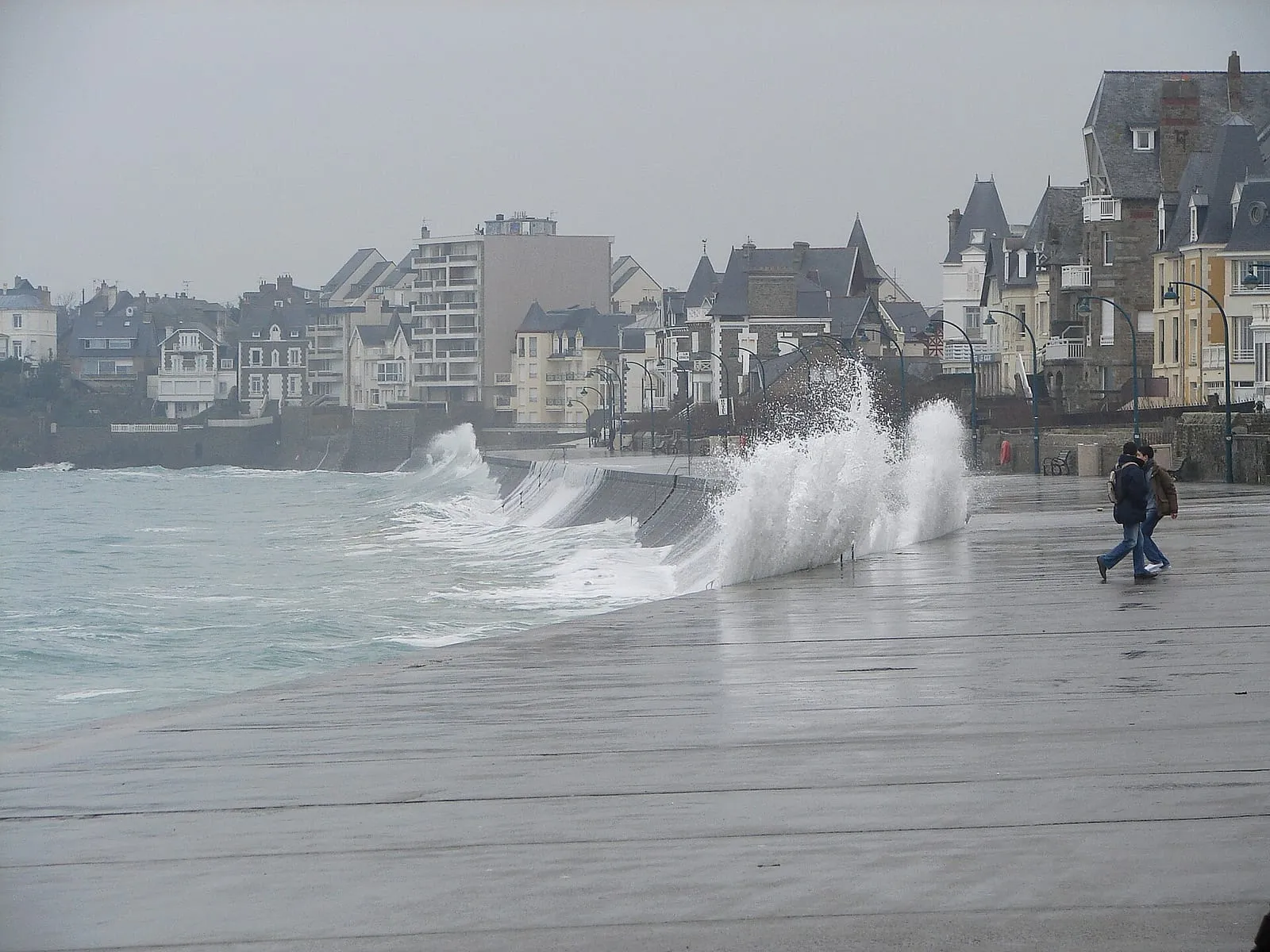
- 100 and above: high water brushes the top of the Sillon sea wall, and given swell and a westerly wind, waves break right over it, the famous spectacle of the leaping sea;
- the strongest coefficients of the year come with the equinoxes, around 20 March and late September.
Planning a spring tide weekend is therefore a two-step affair: pick the episode in the calendar below, then check the official times as the dates approach.
Why an episode every fortnight
There is nothing random about the calendar: spring tides return to the Moon’s rhythm. When the Moon and the Sun line up with the Earth, at every full and new moon, their pulls add up and the water’s movement amplifies: these are the spring tides proper, roughly every fourteen days. In between, at the Moon’s quarters, neap tides calm everything down.
Twice a year, around the equinoxes of March and September, the Earth-Moon-Sun geometry is at its most favourable and the fortnightly cycle peaks: that is where most coefficients above 100 sit. But not all of them: the 2026 calendar makes the point, with the annual maximum in April (105) and an August episode (102) as strong as September’s. Hence the value of reading the table rather than aiming blindly for the equinox.
The highlights of 2026, at a glance
The year counts sixteen episodes at coefficient 95 or more. Four stand out: 20–22 March (104), 17–19 April (105, the annual maximum), 13–15 August (102) and 11–13 September (102). Around them, winter lines up steady episodes between 96 and 99 (often the most spectacular for waves, helped by westerly swell), summer places two family-friendly dates in June and July (95 and 98), and autumn closes the year between 95 and 100, with a final episode on 25–27 December. Each season has its page: winter, summer, and the two equinoxes.
From the calendar to your day: the method
Months ahead: pick the episode in the table, and book your room if you are aiming for an equinox weekend: those are the most sought-after dates of the year.
A few days ahead: check the official SHOM times (widget below) for the high and low water hours of your dates, which slide about fifty minutes later each day. This is also when swell and wind firm up: our “will the sea leap?” index then appears on the relevant pages.
On site: the day plays out in two windows. The hour around high water for the show from the good viewpoints; the two hours around low water for the foreshore, the islets and the foraging, heading back as soon as the tide turns. In between, the town.
Why our coefficients differ from what you read elsewhere
While preparing your trip you may come across different dates or coefficients for the same episodes on other websites. We cannot speak for other publishers. Here is exactly how the figures on this page are produced:
- they are copied from official sources (SHOM-licensed data, consistent with the calendar of the Saint-Malo – Baie du Mont-Saint-Michel tourist office), never computed or estimated by us;
- every row of the table is verified at the source, and the date of that verification is displayed with the data credit;
- when a figure has not yet been officially confirmed (next year’s calendar, for instance), it is not published, rather than published “approximately”.
Faced with two contradictory figures, the referee is always the same: SHOM and the tourist office. That is where we check too.
The 2027 calendar
The 2027 calendar will be published on this page as soon as it is confirmed by the official sources. Until then, no estimates: an approximate tide date is worse than no date at all, especially where the foreshore is concerned.
Written and kept up to date by a Saint-Malo local in love with this coast. The story behind this guide


Spring tides 2026 in Saint-Malo
| Dates | Max coef. | Season |
|---|---|---|
| 4 – 6 January 2026 | 96 | winter |
| 3 – 5 February 2026 | 99 | winter |
| 19 – 21 February 2026 | 97 | winter |
| 4 – 6 March 2026 | 99 | winter |
| 20 – 22 March 2026 | 104 | spring equinoxequinox |
| 17 – 19 April 2026 | 105 | spring |
| 17 – 19 May 2026 | 99 | spring |
| 16 – 17 June 2026 | 95 | summer |
| 16 – 17 July 2026 | 98 | summer |
| 13 – 15 August 2026 | 102 | summer |
| 11 – 13 September 2026 | 102 | autumn equinoxequinox |
| 27 – 29 September 2026 | 99 | autumn equinoxequinox |
| 10 – 12 October 2026 | 95 | autumn |
| 27 – 29 October 2026Next spring tide | 100 | autumn |
| 25 – 27 November 2026 | 97 | autumn |
| 25 – 27 December 2026 | 99 | winter |
Add these dates to my calendar (.ics)Works with Google Calendar, Apple Calendar and Outlook: dates and coefficients, no tide times.
Official tide times for Saint-Malo
Tide predictions provided by SHOM (French national hydrographic office). If the widget does not load, the official tide times remain available below.
Frequently asked questions
When are the next spring tides in Saint-Malo?
The calendar on this page lists every episode of the year with its coefficient; the next upcoming episode is highlighted. For the precise times of high and low water, use the official SHOM widget further down: it is the only source to rely on when planning anything on the foreshore.
What is the tidal coefficient?
A number between 20 and 120, published by SHOM (the French hydrographic office), measuring the tide's amplitude: the higher it is, the higher the sea rises and the lower it falls. In Saint-Malo, a spring tide starts around 90; above 100, the foreshore uncovers very far out and high water brushes the top of the Sillon sea wall.
How many spring tides are there per year in Saint-Malo?
In 2026, sixteen episodes reach a coefficient of 95 or more, roughly one a fortnight, pegged to the full and new moons. The strongest cluster around the March and September equinoxes, with two off-schedule peaks this year in April (105) and August (102).
Why do your coefficients differ from other websites?
Our dates and coefficients are copied from official sources, never computed or estimated, and the verification date is shown under the calendar. If you read different figures elsewhere, check them against SHOM or the Saint-Malo tourist office: that is the referee.
Is the 2027 calendar available?
It will be published on this page as soon as the official data is confirmed. We never publish a tide date we have not verified at the source, so no estimates in the meantime.