Staying near Grand Bé: the walk out, tide times and safety margin
Updated on 23 October 2026
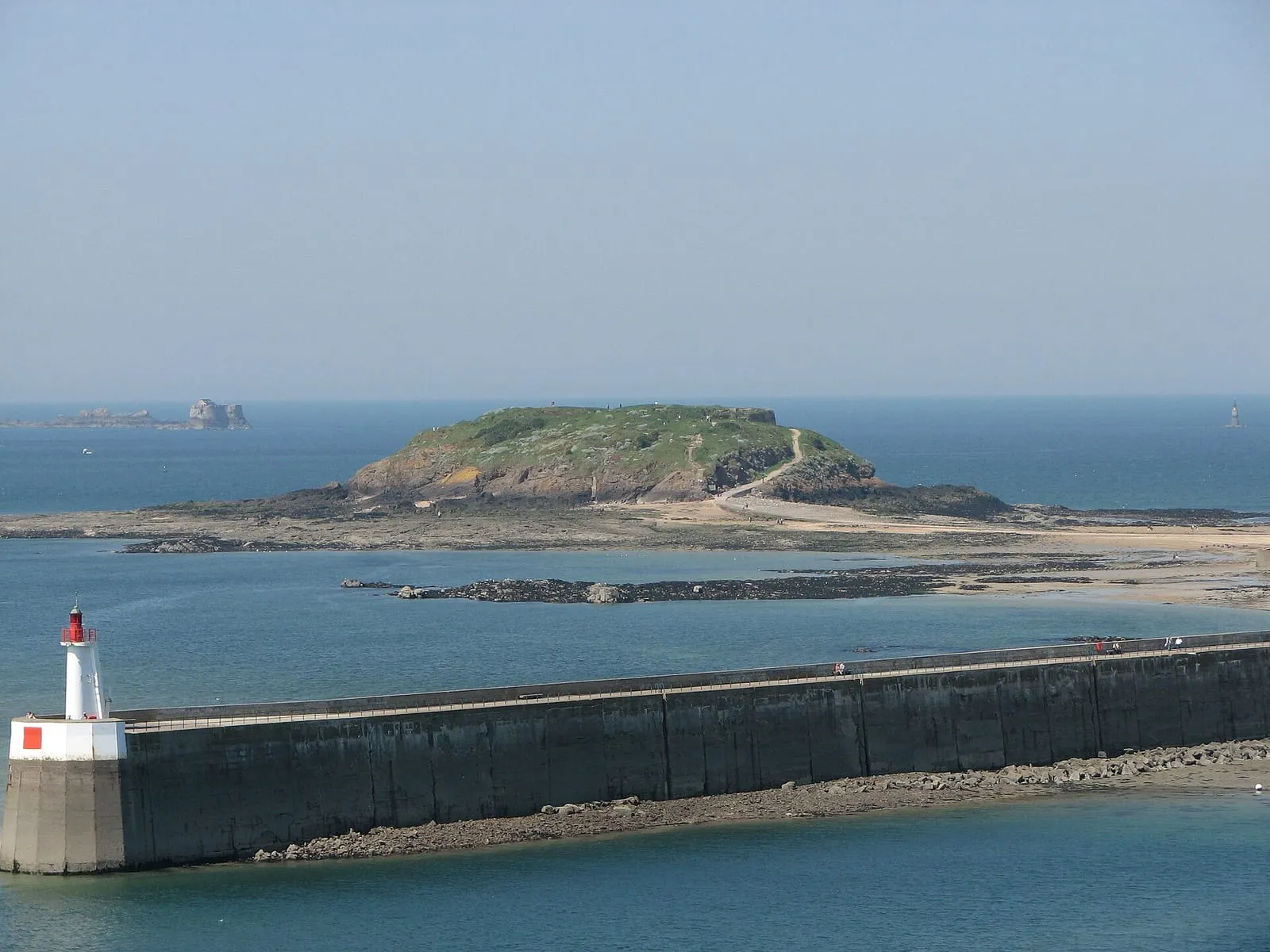

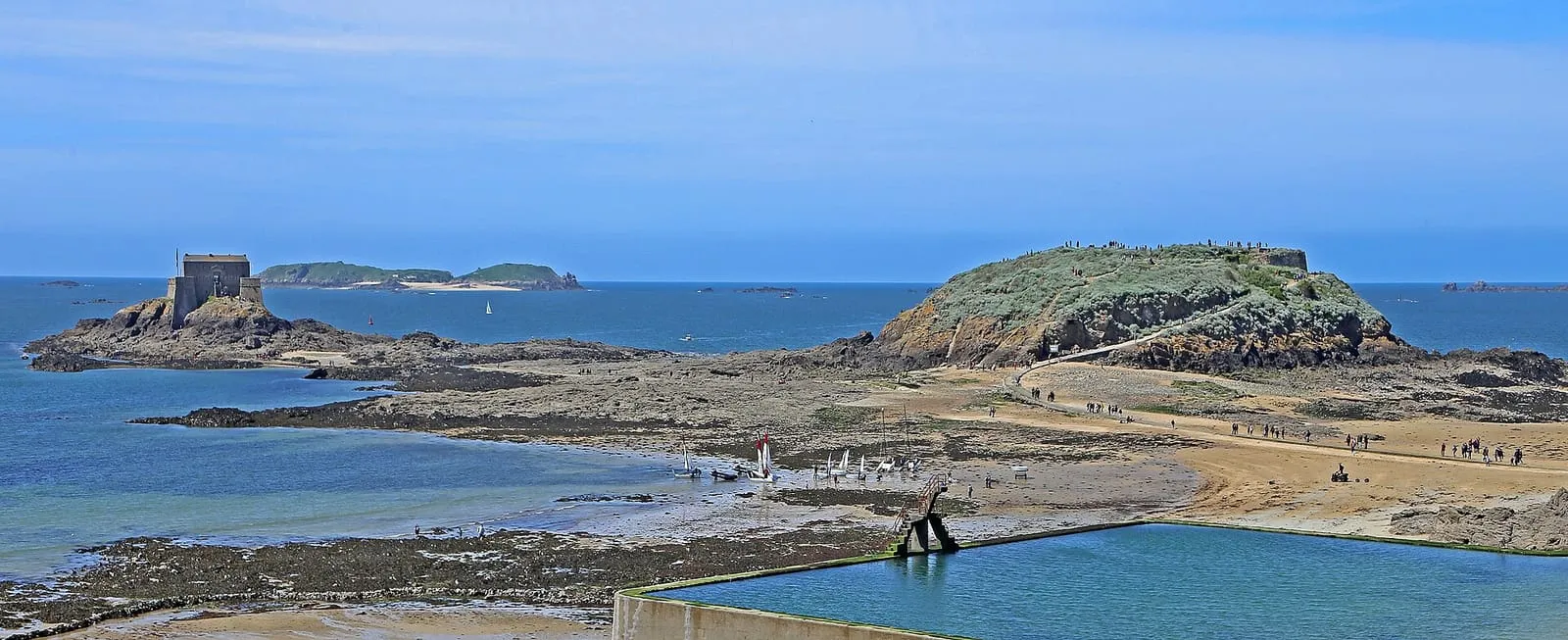
At low tide, a causeway of sand and rock links Bon-Secours beach to Grand Bé, the islet where Chateaubriand is buried facing the open sea. Allow ten minutes for the crossing, free of charge, from the foot of the ramparts. The one constraint is also the one real difficulty: the passage only exists for a few hours a day, and the sea closes it from both sides at once.
When the causeway uncovers
The tombolo emerges around low water, in a window of two to three hours depending on the coefficient. At spring tides the passage is wide and the window comfortable; at neap tides it barely uncovers, some days not at all.
The times change every day. Check the official SHOM widget on this page the same morning (not a timetable copied from another site the day before) and note the low-water time: the outing is organised around it.
Big coefficient, big window, and a big sting in the tail
The coefficient cuts both ways. On big coefficients the sea drops lower: the tombolo uncovers earlier and wider, and the window stretches. That is the right day to chain Grand Bé and Petit Bé, or to wander the foreshore around the islets. But the same coefficient brings the sea back that much faster: there is more water to return, the turn of the tide is sharper, and the causeway closes in minutes where a neap tide takes its time. In other words: the days when the crossing is most tempting are also the days when the return margin forgives least. The thirty-minute rule is not an insurer’s caution: it is the actual rhythm of this bay.
On the islet: what an hour gives you
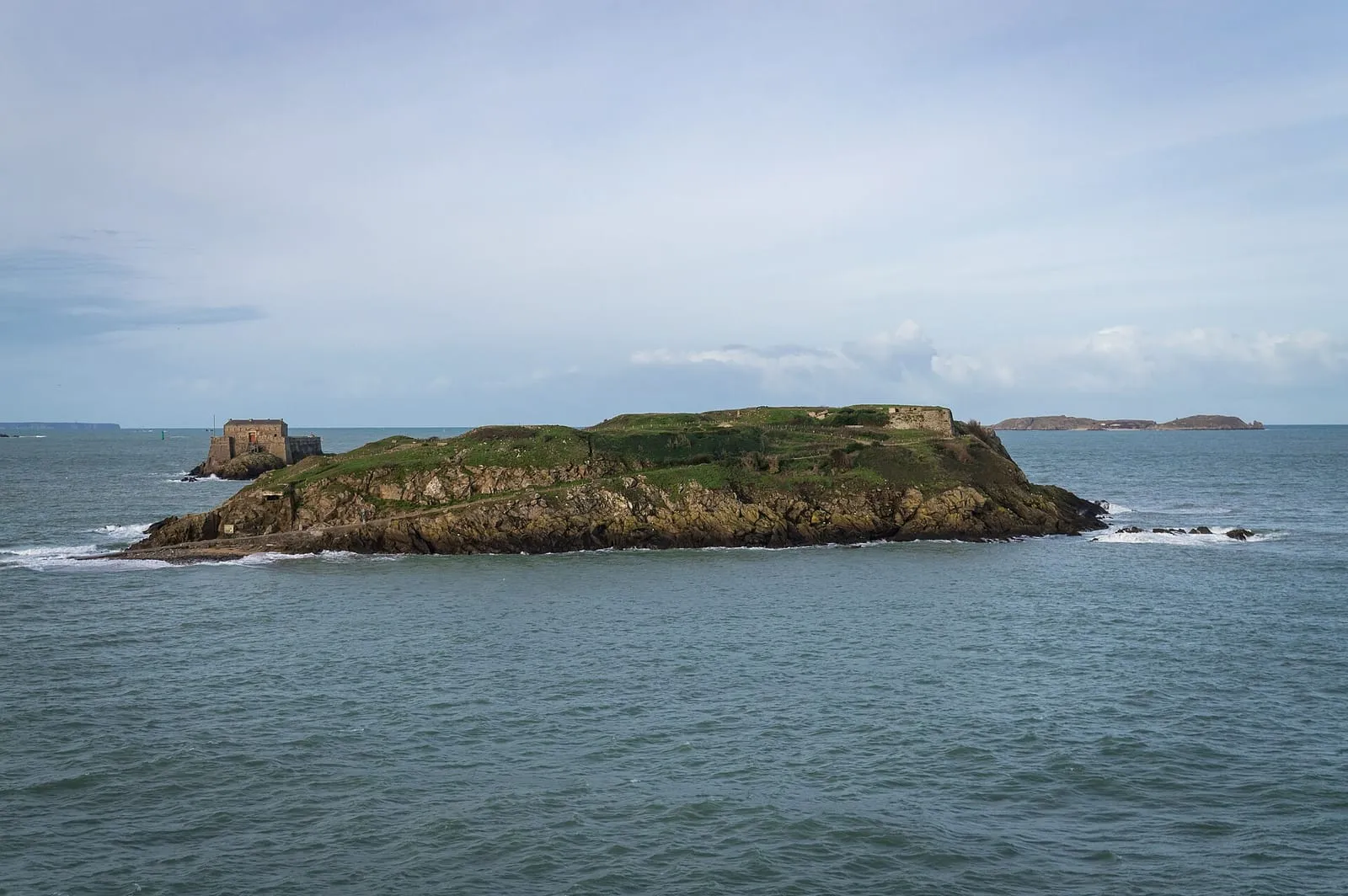
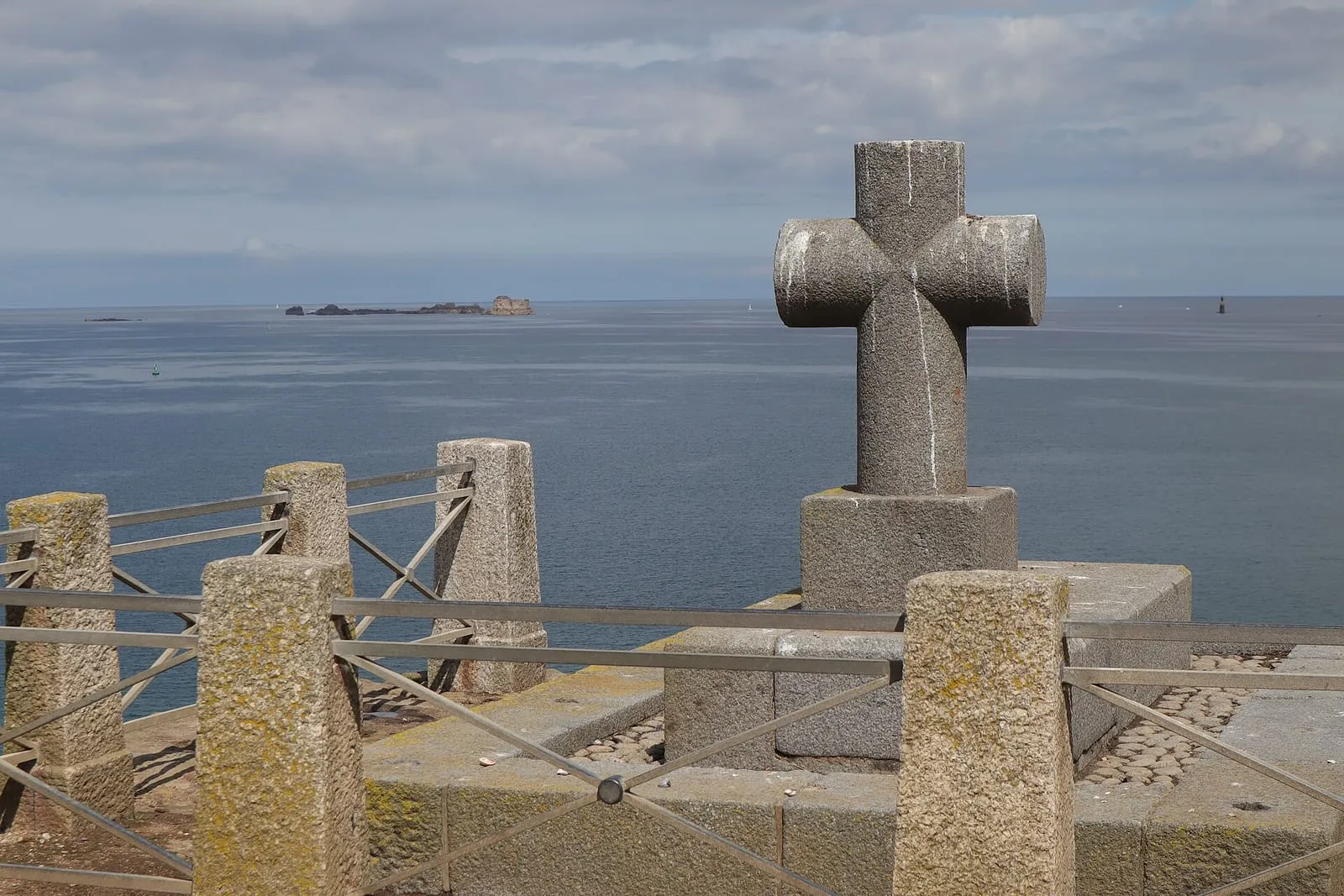
The whole of Grand Bé can be walked in a short hour, crossings included. The path climbs between the gorse to the remains of the fortifications (the islet served as a forward post of Saint-Malo’s defences for centuries) then drops towards the western point and Chateaubriand’s tomb: an unnamed granite slab topped by a plain cross, facing the open sea. The writer, born in Saint-Malo in 1768, obtained this rock from the town so as to be buried “standing, facing the sea”; he has lain here since 1848, and the bareness of the place is deliberate: you behave as you would in a cemetery.
The summit offers the best water-level panorama in the whole roadstead: the ramparts on one side, the open sea and La Conchée on the other, and Petit Bé with its Vauban fort just behind, reached by its own causeway at the big low tides, visits in season when it opens. And beneath your feet, the show in fast-forward: the foreshore uncovering or closing over by the hour, exactly what the low tide page tells.
The way back comes first
Every year, visitors get shut in on the islet. At best they wait six hours for the next low water; at worst the sea-rescue service comes to fetch them out of the current. Three rules:
- set out on a falling tide, never while water still touches the causeway;
- start back at least thirty minutes before the limit posted at the entrance to the passage;
- if the water has reached the causeway, do not cross, in either direction. The current between the two beaches is violent, and people have drowned in it.
Sleeping on the crossing side
Bon-Secours beach lies at the foot of the western ramparts: from the Intra-Muros addresses, the crossing is five minutes’ walk. That is the concrete point of sleeping there: aiming for the dawn low water, when the islet is empty, and crossing again in the evening if the timetable allows. Petit Bé, just beyond, can be visited in season, tide permitting: ask locally, and remember it shortens the window accordingly.
Written and kept up to date by a Saint-Malo local in love with this coast. The story behind this guide


.jpg)
The next spring tides
- 27–29 October 2026100autumn
- 25–27 November 202697autumn
- 25–27 December 202699winter
See the full spring tide calendarAdd these dates to my calendar (.ics)
Compare places to stay
| Accommodation | Area | Tide advantage | Price | Book |
|---|---|---|---|---|
| La Maison des Armateurshotel | Intra-Muros · €€€420 m from the sea wall | Tide advantage : In the very heart of the walled town: no sea view from the rooms, but the rampart walk, the town's best spring tide balcony, is two minutes away. | €€€ | BookHotel website ↗ |
| Hôtel Elizabethhotel | Intra-Muros · €€350 m from the sea wall | Tide advantage : A 16th-century house near the Saint-Louis gate: quiet within the walls, a five-minute walk from the Noires pier and the wave show. | €€ | BookHotel website ↗ |
| Hôtel France & Chateaubriandhotel | Intra-Muros · €€310 m from the sea wall | Tide advantage : Against the Porte Saint-Vincent: some upper rooms glimpse the Fort National, which the tide turns from island to peninsula before your eyes. | €€ | BookHotel website ↗ |
Frequently asked questions
When can you walk out to Grand Bé?
Around low water, when the tombolo (the sand-and-rock causeway) uncovers: roughly a two-to-three-hour window, wider at big coefficients. There is no fixed time: check the official SHOM widget on this page on the day itself, never a copied timetable.
What happens if the tide catches you out there?
You stay on the island until the next low water (about six hours) or rescuers are called out: NEVER attempt the crossing once water covers the causeway; the current there is violent and people have drowned. On-site signs and any sirens override everything.
Can you visit Petit Bé too?
Petit Bé, just beyond Grand Bé, holds a Vauban fort that opens seasonally, tide permitting. The extra crossing shortens the safety window further: check locally and keep an even wider margin.
Can you see Chateaubriand's tomb?
Yes: it stands at the seaward point of the Grand Bé: a granite slab topped by a plain cross, unnamed, honouring the writer's wish to be buried 'standing, facing the sea'. Access is free during the low-tide window; the place is a grave, and visitors are expected to behave accordingly.
How long should you allow for the visit?
An hour covers the unhurried round trip: ten minutes' crossing each way, the loop of the islet, the tomb and the view over the roadstead. Allow thirty minutes more to push on to Petit Bé when it uncovers. The essential point is to place that hour at the start of the low-water window, never at the end: the return margin is not negotiable.