Route du Rhum 2026: the fleet, the course and how to follow the race
Updated on 23 October 2026
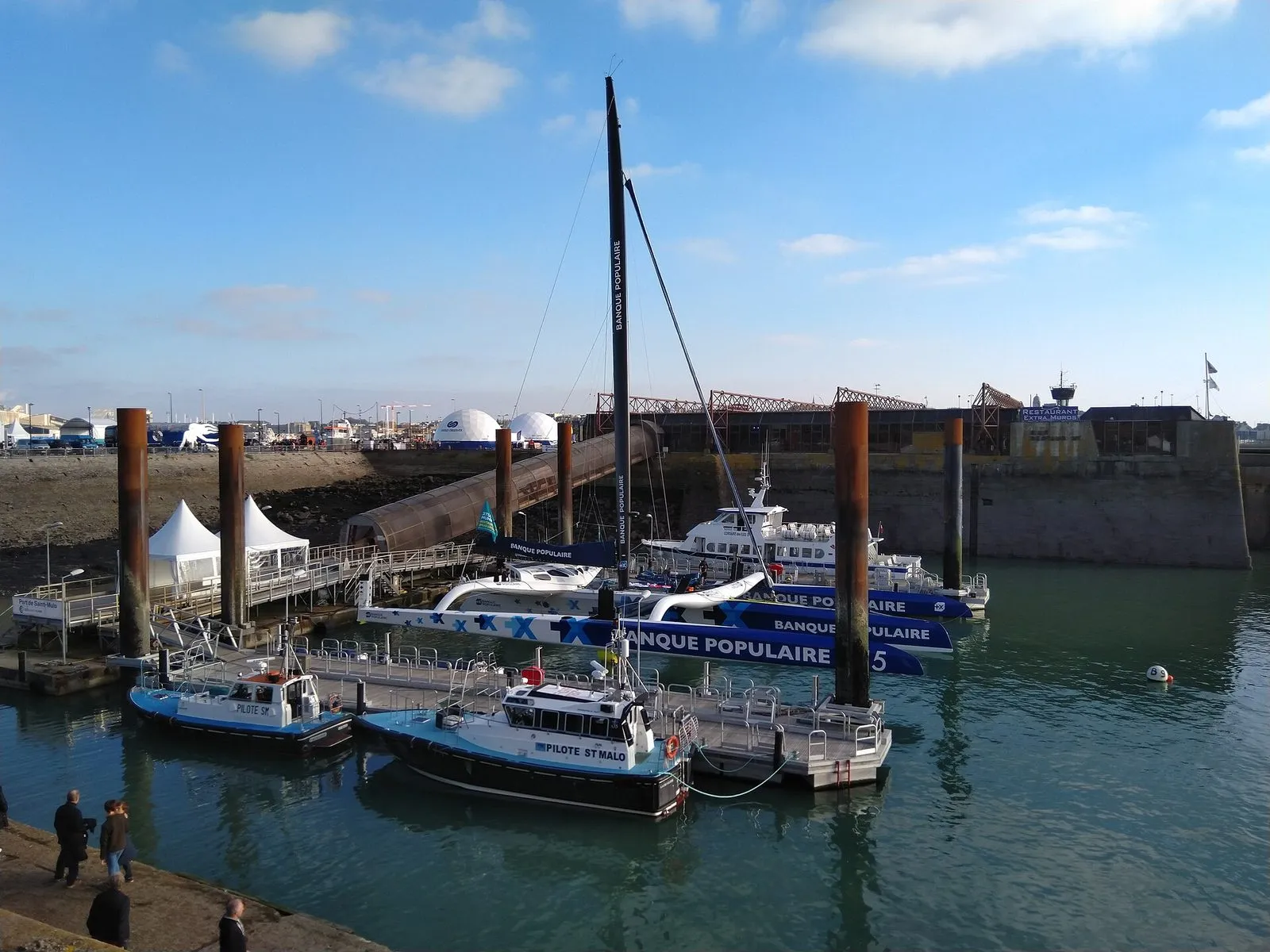

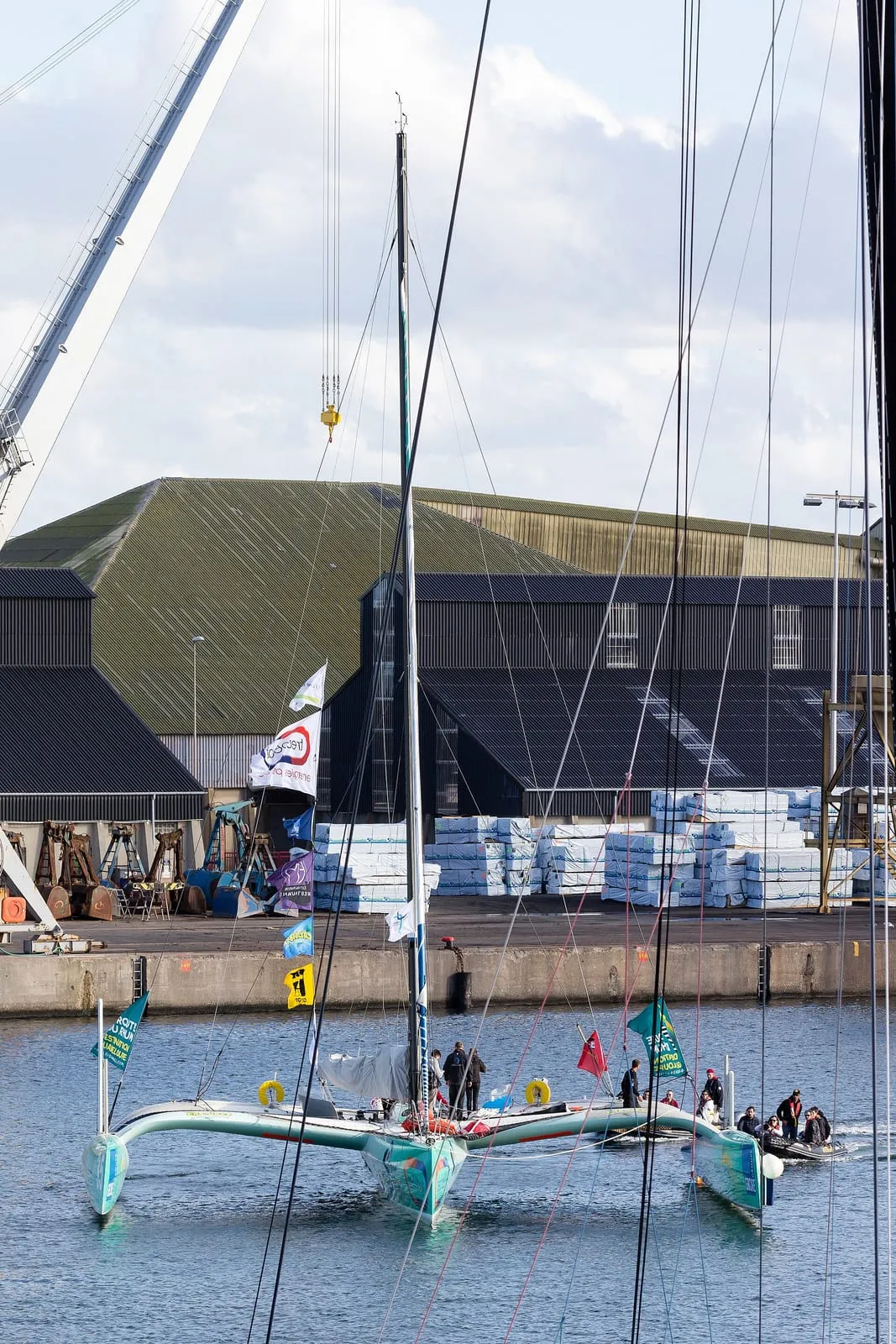
The Route du Rhum 2026 leaves Saint-Malo on Sunday 1 November at 1:02 pm (8:02 am in Guadeloupe), bound single-handed for Pointe-à-Pitre. What makes it unique fits in one sentence: everyone starts together, from 32-metre trimarans flying above the water to monohulls from the 1980s. This page covers the fleet, the course and how to follow the race once the boats have gone. Figures are as of 15 October 2026; our sources are named, and where they disagree, we say so.
How many boats? A moving figure
The organisers announced 118 entries in April, and confirmed that total as final at the official presentation on 22 September. Since then several withdrawals have come in, for budget or health reasons: Thomas Ruyant, the IMOCA title holder, for lack of a sponsor; Erwan Le Roux, a two-time Ocean Fifty winner, for lack of budget; Roland Jourdain, replaced at the helm of his vintage trimaran by François Guiffant; and Halvard Mabire, also in the vintage fleet. The city of Saint-Malo now lists 115 boats; some media still count 116 or 117. The only figure that will count is the one on the start line.
There are eleven women in the fleet, according to France Inter and ici (Radio France): about 9% of the skippers, up from 5% at the previous edition.
The six classes, fastest to slowest
Ultim (8 boats). The giant 32-metre trimarans that fly on their foils. This is where the overall victory is decided. Charles Caudrelier, winner and record holder in 2022, defends his title on a new boat, Gitana 18 (Maxi Edmond de Rothschild). Against him: Armel Le Cléac’h (Maxi Banque Populaire XI), Tom Laperche (SVR-Lazartigue), Thomas Coville (Sodebo Ultim 3), Anthony Marchand (Actual Ultim 4, the boat that won in 2022), Saint-Malo’s own Louis Burton and Guirec Soudée. Alexia Barrier (IDEC Sport) is the first woman entered in the Ultim class.
Ocean Fifty (10 boats). 15-metre trimarans, more affordable, with margins often razor-thin: in 2022 the win came down to 18 minutes. The entry includes Thibaut Vauchel-Camus, who calls himself “Maloupéen”, half Saint-Malo, half Guadeloupe, along with Basile Bourgnon, Pierre Quiroga, Saint-Malo sailors Baptiste Hulin and Luke Berry, and Anne-Claire Le Berre, the only woman in the class.
IMOCA (22 boats). The Vendée Globe monohulls, foiling too. Jérémie Beyou (Charal) and Sam Goodchild are named among the favourites. Sébastien Simon and Boris Herrmann bring brand-new boats. Three women are entered: Violette Dorange, Élodie Bonafous and Francesca Clapcich.
Class40 (49 boats). The largest class: 12-metre monohulls, more modest budgets and tight racing. There will be a new winner, since Yoann Richomme, the two-time title holder, has moved up to IMOCA. Guillaume Pirouelle and Corentin Douguet start as favourites; Ian Lipinski, Fabien Delahaye and Vincent Riou are among the names to watch.
Vintage multihulls (13 boats). Older-generation multihulls, including four Orma trimarans, the formula that dominated the race in the 1990s and 2000s. Francis Joyon, the 2018 winner, is racing here, alongside Damien Seguin, Marc Guillemot and the fleet’s oldest skipper, Charlie Capelle, 71.
Vintage monohulls (13 boats). Monohulls from another era, including Kriter VIII and Jean Le Cam’s Swan. Tanguy Caradec is racing: he is the son of Loïc Caradec, lost at sea during the 1986 edition. The youngest in the fleet, Titouan Pilliard, is 20 according to ici (Radio France).
Class sizes follow the list published by Ouest-France at the end of September, updated after the withdrawals. Ouest-France is a media partner of the race.
Saint-Malo and Guadeloupe sailors
The race links two places, and each has its own representatives. On the Saint-Malo side, the organisers counted around ten local skippers in the spring, including Louis Burton (Ultim), Luke Berry and Baptiste Hulin (Ocean Fifty), Jules Bonnier, Gilles Lamiré and Quentin Le Nabour. Several of them sign autographs on the city’s stand in the race village. On the Guadeloupe side, seven skippers were announced in April, including Damien Seguin, a Paralympic champion, and Kéni Piperol.
The course
3,542 nautical miles, about 6,560 km: that is the great-circle distance, the shortest path on the globe. Nobody actually sails it, because the route follows the wind: boats often dive south to find the trade winds and cover considerably more. The stages of the course:
- The start is given on a 3-mile line off the Pointe du Grouin, near Cancale. Where to watch it from shore: our watch the start page.
- A mark off Cap Fréhel, about fifteen miles after the start: the last chance to see the fleet from the Breton coast.
- The Atlantic: the Bay of Biscay in November, often rough from the first nights, then the run down to the trade winds.
- Rounding Guadeloupe: the boats go round the island to the north-west then south, pass the Basse-Terre buoy at the entrance of the Saintes channel, then head up to Pointe-à-Pitre. Those last thirty miles, often windless in the lee of Basse-Terre’s mountains, have undone more than one ranking.
This is the course of previous editions, as described in the 2022 sailing instructions. The 2026 notice of race was not available at the time of writing.
Benchmark times, and when to expect arrivals
The race record belongs to Charles Caudrelier: 6 days 19 hours 47 minutes in 2022, the first time under seven days. The 2022 class winners show how far apart the classes finish:
| Class | 2022 winner | Race time |
|---|---|---|
| Ultim | Charles Caudrelier | 6 d 19 h 47 min |
| Ocean Fifty | Erwan Le Roux | 10 d 21 h 35 min |
| IMOCA | Thomas Ruyant | 11 d 17 h 36 min |
| Class40 | Yoann Richomme | 14 d 3 h 08 min |
| Vintage multihulls | Loïc Escoffier | 16 d 6 h 37 min |
| Vintage monohulls | Jean-Pierre Dick | 16 d 13 h 57 min |
For 2026, race director Francis Le Goff expects the first Ultim around 7 November. Applying the 2022 times to a 1 November start gives rough orders of magnitude for the other classes: Ocean Fifty and IMOCA around 12 or 13 November, Class40 around the 15th, vintage boats from the 17th. These are simple projections: one badly placed low can shift a whole class by several days. Arrivals then stretch over more than a week, and the Guadeloupe race villages stay open accordingly.
Following the race once the boats have left
- The official tracker is on routedurhum.com, with a personal space to follow your chosen skippers. The organisers also offer a tracker for children, with an educational kit, a first for the race.
- Ouest-France publishes its own map, updated hourly, with wind and the regulated traffic separation zones. The paper is a media partner of the event.
- Live onboard footage: the 2026 novelty announced by the race direction.
- On television, France 3 Bretagne and France Télévisions broadcast part of the lock departures and the start.
If you are in Saint-Malo on start day, the race village screens the race until 4 pm. The history of the event, from Mike Birch to Charles Caudrelier, is told on our history and winners page.
Written and kept up to date by a Saint-Malo local in love with this coast. The story behind this guide


Frequently asked questions
How many boats start the Route du Rhum 2026?
The organisers announced 118 entries in April and again in September 2026, across six classes. Several withdrawals followed (including Thomas Ruyant, the IMOCA title holder, and Erwan Le Roux in the Ocean Fifty class): by mid-October, the city of Saint-Malo counts 115, some media 116 or 117. The definitive figure will be the one on the start line on 1 November.
When will the first boats reach Guadeloupe?
Race director Francis Le Goff expects the first Ultim around 7 November, after roughly six and a half days at sea. The other classes follow over about two weeks: in 2022 the winning Ocean Fifty took almost 11 days, the IMOCA almost 12, the Class40 just over 14 and the vintage boats more than 16. These are benchmarks, not a timetable: everything depends on the weather.
How can I follow the Route du Rhum live?
The official tracker is on routedurhum.com; Ouest-France, the race's media partner, publishes its own, updated hourly. New for 2026, the race direction has announced live onboard footage. The organisers also offer a tracker designed for children.
What is the Route du Rhum course?
The start is off the Pointe du Grouin, then a mark off Cap Fréhel, then the Atlantic to Guadeloupe, which the boats round to the west and south (the Basse-Terre buoy) before finishing in Pointe-à-Pitre. The theoretical distance, along the shortest line on the globe, is 3,542 nautical miles, about 6,560 km.