Photographing the spring tides in Saint-Malo
Updated on 31 July 2026
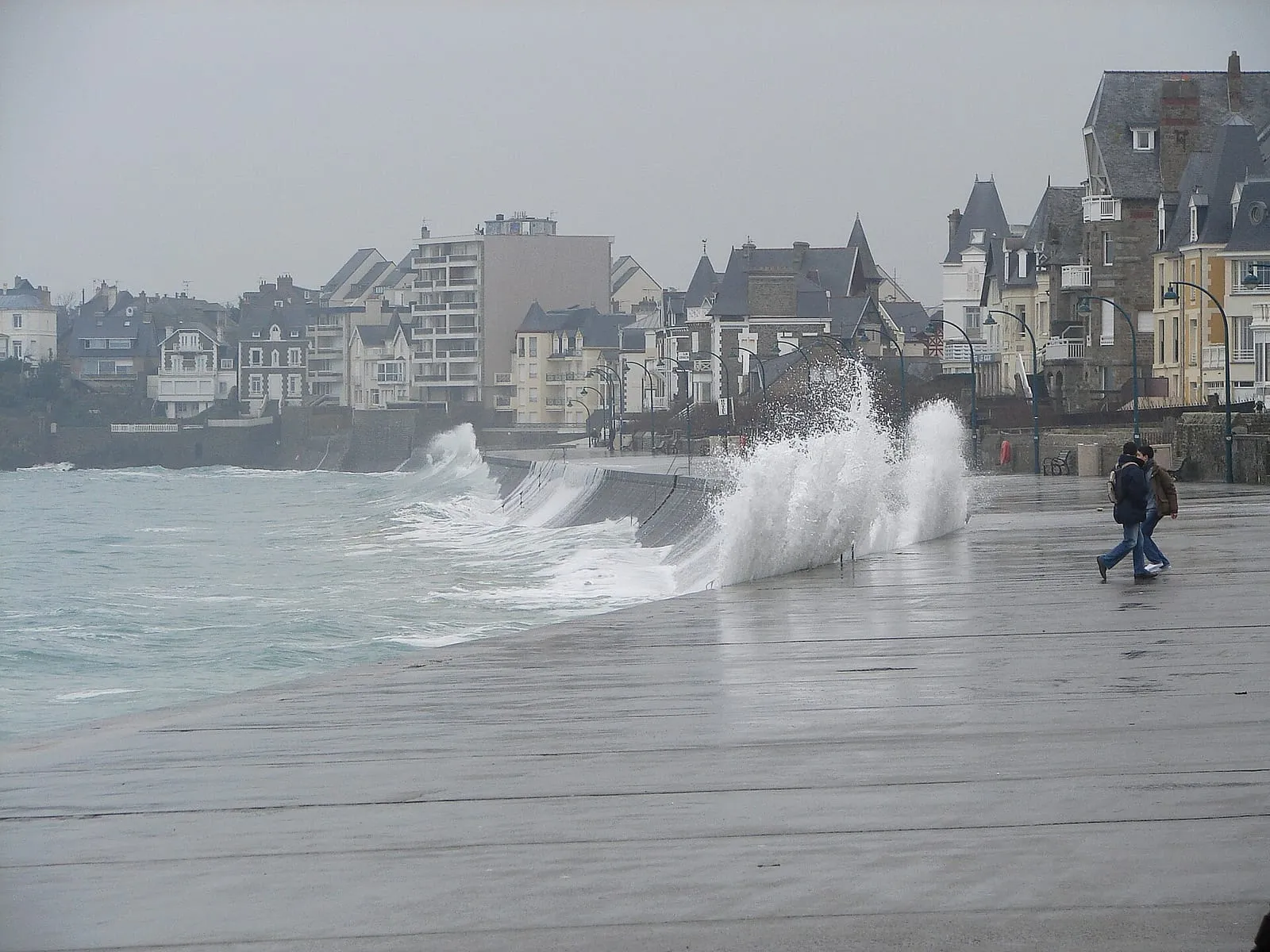

Every spring tide sends the same pictures around the world: vertical plumes above the Sillon sea wall, ramparts ringed with foam, breakwaters standing in a mirror-flat sea at dusk. They look easy: the sea appears to do the work. In truth, a good spring tide photograph is prepared: a day picked from the calendar, a light anticipated, a viewpoint scouted in advance. And one rule that outranks all the others: you shoot from high ground, set back. This page completes our guide to the spring tide viewpoints: that one says where to watch, this one says how to frame.
Picking your day: coefficient, swell and wind
Everything starts with the spring tide calendar: aim for a coefficient of 100 or more, known years in advance. But the coefficient is only half the picture. On a calm sea, even a very big coefficient delivers a high water that is perfectly smooth: beautiful for moods, disappointing for plumes. To photograph the sea exploding against the wall, a well-formed west to north-west swell and an onshore wind have to turn up on the same day: that is exactly what our “will the sea jump?” index weighs up, displayed at the top of this page as each episode approaches, and what our page on the crashing waves explains in detail.
Do not forget the other window: six hours after high water, the same coefficient uncovers an immense foreshore, and the Sillon becomes an open-air graphic landscape. Dates and coefficients are shown on this page; for the times of high and low water, check the official SHOM tide tables before setting out.
Picking your light
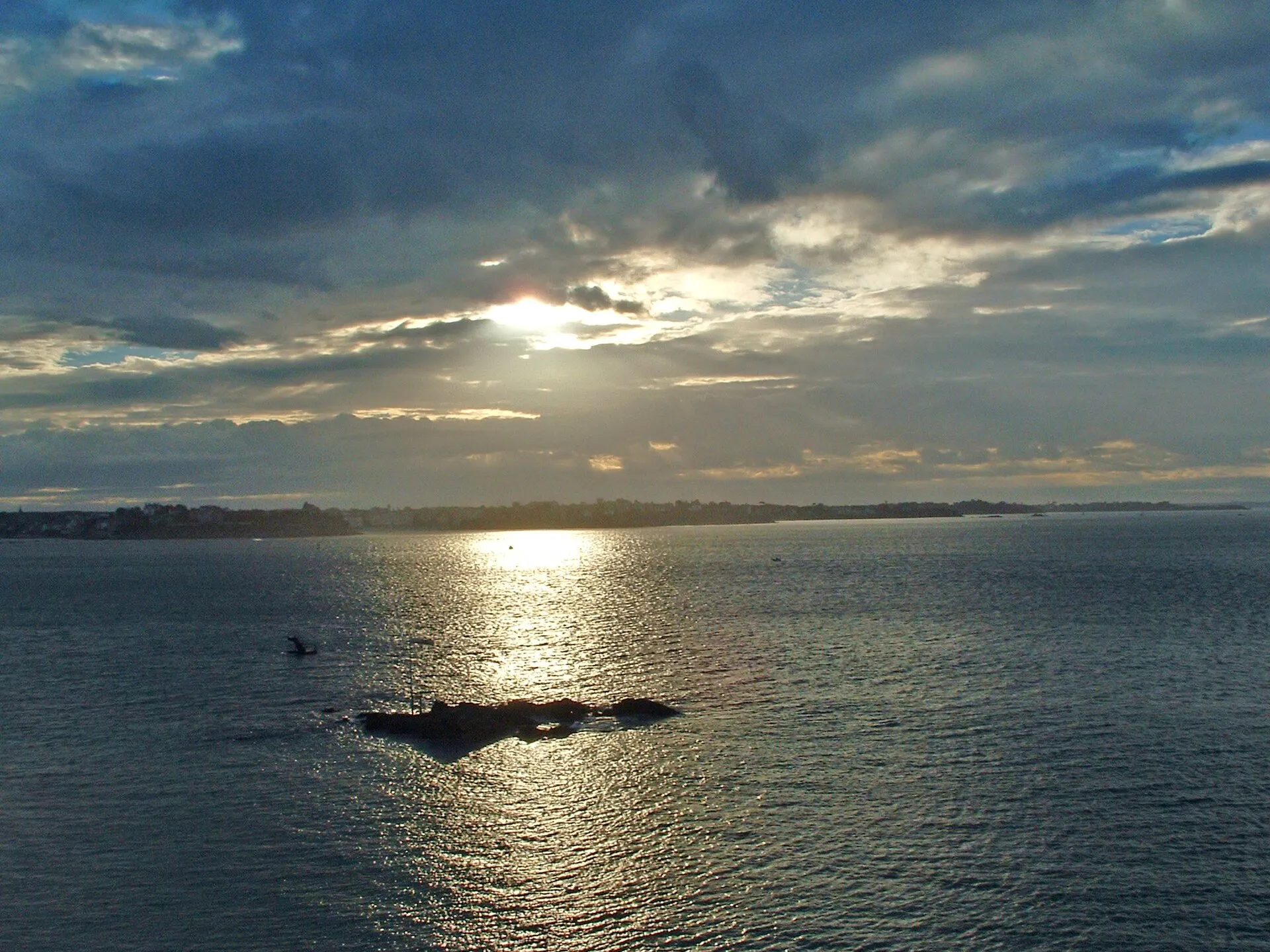
Each episode sets its high waters at different hours, so a photographer’s first decision is matching the tide to a light. A late-day high water bathes the roadstead in the sunset, and from the ramparts the colour carries all the way to Dinard; a morning high water lights the sea wall in something still cold and clean. In winter the sun stays low all day: backlight cuts out the silhouettes along the ramparts and turns every plume into silver lace.
That leaves the storm days, which stage the strongest show under the most thankless sky: uniform grey, flat light. On those days, give up on colour and make movement the subject: the wave caught mid-climb, foam streaming off in the wind, the outline of Fort National vanishing behind a curtain of spray.
The camera positions, lens in hand
The telephoto belongs in Dinard. From the Pointe du Moulinet, facing the corsair city, a long lens (200 mm and beyond) compresses the planes: the offshore waves, Fort National and the ramparts stack up in a single frame, and every plume seems to leap from the rooftops of Intra-Muros. It is the great post on swell days, with the whole width of the roadstead between you and the waves.
The wide-angle climbs the ramparts, set back from the parapet, never leaning over it. From up there, a wide focal length takes in the bay, Fort National and the rocks of the foreground; on big swell days the plumes rise into your frame without you needing to move closer.
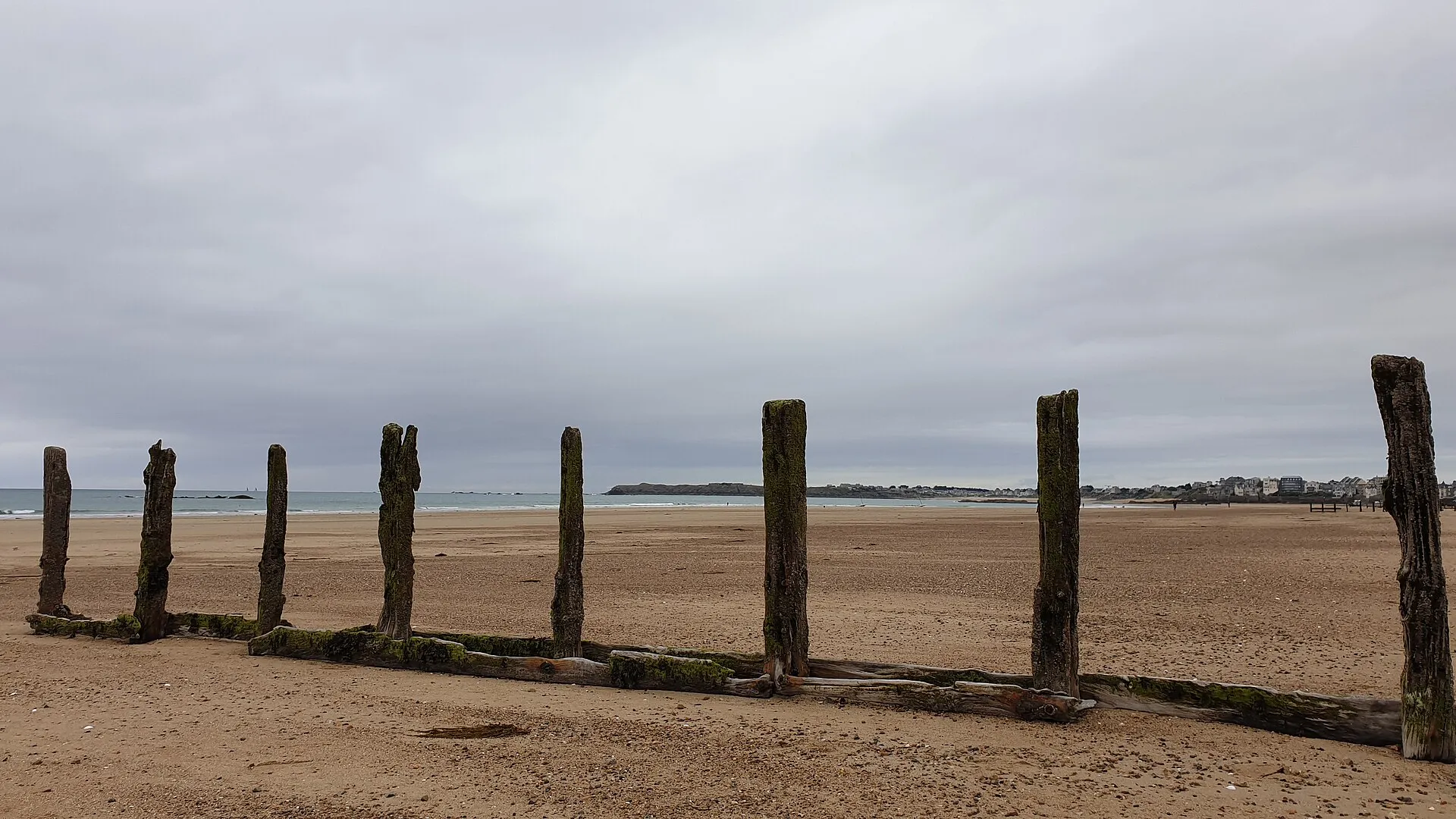
The Sillon is photographed at low tide. Its oak breakwaters, planted in tight rows across the foreshore, make one of the most graphic foregrounds on this coast: leading lines running out to sea, reflections in the wet sand, walkers in silhouette against the light.
Rochebonne, finally, for the plumes. This slipway in Paramé is where the sea climbs highest on swell days; you shoot it with a telephoto from the town side of the promenade, well back, never from the slipway itself. All these positions are on our map, with their orientation.
The technique, kept simple
To freeze a plume, you need speed: around 1/1000th of a second, raising the ISO under a dark sky if you must. Frame wider than the wall (the wave alone decides its height), fire in burst as it strikes, and keep headroom in the frame: the finest plumes always exceed what you expected.
At low tide the logic reverses. On a tripod, a long exposure of a few seconds smooths the sea around the breakwaters and turns the foreshore pools into mirrors; in full daylight, an ND filter lets you stretch the exposure without overexposing. This is the quiet photography of the spring tides: the same tidal range, on an entirely different tempo.
Sea spray, the enemy of your gear
On a west-wind day, the air carries salt all the way up to the ramparts. Bring a microfibre cloth to wipe the front element between shots, mount a protective filter on the front line, and never change lenses facing the wind: find shelter, back to the spray, or keep the lens on. Salt creeps everywhere; back home, wiping the body and barrel with a barely damp cloth saves many a repair bill.
The photograph is taken high up and set back
This is the rule that outranks every other, and the reason this page exists. Every big storm sees photographers edging down to the wall or the mole for “the” shot. That is exactly the behaviour not to copy. A wave gives no warning: it sweeps the full width of the parapet, hurls pebbles, and a single one is enough to carry an adult away. Soaked gear is the least of the risks. You never shoot with your back to the sea, never at the edge of the dyke on a swell day, never from the Môle des Noires or the slipways in heavy weather. The crashing waves are something to watch from a safe distance, behind shelter, camera included: the finest spring tide images are taken from the ramparts and from Dinard, on a telephoto, high up and set back.
Written and kept up to date by a Saint-Malo local in love with this coast. The story behind this guide


The next spring tides
- 11–13 September 2026102autumn equinoxequinox
- 27–29 September 202699autumn equinoxequinox
- 10–12 October 202695autumn
See the full spring tide calendar
Dates and coefficients are indicative. Always check the official SHOM tide times before heading onto the foreshore. Official tide times (SHOM) ↗
Will the sea leap the wall?
Waves over the Sillon sea wall: our index for 11–13 September 2026
Show unlikely
The sea will most likely stay calm along the wall on this date. The spring tide is still a great sight at low tide.
What drives this index
- Tide coefficient102
- Swell (significant height)0.4 m (NW)
- Swell period10 s
- Wind19 km/h (NW)
Best window of the episode: 13 September 2026. Index computed on 13 September 2026.
A qualitative, heuristic estimate, not a guarantee: nature does what it wants. Swell and wind forecasts: Météo-France (Licence Ouverte).
Which lenses should I bring for the spring tides?
Two cover almost everything: a telephoto (200 mm or longer) to compress waves and ramparts from the Pointe du Moulinet in Dinard, or to catch the Rochebonne plumes from a distance, and a wide-angle for the bay from the ramparts or the Sillon breakwaters at low tide. One body is enough. You never change lenses facing a wind full of spray.
What settings freeze a wave breaking over the sea wall?
A fast shutter speed, around 1/1000th of a second, raising the ISO under a dark sky, and burst mode fired as the wave hits the wall. Frame wider than the dyke: the height of a plume cannot be predicted, and the best ones overflow the frame you had prepared for them.
Where can I photograph the waves safely?
High up and set back, always: the ramparts of Intra-Muros well away from the parapet, the Pointe du Moulinet in Dinard, the town side of the Sillon promenade. Never on the dyke, the harbour mole or the slipways around high water on a swell day, and never with your back to the sea: a wave gives no warning, and one is enough to sweep an adult away.
Can I photograph the spring tides with a drone?
Drone flying is strictly regulated in France, and the Saint-Malo seafront stacks up the constraints: flying over people, restricted zones, and strong wind on precisely the interesting days. Check the rules in force and the official restriction maps before any flight; on storm days the wind compromises the flying in any case.
How do I protect my gear from rain and sea spray?
A protective filter mounted on the front, a microfibre cloth to wipe the front element between shots, and no lens changes facing the wind. Find shelter, back to the spray, or leave the lens on. Back home, wipe the body and barrel with a barely damp microfibre cloth to lift the salt before it sets in.