The Rance tidal power station: the tide turned into electricity
Updated on 31 July 2026
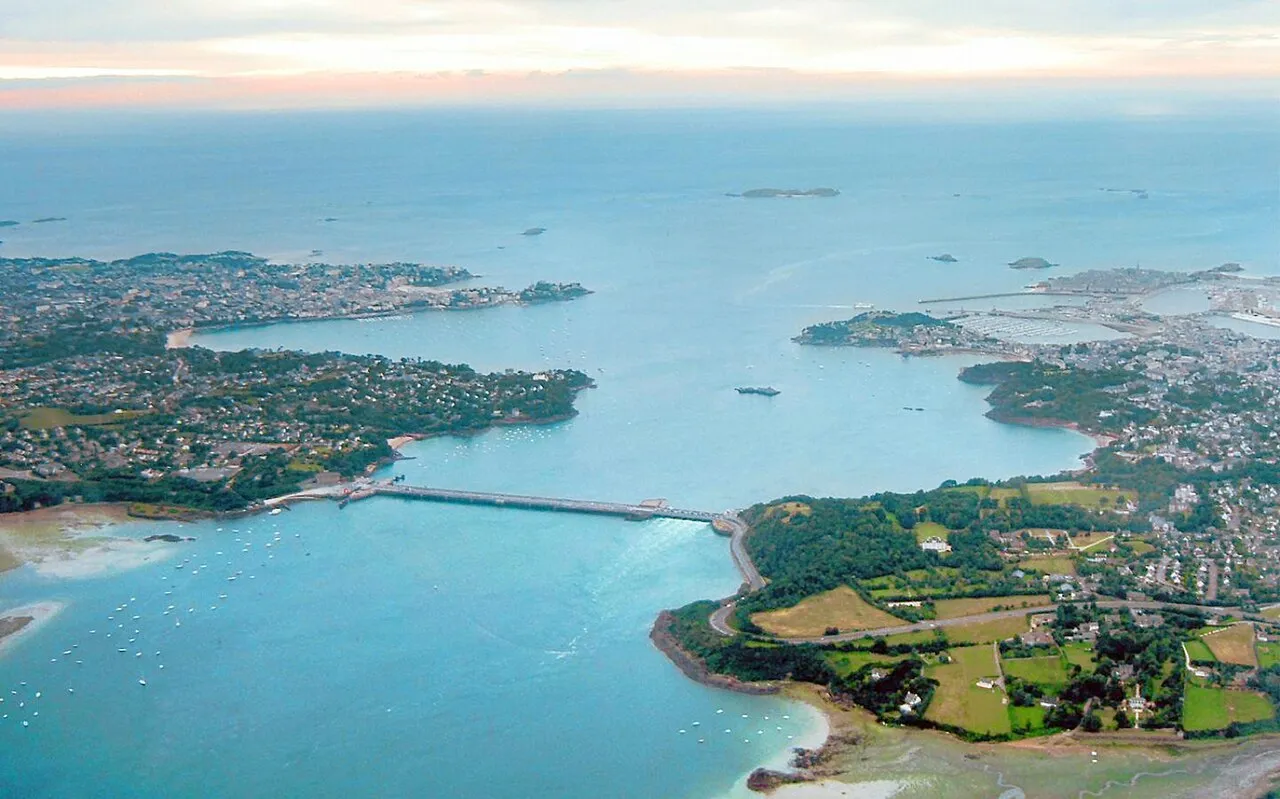

On the way out of Saint-Malo, the road to Dinard runs over a 750-metre barrage thrown across the Rance estuary, beneath which Europe’s biggest tidal range has been spinning turbines since 1966. The Rance tidal power station is a work of engineering as much as a roadside curiosity: the world pioneer of tidal energy, it can be seen on the way between the two shores. And it has changed the tide itself throughout the estuary.
The 1966 gamble
Harnessing the tides is an old Breton dream: tide mills dotted the Rance as far back as the Middle Ages, and the Prat mill still bears witness. But going from mill to power plant demanded an exceptional site: a giant tidal range, a narrow estuary, granite foundations. The Rance offered all three. Opened in 1966 after years of works (the estuary was sealed off by cofferdams during construction), the plant was the world’s first large tidal power station, and remained unrivalled for forty-five years, until South Korea’s Sihwa Lake plant in 2011, which surpasses it only narrowly.
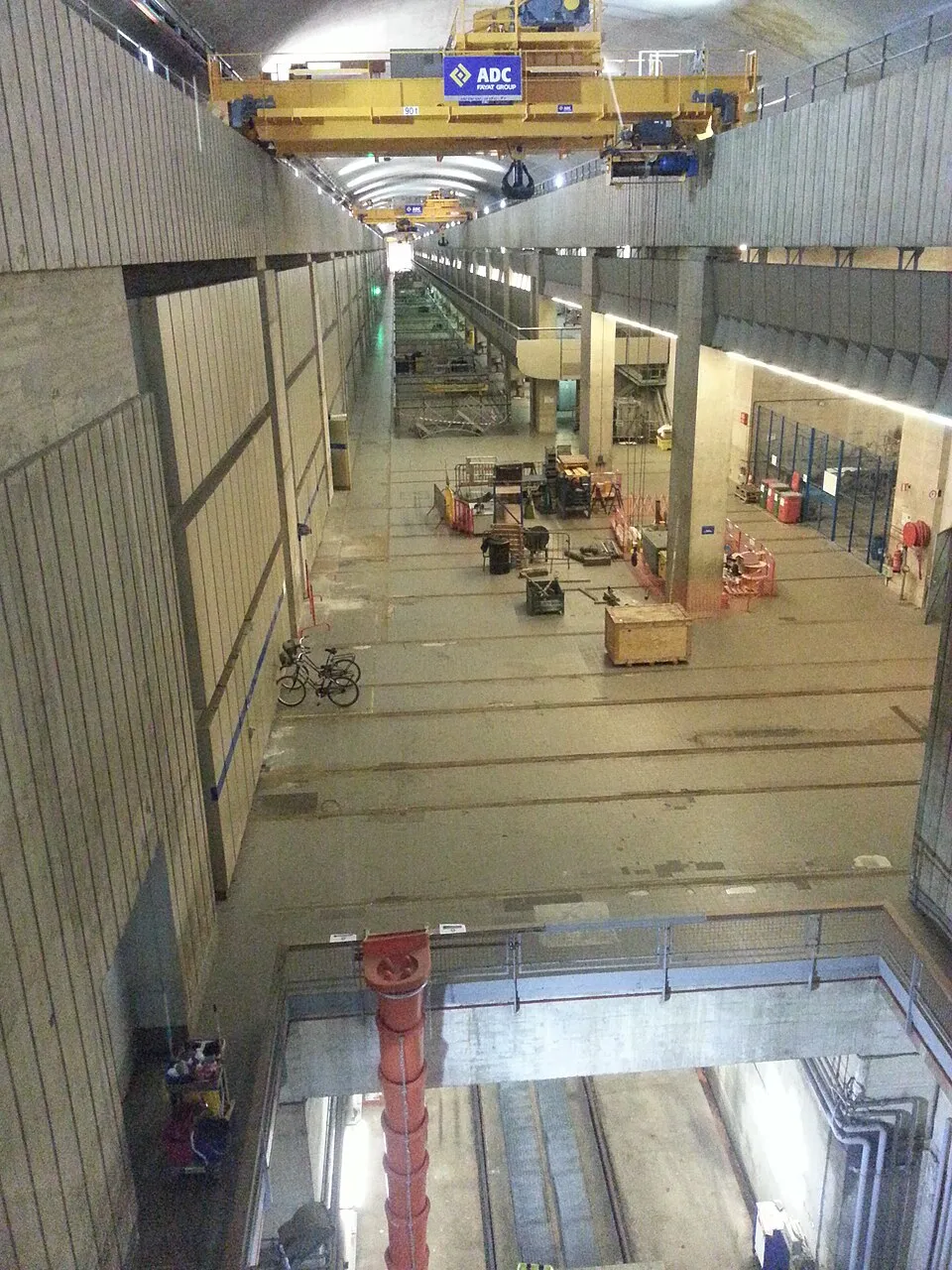
The figures have not aged: 24 bulb turbine units of 10 MW housed in the barrage, 240 MW of capacity (the order of magnitude of a city like Rennes at peak), around 500 GWh generated a year, with no fuel and no emissions, powered by a resource as punctual as astronomy itself.
How the tide becomes current
The principle fits in one sentence: the barrage turns the upstream estuary into a holding basin, and all the water entering or leaving passes through the machines. On the rising tide, the sea fills the basin through the turbines; on the falling tide, the basin drains back seaward through the same, reversible turbines. The bulb units, fully immersed in their ducts, work in both directions, and can even pump to top the basin up cheaply and generate more on the ebb. Gates complete the arrangement, and a lock at the western end lets boats pass between the sea and the Rance.
Operating it is a permanent chess game against the tide tables: each cycle is planned to generate when the head, the difference in level between sea and basin, is at its best. The tide supplies the energy; the engineer picks the moment.
What the barrage changed in the estuary
You do not tame Europe’s biggest tidal range without consequences. Upstream of the structure, as far as the Châtelier lock, the Rance now lives to the rhythm of the plant’s operation more than to the moon’s: reduced range, shifted times, managed levels. For the visitor the consequence is very concrete: the slipways and flats of Saint-Suliac, Mordreuc or La Landriais uncover at different hours than the open sea, and the standard tide tables do not apply there. The estuary’s sedimentation, altered by the structure, is meanwhile the object of long-term management programmes. That is the debated price of sixty years of carbon-free electricity.
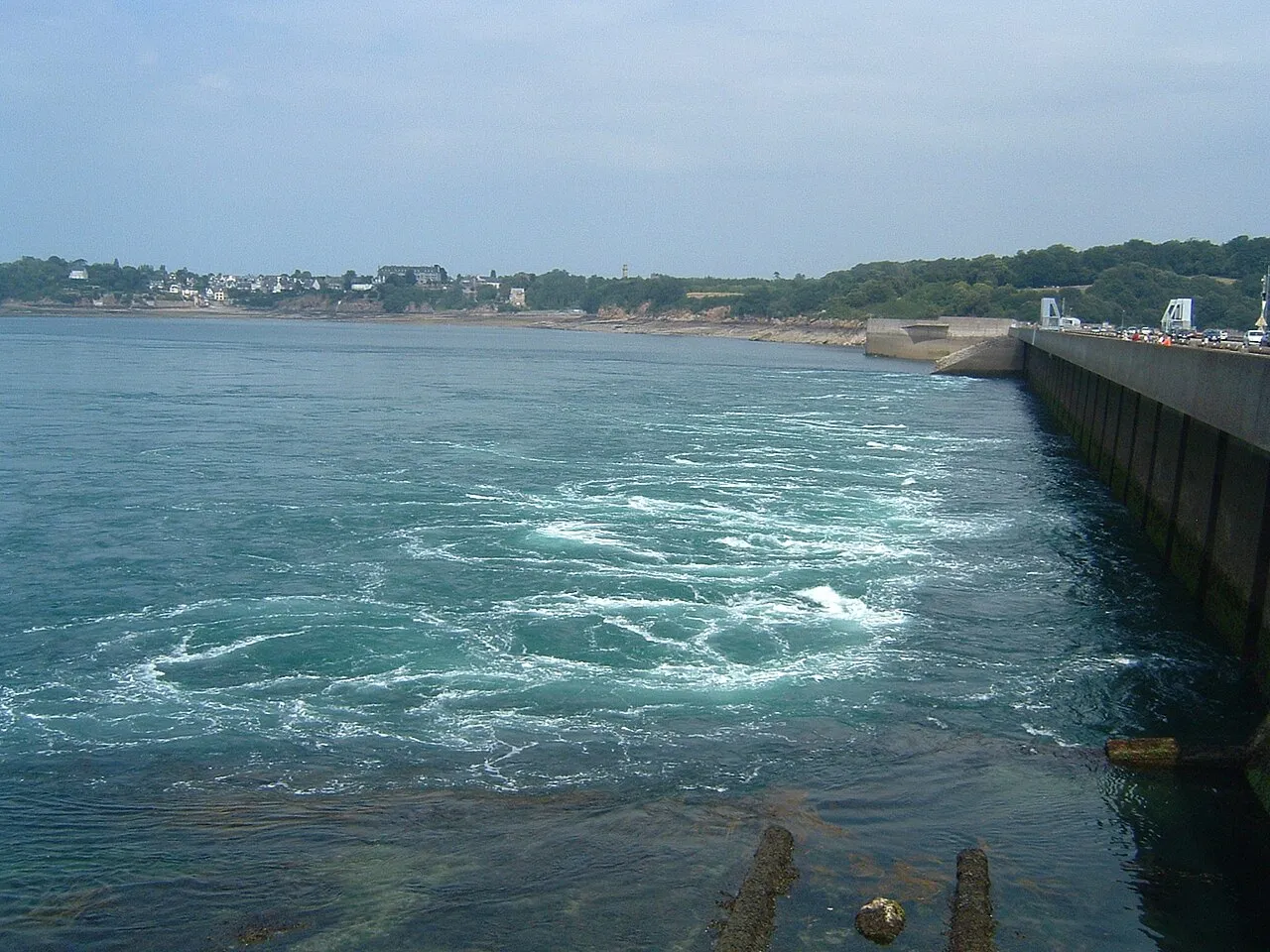
In the barrage’s immediate surroundings, caution is non-negotiable: the currents at the turbine and gate intakes are violent, and the zones close to the structure are closed to boats and swimmers. The spot’s safety entry is on our map. And on the sea as on the Rance, the day’s tide times are always checked against the official SHOM sources.
Seeing the plant: the barrage, the views, the discovery centre
The simplest part is freely accessible: crossing the barrage on the Saint-Malo–Dinard road, with its pedestrian and cycle way, gives the plunging view over the estuary on the basin side, the ballet of the lock and, on a big coefficient, the striking contrast between the two water levels. The viewpoints on either shore give the wide shot of the structure: the Briantais headland on the Saint-Malo side, La Richardais on the Dinard side. EDF’s discovery centre, housed in the plant, tells the story of the construction and the machinery. Its opening periods and hours vary: check current conditions before planning the visit. The whole combines naturally with a day in the Rance valley, from Saint-Suliac to Dinan.
Written and kept up to date by a Saint-Malo local in love with this coast. The story behind this guide


Check the official tide times on maree.shom.fr ↗
Can you visit the Rance tidal power station?
The barrage itself can be crossed freely all year round: the Saint-Malo–Dinard road runs over it, with a walkway for pedestrians and cyclists and a plunging view over the estuary and the turbines on the basin side. EDF's discovery centre, for its part, opens on varying periods and hours: check current conditions before coming.
How does a tidal power station work?
The barrage turns the upstream estuary into a holding basin. On the rising tide, the sea fills the basin; on the falling tide, the water flows back out to sea. In both directions it passes through 'bulb' turbines that generate electricity. Gates and a lock complete the structure, and the units can also pump to optimise the head of water.
Is it the biggest tidal power station in the world?
It was, for forty-five years: the world's first large tidal power station at its opening in 1966, rated 240 MW, it was only overtaken in 2011, and narrowly, by South Korea's Sihwa Lake plant. It remains the world's oldest in operation and France's first, producing around 500 GWh a year.
Is the tide normal upstream of the barrage?
No: between the barrage and the Châtelier lock, the Rance's levels follow EDF's operating cycles rather than the tide tables. The range is reduced and the times shifted: the estuary's slipways and flats uncover at different hours than the open sea. Take care near the structure: the currents around the turbines and gates are violent, and the nearby zones are closed to boats and swimmers.