The Chausey Islands from Saint-Malo: boat trips, tides and island rules
Updated on 28 September 2026
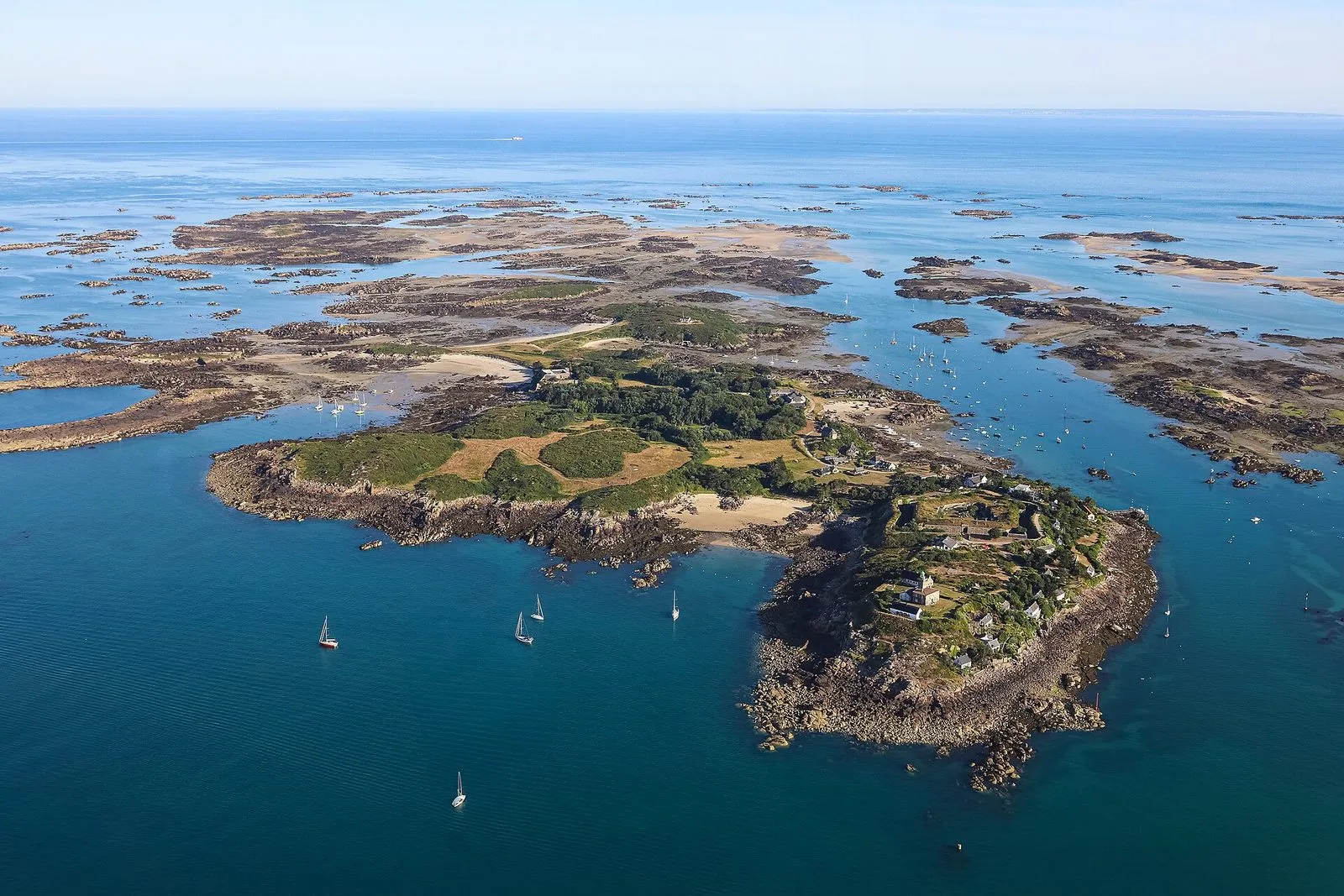

On a clear day, from the Pointe du Grouin, you can make out a low line of rocks on the north-eastern horizon. Those are the Chausey Islands, a Normandy archipelago that belongs to the town of Granville and sits 16 or 17 kilometres off the Manche coast. There is little in the way of sights. People come to watch the tide reshape an entire landscape within a few hours.
An archipelago that changes size twice a day
Locals repeat it and the boat operators print it: Chausey is said to have 365 islets at low tide and 52 at high tide, one for every day and every week of the year. The Conservatoire du littoral, the public body that protects the site, describes these numbers as what they are, a legend told to visitors. Granville’s tourist office puts it more cautiously at “around fifty” islets at high water.
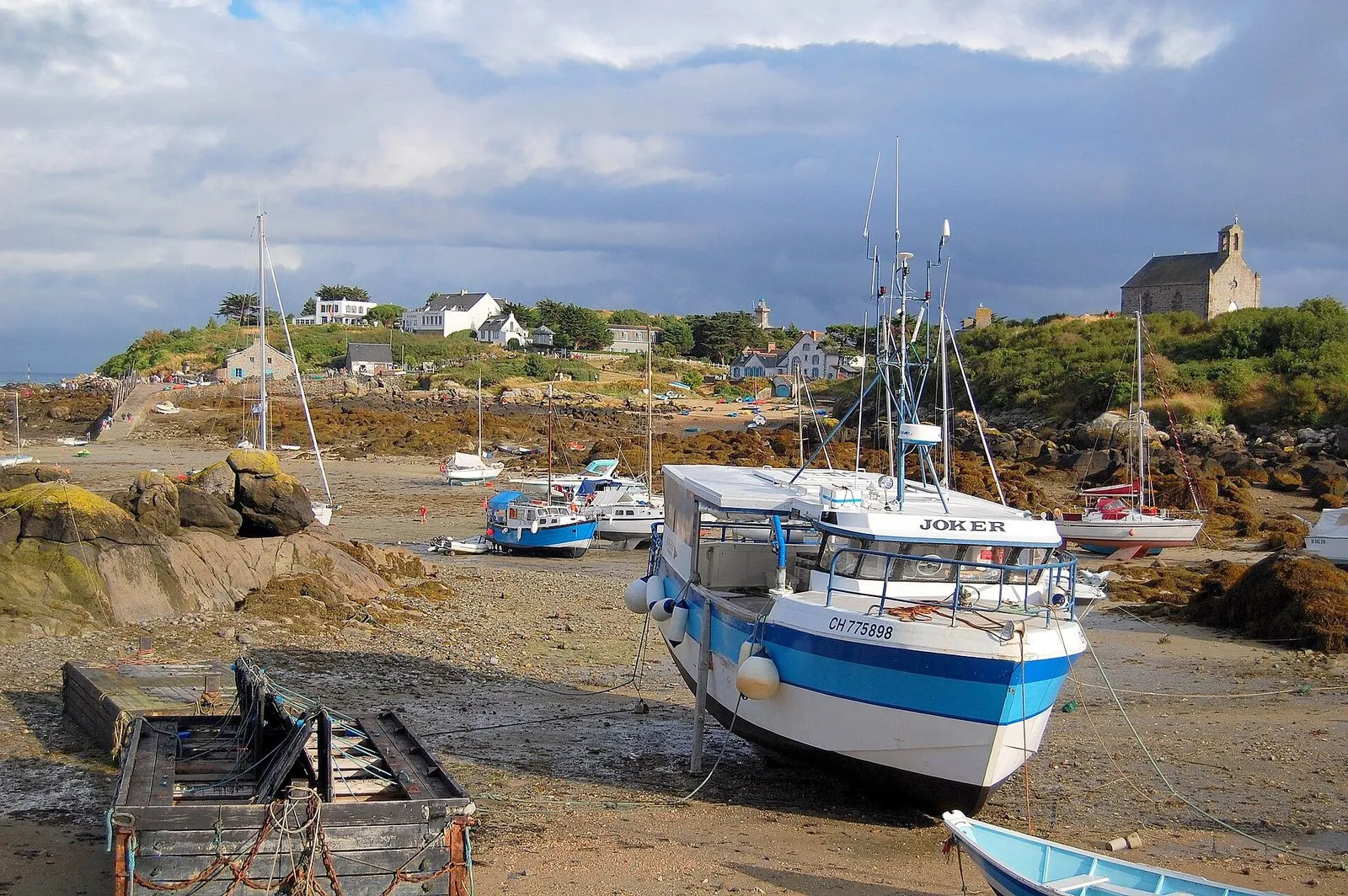
The measured figures are striking enough. The tidal range here can exceed 14 metres, among the largest in Europe. At low water nearly 3,000 hectares of foreshore appear: mudflats, sandbanks, channels and fields of weed-covered rock. At high water only 65 hectares of dry land remain, 45 of them on Grande-Île alone. Within six hours, a scatter of small islands turns into a plain of sand and granite where you can step from one rock to the next.
The tide is so strong here for the same reason as in Saint-Malo: the Normandy-Brittany gulf funnels and amplifies the tidal wave. Our page on understanding the tides explains how it works.
Grande-Île, the only inhabited island
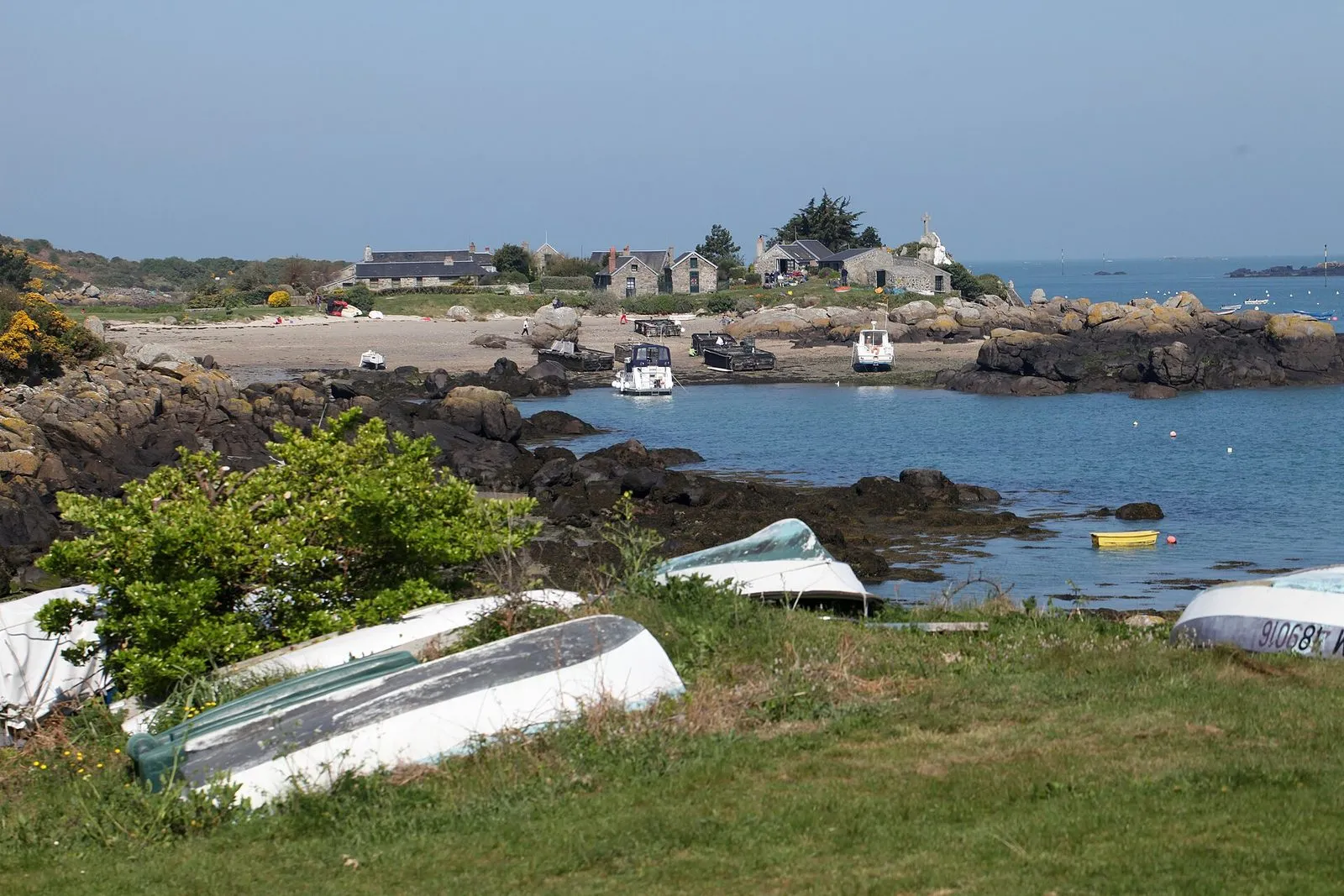
Boats land at Grande-Île, on the slipway built in 1862 at the same time as the fort. The coastal path loops round the island in under two hours, a 5.5 km walk according to Granville’s tourist office. Along the way you pass the lighthouse and fort on the Pointe de la Tour, Port-Marie beach (lifeguarded in summer), the Grande Grève, which is the largest beach in the archipelago and where shellfishers head out onto the flats, and finally the Blainvillais hamlet. It takes its name from people of Blainville-sur-Mer who came to burn kelp for soda ash, which was sold to the soap makers of Rouen.
There are no cars. The island has a hotel, a restaurant, a grocery and a gift shop. Most of the land belongs to the SCI des Îles Chausey, a private company; the Conservatoire du littoral owns 6 hectares and the town of Granville the Pointe de la Tour. On the private land, marked by a white fence, keep to the path.
Chausey granite, right up to the walls of Saint-Malo
The islands are made of a granite (geologists call it granodiorite) that was quarried for eight centuries. Heavy, hard-wearing and cut right at the water’s edge, it was easy to ship. It went into the abbey of Mont-Saint-Michel from the 11th century onwards, the quays of Granville, Dieppe and London, and the pavements of Haussmann’s Paris. In the 19th century, some 500 quarrymen lived on the islands.
The link with Saint-Malo is a direct one. Chausey stone was used to rebuild the walled town after it was destroyed in 1944, and parts of the harbour works are made of it too. Walking the ramparts, you are partly walking on Chausey granite.
Getting to Chausey from Saint-Malo
By boat from Saint-Malo or Dinard. Compagnie Corsaire, whose ticket office is at the Gare Maritime de la Bourse, runs direct crossings to Grande-Île from both Saint-Malo and Dinard. Allow about 70 minutes at sea. According to the company, there are several sailings a week from April to June and in September and October, and daily sailings from mid-July to the end of August, going out in the morning and returning late in the afternoon. The timetable changes every year and depends on sea conditions, so check dates and fares on compagniecorsaire.com. Booking is strongly advised. The company notes that it cannot take wheelchair users to Chausey, as neither the landing nor the paths are suitable.
From Granville. Outside the Saint-Malo dates, the regular service leaves from Granville’s ferry terminal with the Jolie France boats, and the crossing takes under an hour. You can also sail over on one of Granville’s traditional wooden boats. The Conservatoire du littoral warns that the tide decides what time you arrive on Grande-Île.
For other boat trips from beneath the ramparts (the bay of Saint-Malo, Cézembre, Cap Fréhel), this selection of boat tours adds to what the local companies offer.
Birds, seals and seagrass: the rules on the islands
Chausey is part of the Natura 2000 network. The Conservatoire du littoral is also responsible for 5,000 hectares of the surrounding sea area, managed on its behalf by SyMEL, the Manche coastal sites authority. Two coastal wardens are assigned to the archipelago.
More than 200 bird species use the islands. Oystercatchers here make up over 15% of the French population, and Chausey is the only place in France where the red-breasted merganser breeds. To avoid disturbing nests, the islets are open to visitors only from 15 July to 30 September. Bottlenose dolphins are often seen on the crossing, grey seals haul out on the rocks, and the seabed holds beds of eelgrass, a protected flowering plant that shelters young fish and shellfish. Try not to trample it at low tide.
Chausey on a spring tide
On high-coefficient days the archipelago reaches its full extent. The channels drain, the islets join up through sandbanks, and the Grande Grève becomes the gateway to a vast expanse of foreshore. This is also where shellfishers gather, after clams, praires and prawns. Wardens check catches as passengers step off the boats: the Manche rules set minimum sizes, daily limits and permitted tools, and some species have fishing seasons specific to Chausey. Check before you go with Granville’s tourist office or the state services for the Manche. Our general advice is on the shellfish foraging page.
The Chausey flats cover quickly, and the channels fill before the sandbanks beside them. Check the official SHOM tide times before any outing (maree.shom.fr), note the time of low water and start heading back by then at the latest, and never cross a channel on a rising tide. Keep the time of your return boat in mind as well. Our low tide page covers the habits worth keeping on the foreshore.
Planning your day
A day on Chausey from Saint-Malo fills the whole stretch between the morning departure and the evening return. Bring water, a picnic or a restaurant booking, shoes that cope with sand and rock, and protection from sun and wind. If you want to see both high and low water from the island itself, the hotel on Grande-Île makes an overnight stay possible, and Compagnie Corsaire offers a separate return fare when you travel out and back on different days. Take a bag for your rubbish: the archipelago is a protected site and the boat company asks visitors to leave it clean. Granville’s tourist office recommends spring and autumn for the best conditions on the islands. To plan the rest of your stay, see our guide to trips around Saint-Malo.
Written and kept up to date by a Saint-Malo local in love with this coast. The story behind this guide


Check the official tide times on maree.shom.fr ↗
Frequently asked questions
Is there a boat to Chausey from Saint-Malo?
Yes. Compagnie Corsaire runs crossings to Grande-Île from Saint-Malo and Dinard, taking about 70 minutes. Sailings run on selected dates in spring and autumn and more often in summer. The timetable and fares are published on compagniecorsaire.com.
How many islands are there in the Chausey archipelago?
Local tradition says 365 islets at low tide and 52 at high tide, one for each day and each week of the year. The Conservatoire du littoral itself calls these figures a legend told to visitors. The measured figures are just as striking: low water uncovers nearly 3,000 hectares of foreshore, against 65 hectares of land that never goes under.
Do I need a passport to visit Chausey?
No. Chausey is part of the town of Granville in the Manche department, so it is French territory and the crossing involves no border. Do not confuse it with Jersey or Guernsey, which do require travel documents.
Can you walk on the Chausey islets?
Not all year. To protect nesting seabirds, the islets are open only from 15 July to 30 September, according to the Conservatoire du littoral. On Grande-Île, most of the land is private property of the SCI des Îles Chausey, and visitors are asked to stay on the coastal path.
Can you go shellfishing on Chausey?
Yes, it is one of the busiest shellfishing grounds in the Manche, especially on big spring tides. The Manche rules apply (minimum sizes, daily limits, permitted tools), and SyMEL wardens check catches. Check the official SHOM tide times before any outing on the foreshore.