St Malo ferry terminal: arriving from Portsmouth and sailing to the Channel Islands
Updated on 28 September 2026
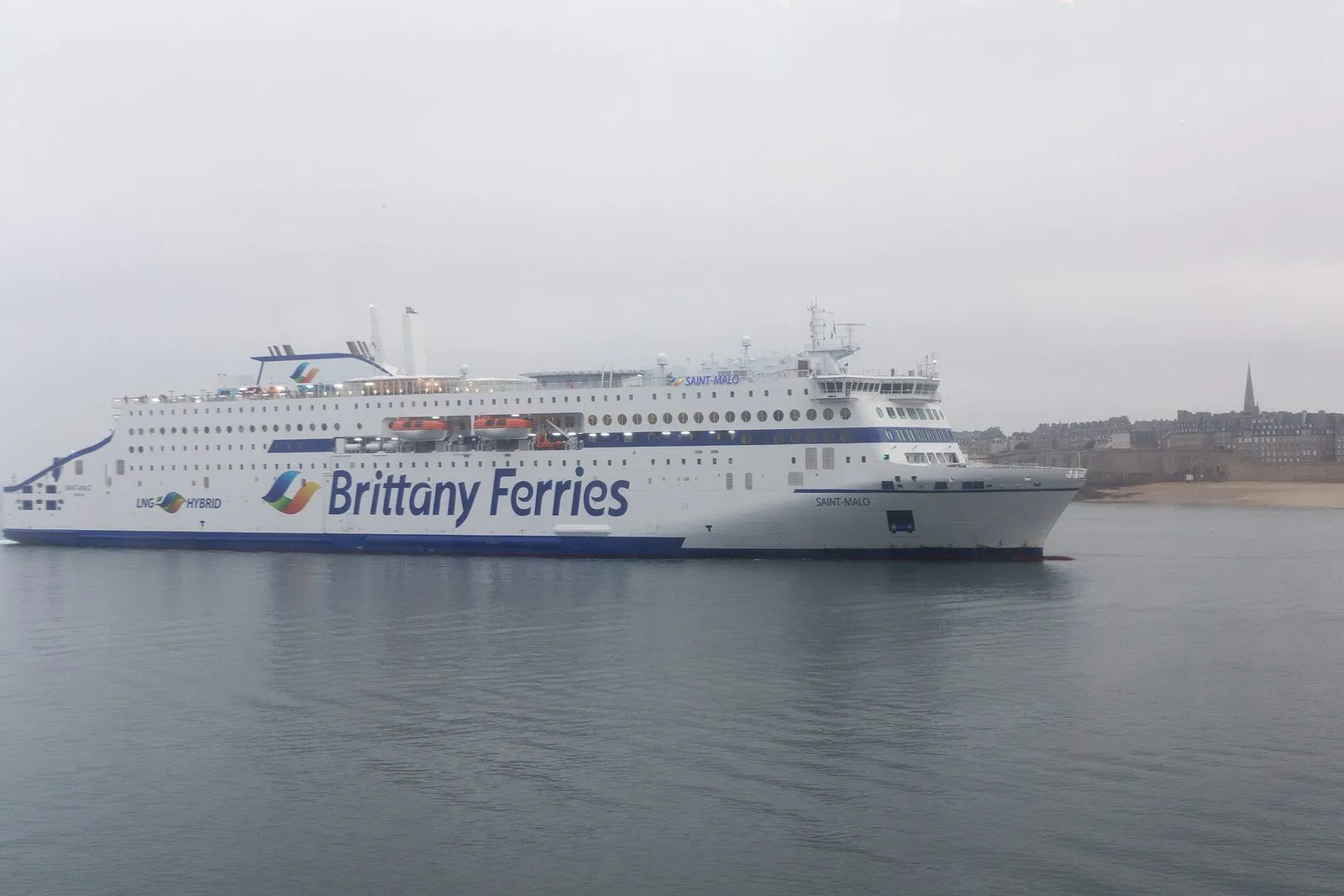

Few ferry ports put you ashore this close to a walled city. Most mornings the overnight boat from Portsmouth slides past the Grand Bé, runs along the ramparts and ties up a few hundred metres from the old town. This page covers which terminal you need, how to walk into Intra-Muros, where to leave the car before sailing, and how to spend a first morning that, like everything in St Malo, depends on the tide.
Two terminals, two jobs
St Malo has two passenger buildings, and people mix them up all the time.
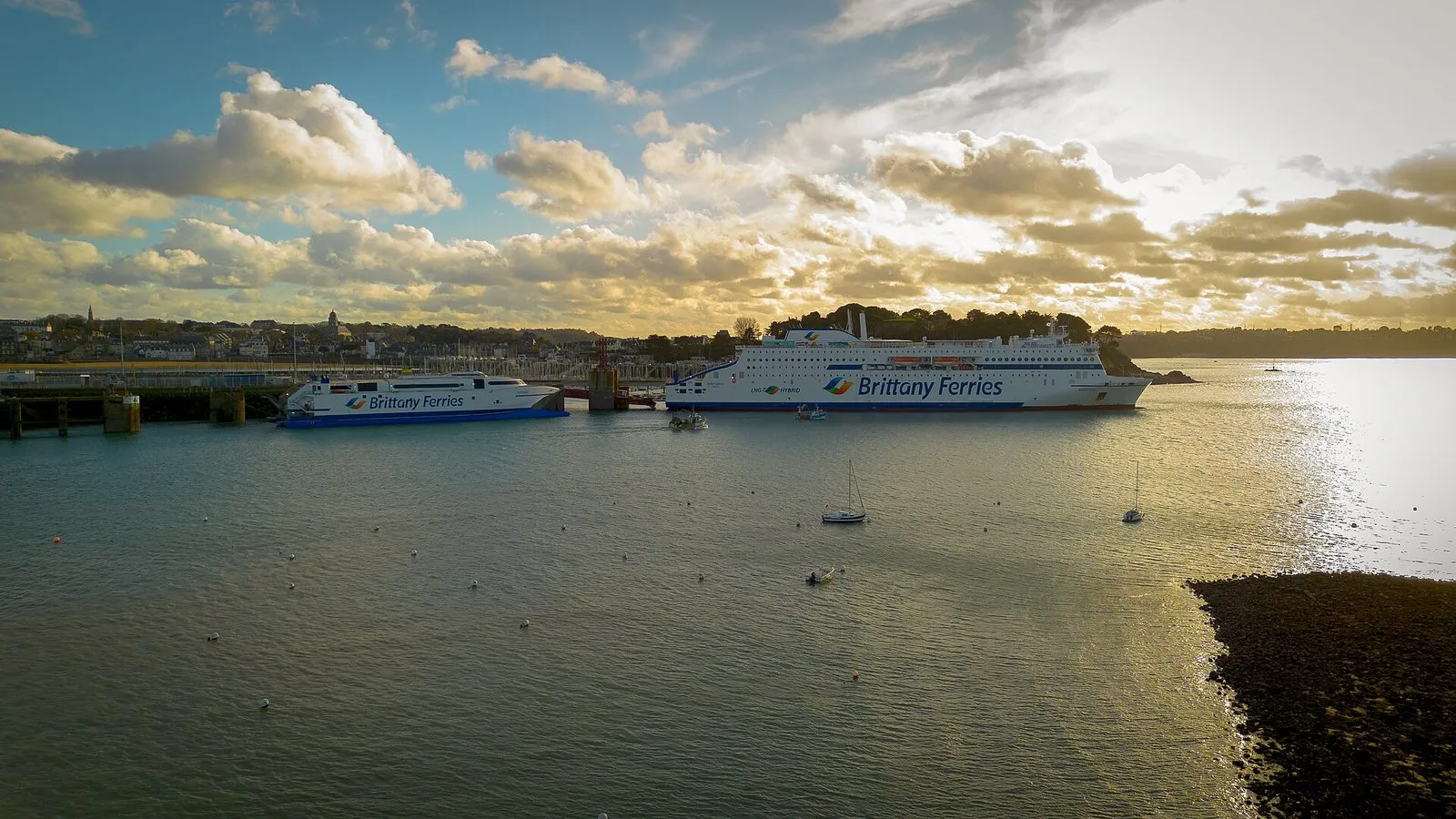
The Naye ferry terminal (Terminal ferry du Naye), on the Terre-Plein du Naye, handles cross-Channel traffic. This is where Brittany Ferries sails to and from Portsmouth, and where the boats for Jersey and Guernsey come and go. Since Brittany Ferries took over Condor Ferries in 2025, Channel Islands sailings are run by Brittany Ferries and by DFDS, depending on the route and the season. Schedules change from year to year, so check each operator’s own site.
The Gare maritime de la Bourse, below the ramparts on the Cale de la Bourse, is for sea excursions (Chausey, Cap Fréhel, the Rance, the bay of Cancale) and cruise ship calls. It closed in November 2024 for work on its steel roof structure and, according to the port authority, was due to reopen in mid-March 2026. If you are booked on a boat trip, confirm the boarding point with the company.
For a day trip to Jersey, everything is on our Jersey ferry page.
A terminal under reconstruction until 2027
The Brittany Region, which owns the port, is spending around 150 million euros between 2025 and 2031 to modernise the Naye terminal. The plan includes a new terminal building, due to open at the end of summer 2027, a new car park and dredging of the outer harbour. A temporary car park has been in use since late October 2025.
In practice, Brittany Ferries warns that the works temporarily affect access to the terminal and parking, and advises allowing extra time. Progress updates (in French) are posted on ports.bretagne.bzh.
Walking from the terminal to the old town
On a map the terminal looks further out than it is. Leave the Terre-Plein du Naye, follow the Chaussée Éric Tabarly and then the Quai de la Bourse to the Porte Saint-Louis gate: 700 to 900 metres depending on where you start, about ten flat minutes on foot. The Porte Saint-Vincent, the main gate by the tourist office, is 1.1 to 1.3 kilometres away along the quays.
Brittany Ferries quotes roughly ten minutes’ walk to the town centre and twenty-five to the railway station, which is about two kilometres from the terminal. There is a café and wifi in the building but no cash machine or bureau de change, so plan to get euros in town.
A big suitcase is manageable on the quays, less so on the cobbles inside the walls. If you are staying in the walled city, our guide to staying in Intra-Muros helps you pick somewhere within easy reach of the port.
Parking before you sail
The terminal has an unattended pay car park with a height limit, and Brittany Ferries lets passengers on very early sailings park overnight in the check-in lanes. With the works under way, spaces and access routes can change from one season to the next. We don’t publish prices: check the St Malo port page on your operator’s website just before you travel.
If you are spending a few days in town first, our page on parking in Saint-Malo covers park-and-ride and the days to avoid. Check-in deadlines depend on the operator, your vehicle and whether you travel with a pet; they are shown on your booking.
Your first morning: ramparts, breakfast, low tide
The overnight sailing from Portsmouth docks in the morning, which Brittany Ferries sells as a chance to “enjoy breakfast in France”. That leaves a whole morning before you drive on or check in to a hotel.
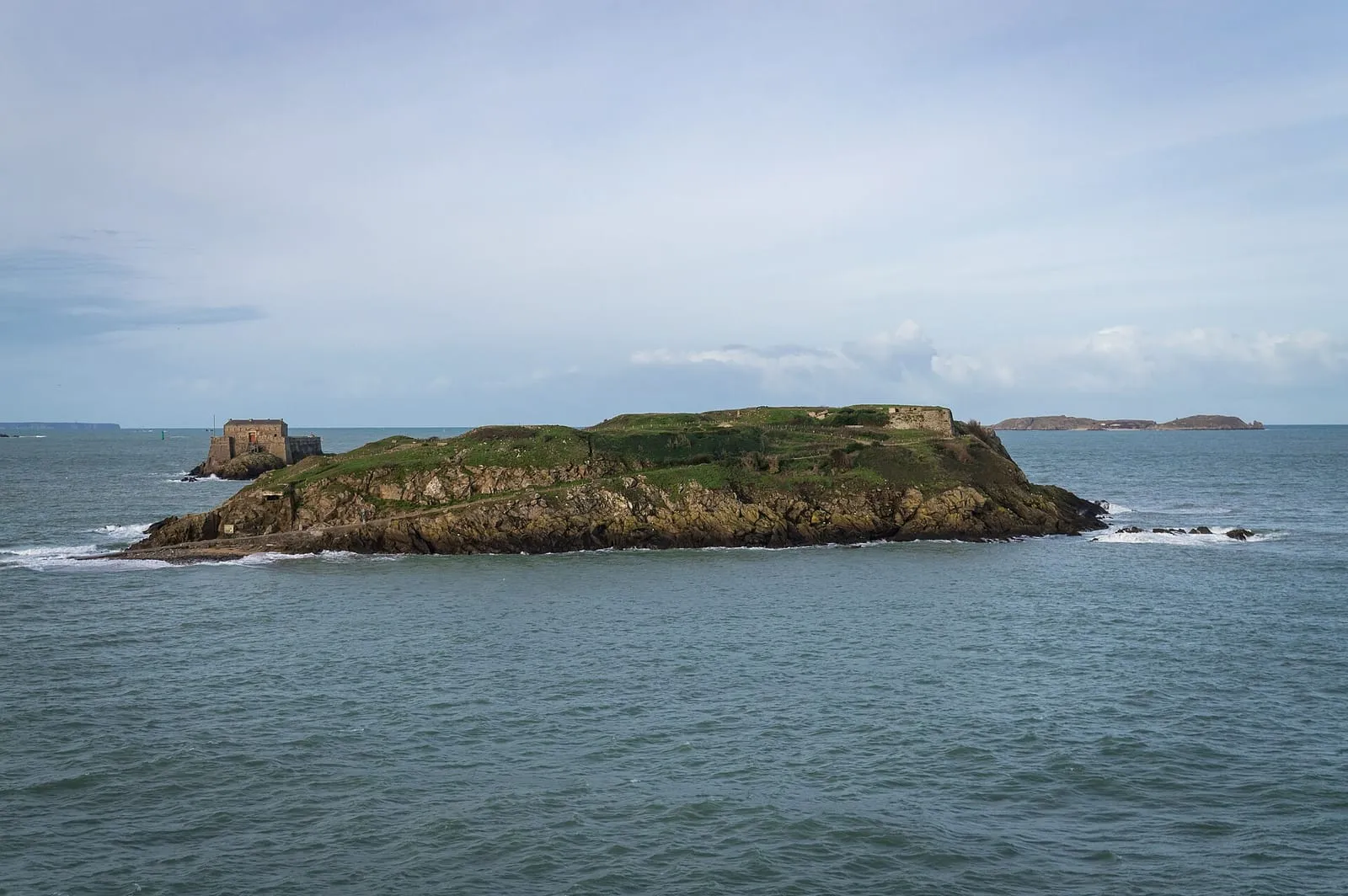
The easy plan: walk to the Porte Saint-Louis, find a table in one of the streets of Intra-Muros for coffee and a croissant, then climb up to the ramparts. The walk along the walls is free and open day and night; the full loop is about two kilometres and takes a good hour. From the seaward bastions you look back at the harbour you have just sailed into, with the Fort National, the Grand Bé and Dinard across the water.
If you would rather have a guide inside the walls, walking tours are available: https://www.getyourguide.com/en-us/saint-malo-l35279/walking-tours-tc3/
If low tide falls during the morning, you can walk out to the Grand Bé from Bon-Secours beach. The causeway is open for a few hours around low water and the rising tide covers it again. Check the official SHOM tide times before any outing on the foreshore, and read our page on the Grand Bé and the tidal islands for the rules on getting back.
If you are staying on, our two days in Saint-Malo itinerary picks up from there.
Ferries, the port and the tide
In St Malo even the ferry works around the tide. The Naye terminal is in the outer harbour, which is tidal and lies outside the enclosed docks. The ferries do not use the Naye lock: the lock serves the inner basins (Vauban, Duguay-Trouin, Bouvet and Jacques-Cartier), which handle freight, ship repair, fishing and pleasure boats, and it operates from two hours before to two hours after high water.
The tide still shapes the crossing. The range here can reach 13.60 metres, among the largest in Europe, and Brittany Ferries says Portsmouth departure and arrival times can shift by up to an hour because of the tide. The dredging that began in March 2025 is meant to guarantee a minimum depth in the turning area at the lowest tides, so the biggest ferries are not disrupted during spring tides. Check your exact sailing time with the operator the day before.
On a spring tide the view on arrival changes too. At low water, uncovered islets and reefs stretch almost to the ramparts; at high water the sea runs right up to the walls. In rough weather, waves breaking over the Sillon sea wall should be watched from a safe distance, behind shelter, never from the edge of the promenade.
For every other way of getting here (train, road, air), see getting to Saint-Malo.
Written and kept up to date by a Saint-Malo local in love with this coast. The story behind this guide


.jpg)

Check the official tide times on maree.shom.fr ↗
Frequently asked questions
Where does the Portsmouth ferry leave from in St Malo?
From the Naye ferry terminal (Terminal ferry du Naye), on the Terre-Plein du Naye just south of the walled city. It handles all cross-Channel traffic: Brittany Ferries to Portsmouth and the sailings to Jersey and Guernsey. The Gare maritime de la Bourse, closer to the ramparts, is used for sea excursions and cruise calls.
Can you walk from the St Malo ferry terminal to the old town?
Yes. Along the Chaussée Éric Tabarly and the Quai de la Bourse, the Porte Saint-Louis gate is 700 to 900 metres away, roughly ten minutes on foot. Brittany Ferries gives about ten minutes to the town centre and twenty-five to the railway station. Footpaths may be diverted while the terminal is being rebuilt.
Where do you park before a ferry from St Malo?
There is a pay car park at the terminal, plus a temporary car park opened in late 2025 during the redevelopment. The ferry companies ask passengers to allow extra time, as the works affect access and parking. Check current prices and conditions on your operator's website before you travel.
Why does the Portsmouth ferry arrive at different times?
Brittany Ferries states that departure and arrival times can vary by up to an hour because of the tide. The Naye terminal sits in the outer harbour, which is fully tidal, and St Malo has one of the largest tidal ranges in Europe. Check your sailing time with the operator the day before.
What can you do in St Malo straight off the ferry?
Walk into the walled city, have breakfast there, then do the circuit of the ramparts, which are free and open day and night. If low tide falls in the morning, you can walk out to the Grand Bé island: check the official SHOM tide times before heading out.