The Bon-Secours pool: the swim that doesn't depend on the tide
Updated on 31 July 2026
,_swimming_pool_on_beach.JPG)
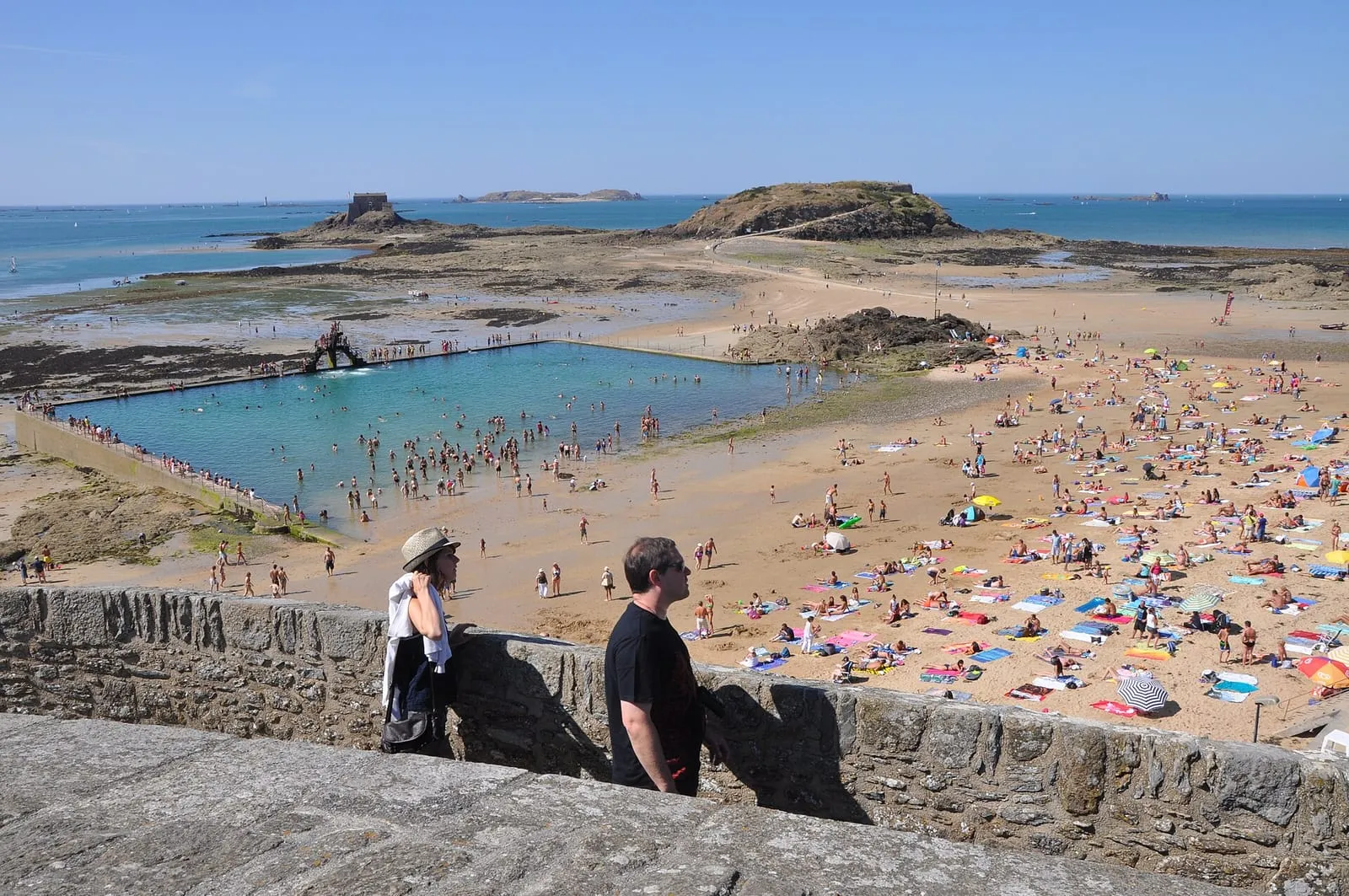
On a coast where the sea walks out hundreds of metres twice a day, the people of Saint-Malo found the answer back in the 1930s: a granite basin set on the beach, which every high tide fills and renews before withdrawing. The Bon-Secours pool gives you a swim that does not depend on the hour of the tide, on a coast with Europe’s biggest tidal range; its three-tier diving platform turns up in a great many photographs of Saint-Malo.
A tide put to work
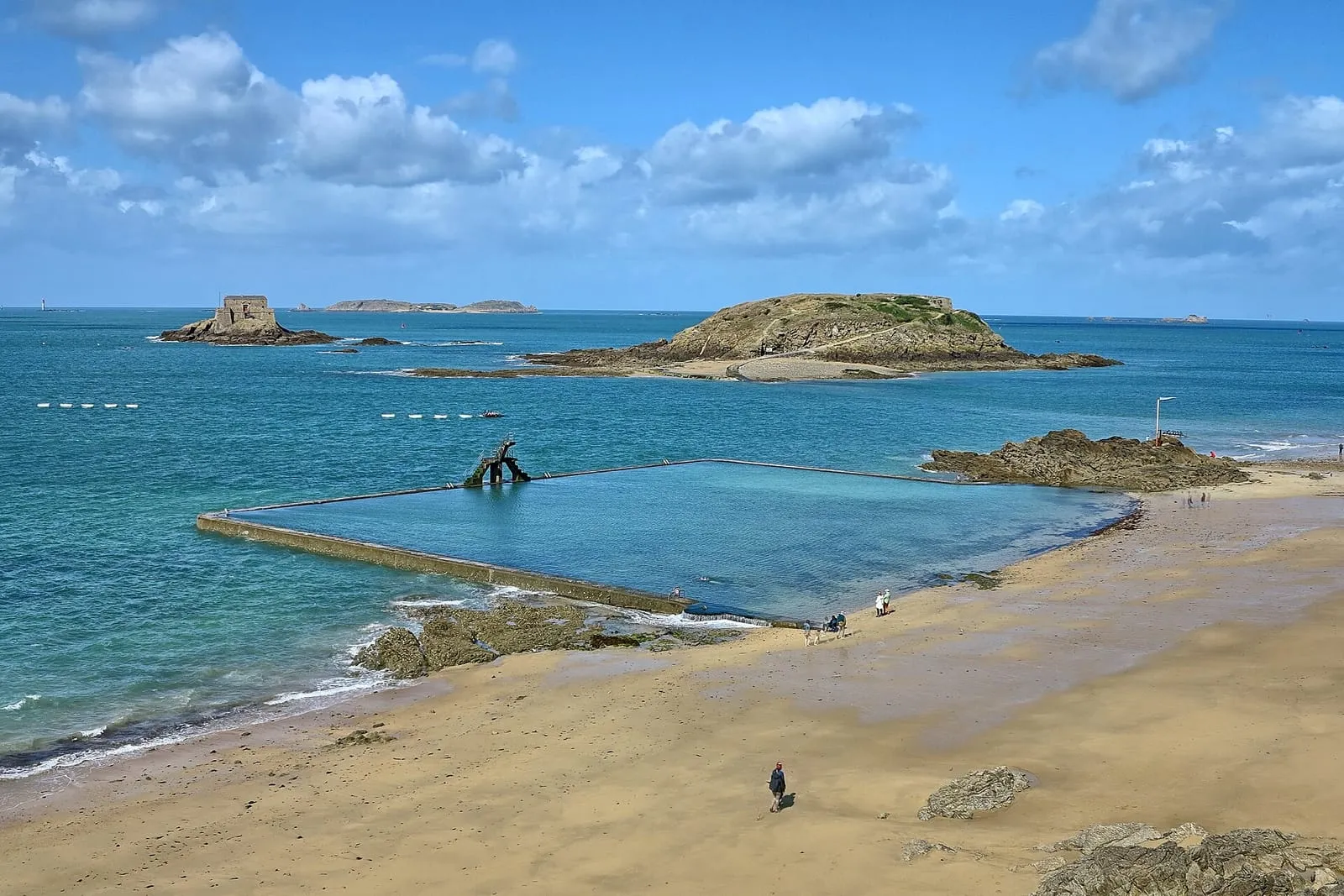
The principle fits in one sentence: at every high water, the sea comes over the rim and leaves a full basin behind. No pump, no filtration: the tide does everything, twice a day, for nearly a century now. When low water has made the beach immense and pushed the sea to the horizon, the pool is still there, full and deep, the only serious swim on this side of the ramparts. It is the same principle as the locks and the tide mills, which put the tidal range to work rather than fight it.
The diving platform has a place of its own: three concrete tiers from which generations of Malouins have jumped, the rite of passage of summers on this coast, with the Grand Bé behind.
The swim, a user’s guide
At low tide, everything comes together: deep water, platform in service, and Bon-Secours beach all around for the towels. On the rising tide, the sea returns, surrounds the basin, then submerges it: you then swim literally above the pool, a strange and very Saint-Malo sensation. Around high water the rim disappears: keep clear of it whenever swell is working, and find the basin again on the ebb, freshly refilled.
Two practical points: access is free, like the beach; and the basin is not permanently supervised. The bottom, slippery with seaweed near the steps, deserves a little care, and children a constant eye. In season, mind the flags of the beach first-aid post; in any season, the tide’s hour is checked against the official SHOM times.
Around the basin
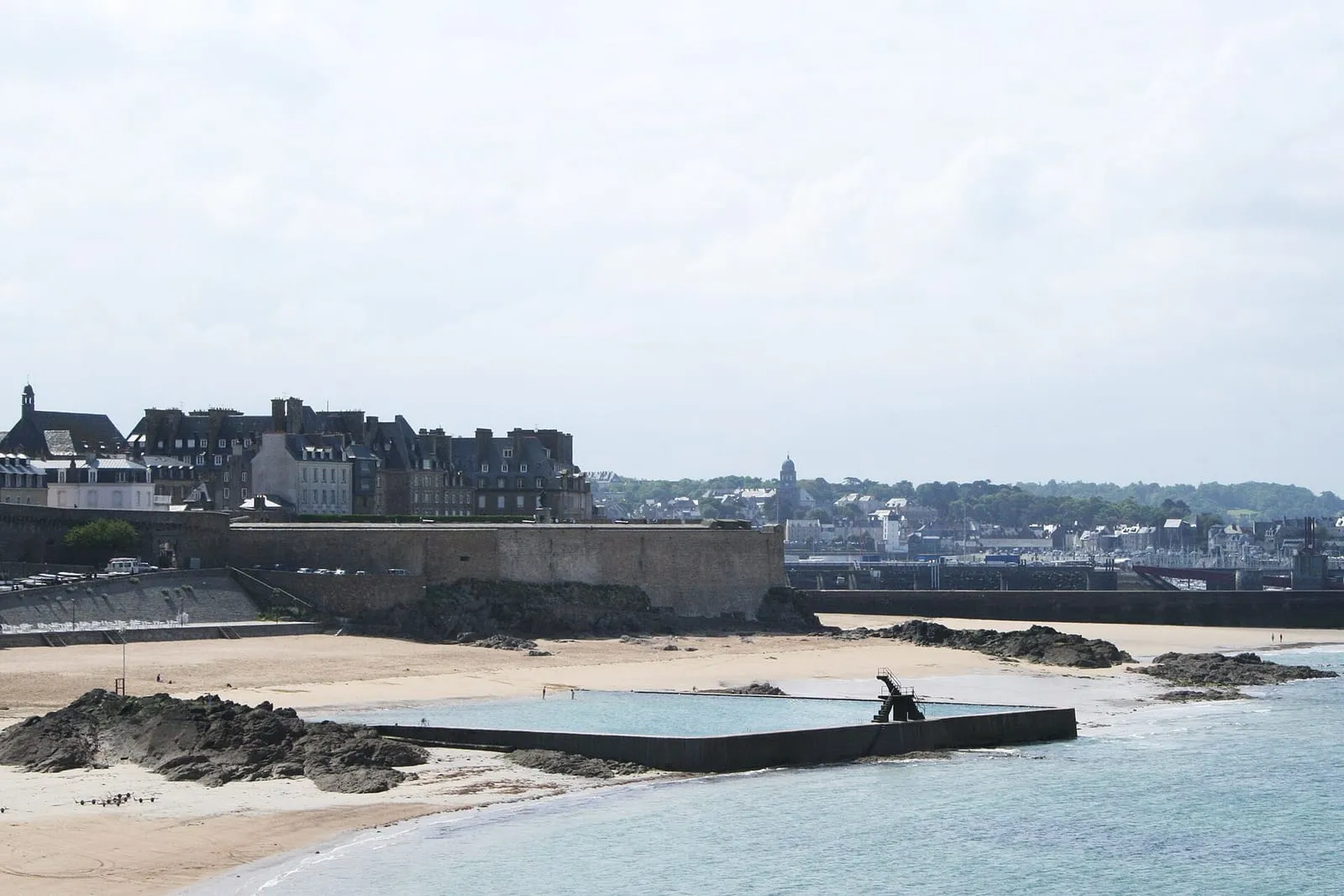
Bon-Secours is a tidal crossroads: the Grand Bé causeway leaves from the same beach at low tide, the ramparts overlook the basin and give the best vantage point on the divers; the sun sets exactly on its axis, behind the islets. The classic programme for a summer evening: a swim in the pool, the Grand Bé loop if the tide window allows, sunset from the wall walk. The spot’s entry and exact position are on the interactive map.
Written and kept up to date by a Saint-Malo local in love with this coast. The story behind this guide


Check the official tide times on maree.shom.fr ↗
Is the Bon-Secours pool free to use?
Yes: the basin is freely accessible, at the foot of the ramparts, like the beach around it. It is not permanently supervised. You swim at your own risk, keep a constant eye on children, and mind the beach flags in season.
How does the pool fill up?
By the tide itself: at every high water the sea comes over the rim, renews the water and withdraws leaving the basin full. When the sea is hundreds of metres out at low tide, the pool keeps its water and its depth.
When is the best time to swim there?
Low tide, precisely: that is when the pool matters most, the only deep-water swim once the sea has gone, and the diving platform is in full use. Around high water the basin disappears beneath the rising sea: you then swim 'above' the pool, and you keep clear of the rim whenever swell is working.