Cap Fréhel: pink sandstone cliffs, lighthouses and moorland
Updated on 31 July 2026
.jpg)
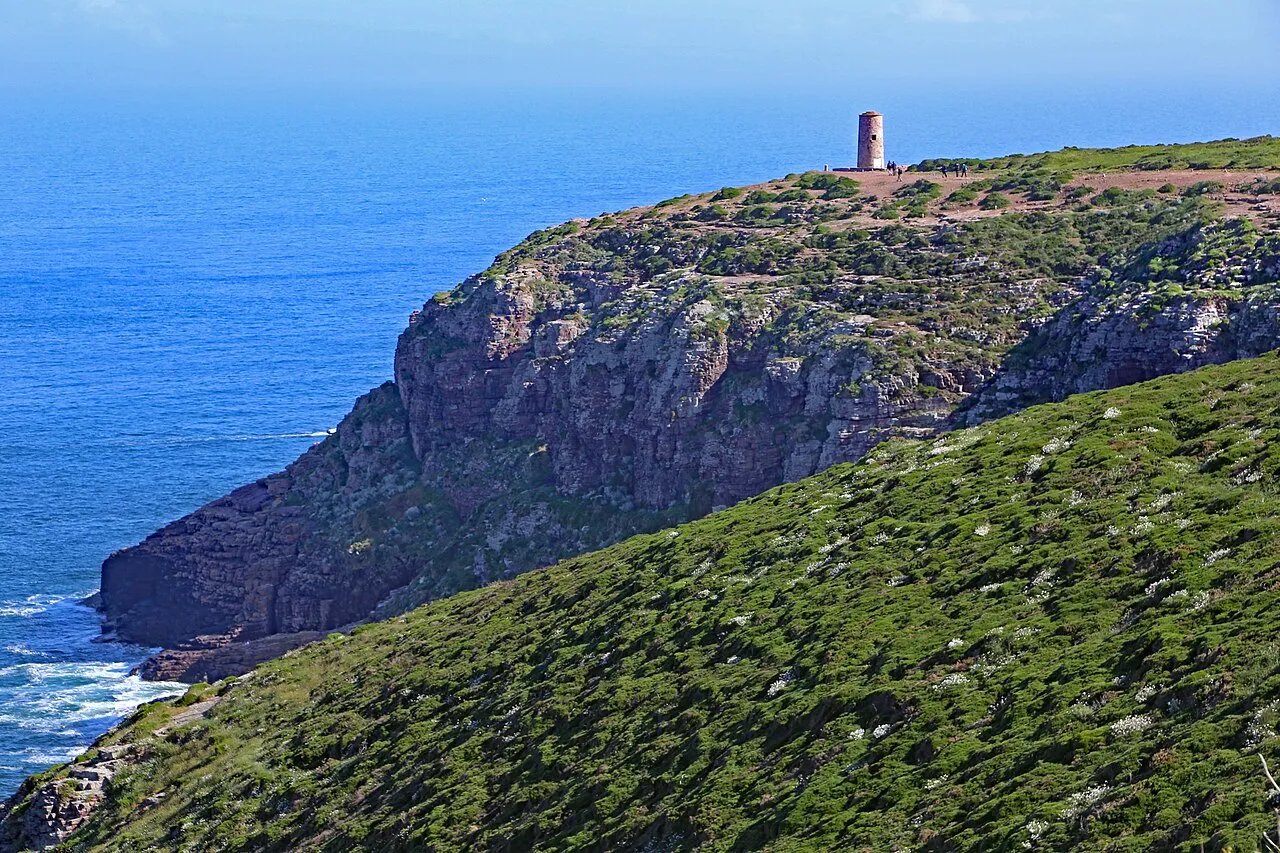
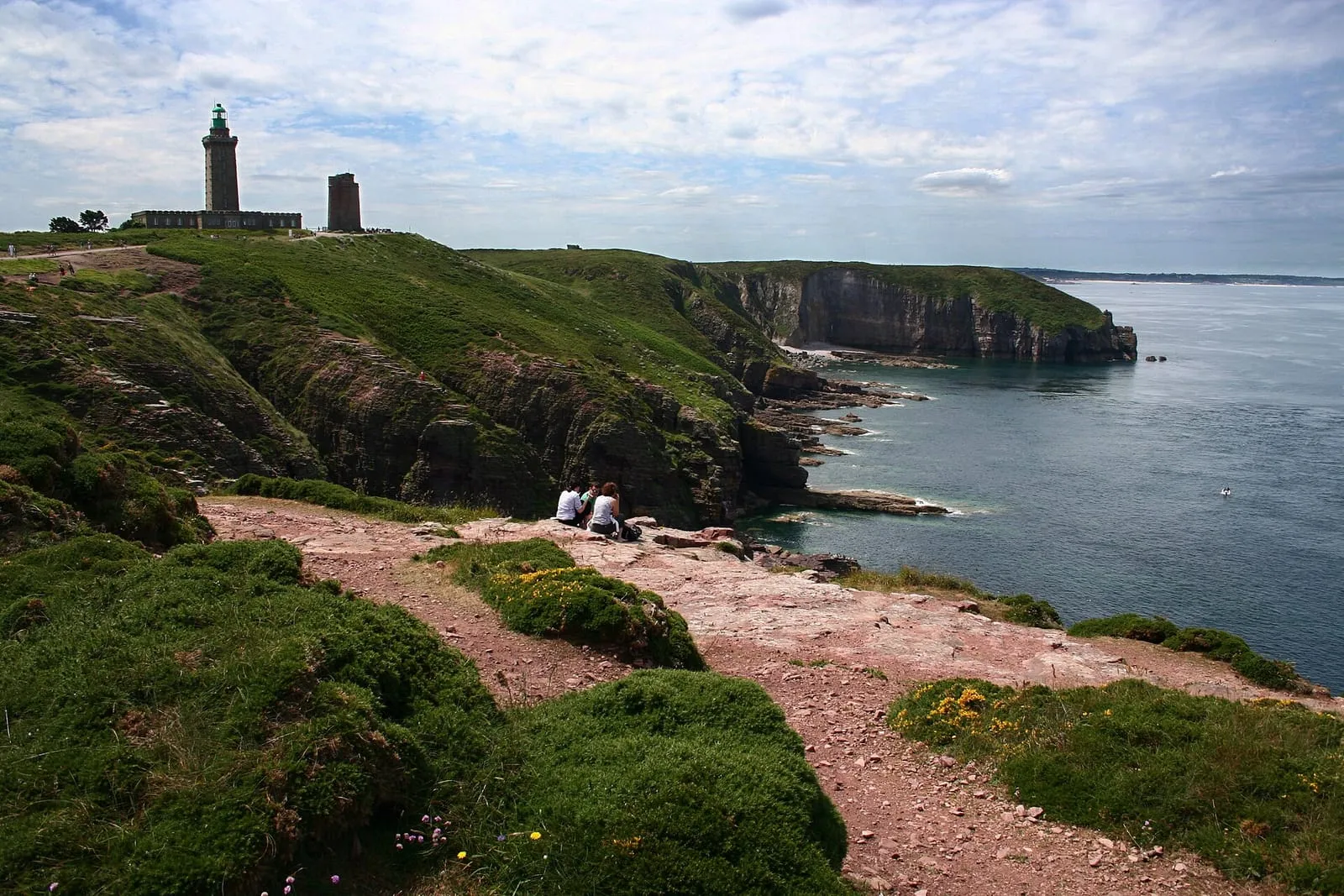
An hour’s drive from Saint-Malo, at the western end of the Emerald Coast, Cap Fréhel pushes its pink sandstone cliffs out into the sea: around seventy metres of sheer rock above the water, crowned with a moorland of heather and gorse. It is one of the great excursions among the surroundings of Saint-Malo: an accessible land’s end where the coast suddenly changes scale and the eye meets nothing but open sea.
Seventy metres of pink sandstone
The cape owes its colour to its rock: a pink sandstone that the light rekindles at every hour, from pale rose in the morning to copper at dusk. Above, the moorland, low and dense, shifting colour with the seasons; below, the sea, working at the cliff without pause. Between the two, the GR34 unrolls its old customs-officers’ path along the very edge of the drop: it offers the finest views, and it is where you must stay. The ground near the edge is unfenced.
Two lighthouses and a seabird reserve
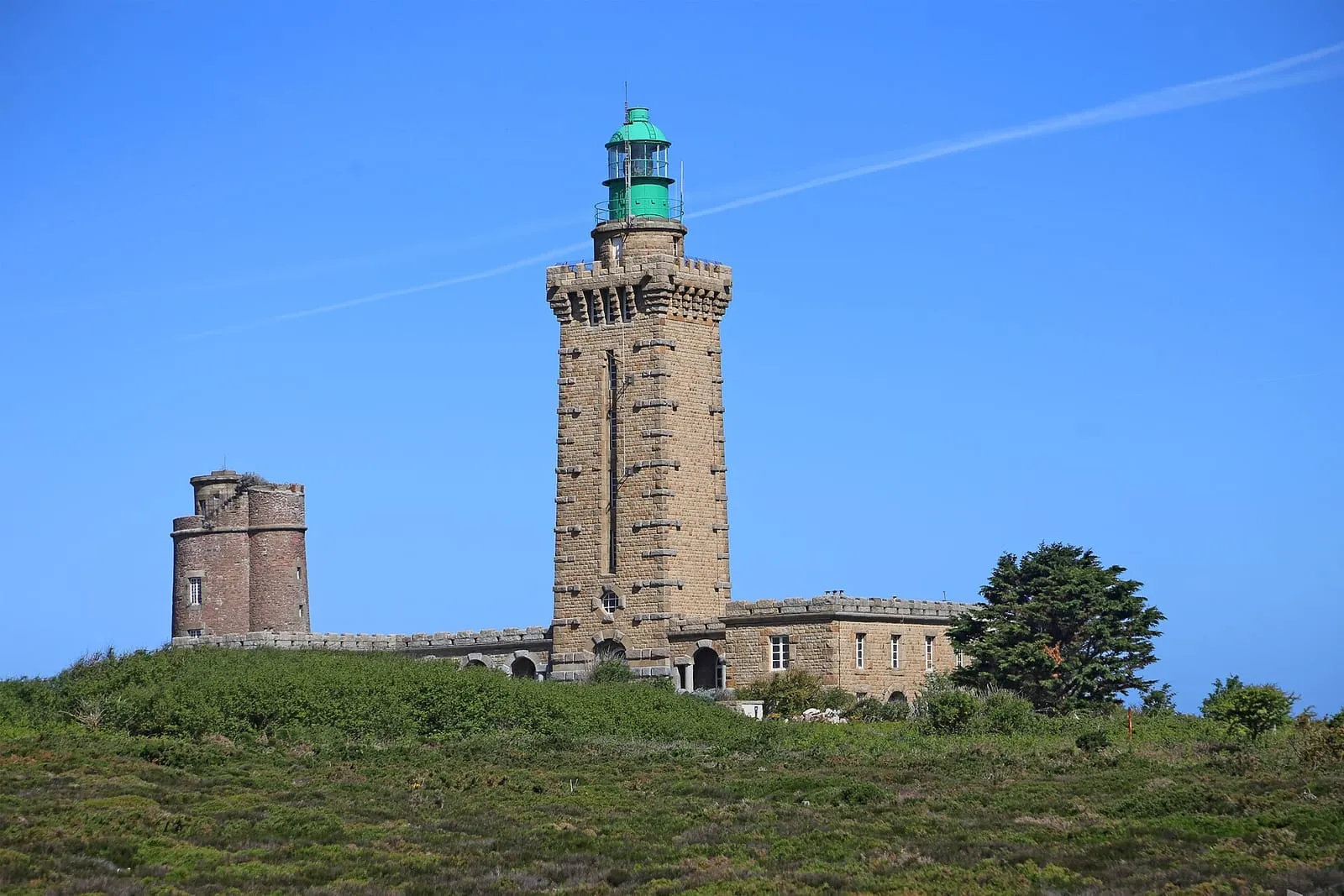
At the top of the cape, two lighthouses stand side by side: the 18th-century tower and the great 20th-century light, keeping watch together over the headland. The cliffs themselves belong first to the birds: the cape holds a major ornithological reserve, with seabirds nesting directly on the rock face. Bring binoculars and watch from the waymarked paths: you see perfectly well without going anywhere near the edge. And if your legs are willing, carry on along the GR34 to Fort la Latte, about four kilometres of coastal path away: the two together make a full day’s walk.
When the sea hurls itself at the cliffs
Cap Fréhel is also a grandstand for the sea in fury. With a big swell and high tidal coefficients, waves fling themselves at the foot of the cliffs: it is the same energy that sends the sea leaping over the Saint-Malo seawall, unleashed here against seventy metres of sandstone. The cape ranks high among the region’s spring-tide viewpoints.
The rule here, more than anywhere, is simple and admits no exception: watch from the paths, never from the edge. The wind blows hard on the cape, the drops are unfenced and not always visible in the moorland, and no photograph is worth one step too many. Stay on the waymarked paths and keep children by the hand: the sea and the wind are perfectly visible from there.
Written and kept up to date by a Saint-Malo local in love with this coast. The story behind this guide


How far is Cap Fréhel from Saint-Malo?
Allow about an hour's drive, heading west along the Emerald Coast. The cape pairs very well with neighbouring Fort la Latte, linked by roughly four kilometres of coastal path on the GR34, one of the finest walks in the region.
Can you see seabirds at Cap Fréhel?
Yes: the cape holds a major ornithological reserve, with seabirds nesting directly on the cliff faces. Watch them from the waymarked paths, without trying to approach the edge: the drops are unfenced.
When is the sea spectacular at Cap Fréhel?
With a big swell and high tidal coefficients, the sea hurls itself at the cliffs and the sight is striking. It is watched from the paths, never from the edge: seventy metres of sheer drop, strong wind and no barriers.