The sculpted rocks of Rothéneuf: Abbé Fouré's carved cliff
Updated on 31 July 2026
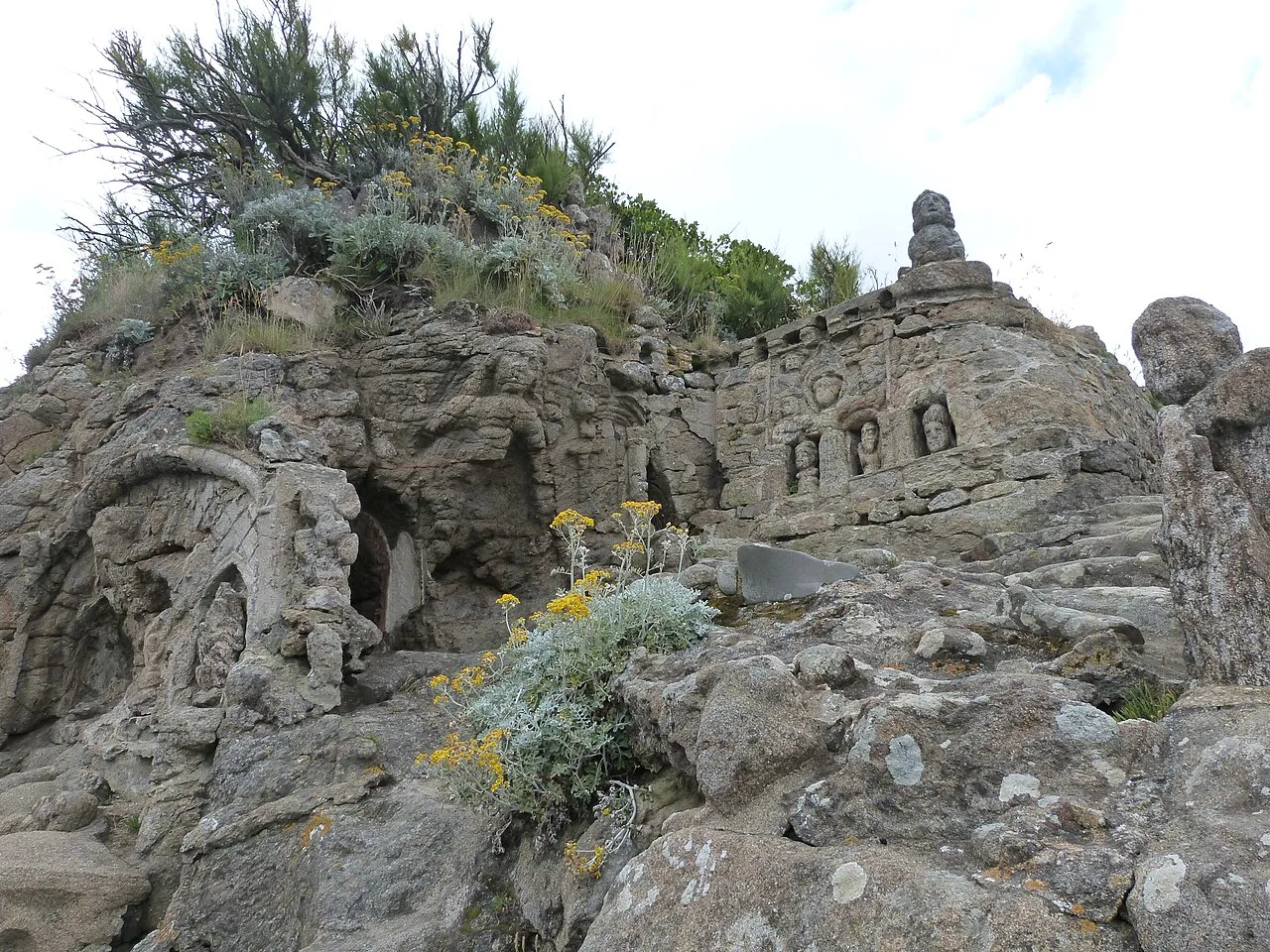

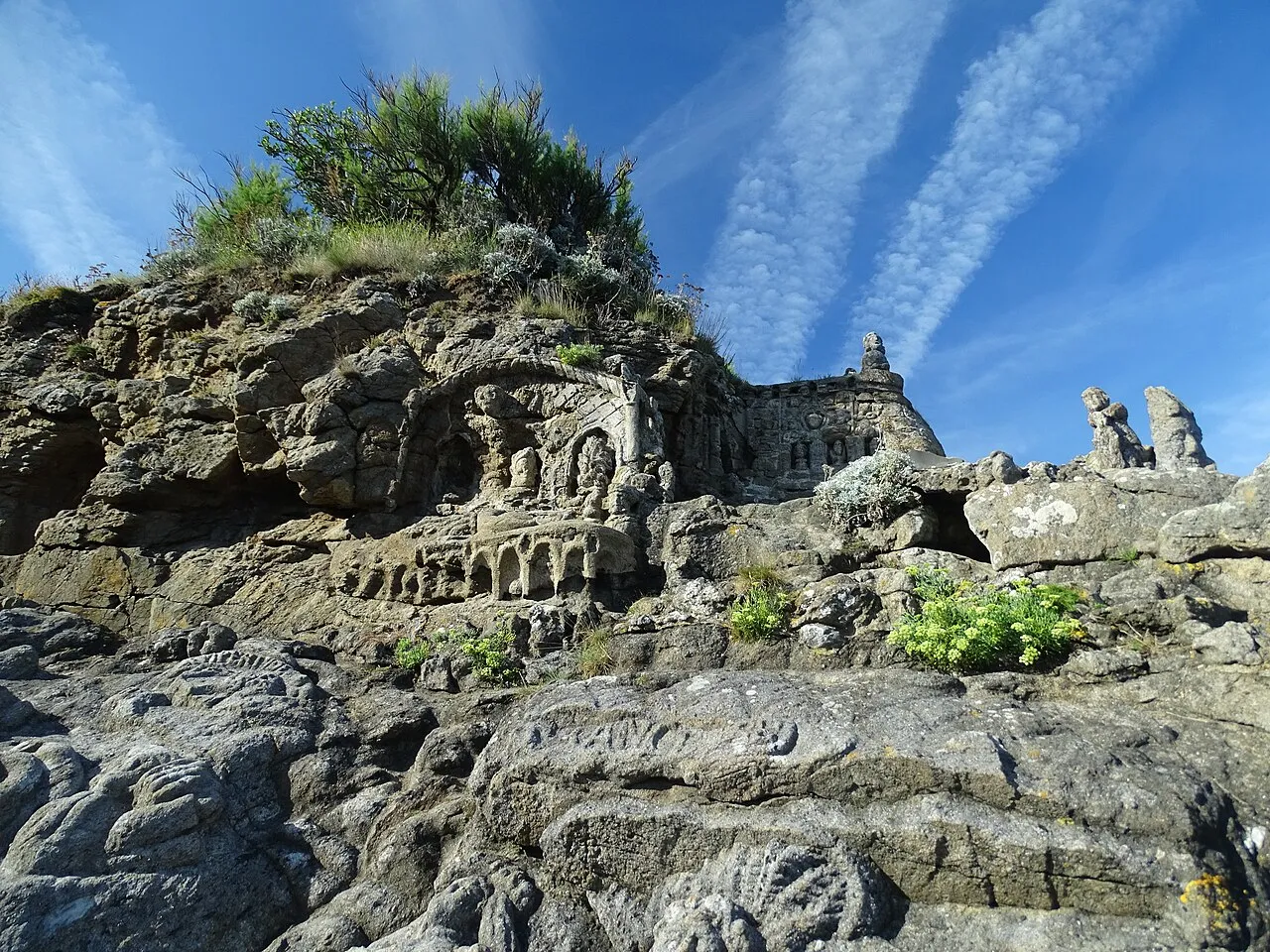
Between 1894 and 1907, a priest who had lost his hearing spent thirteen years carving a granite cliff that faces the open sea, until more than three hundred figures had emerged from it. The sculpted rocks of Rothéneuf are like nothing else on this coast: not a monument, not a museum, but an open-air work of art set on a spray-beaten headland. It is also one of Europe’s great outsider-art sites.
The hermit who made the granite speak
The sculptor was Adolphe Julien Fouré (1839-1910), known to everyone here as Abbé Fouré. A stroke had left him deaf and forced him out of ministry; he settled at Rothéneuf as a hermit and set about carving the cliff itself, from 1894 to 1907. No commission, no school, no master plan: a solitary work, cut outdoors, facing the sea, season after season. That is exactly what earns the place its standing: a creation born entirely outside the art world, of one man and one rock, the very definition of outsider art on the scale of a whole cliff.
Sailors, corsairs and sea monsters
More than three hundred figures inhabit the rock: sailors and corsairs, sea monsters, characters out of Saint-Malo’s legends. You find them as you move across the headland, often where you least expect them: a face in a fold of granite, a figure stretched along the slope, an entire scene unrolled over several metres. The sea, meanwhile, carries on its own work: salt spray slowly erodes the sculptures, softening features, blurring reliefs. This is art on borrowed time, and that is part of what moves you here: what you see today will not be quite the same in ten years. A chapter apart in the heritage of the Saint-Malo coast, to be seen while it can still be seen.
Planning the visit: tide, opening times, surroundings
The site charges an entrance fee, and opening times should be checked on site before you come. For drama, aim for high tide: waves then break at the foot of the headland, and the figures seem carved precisely for that confrontation with the open sea. The place remains an exposed rocky spur: keep to the laid-out paths, especially in strong wind or heavy seas.
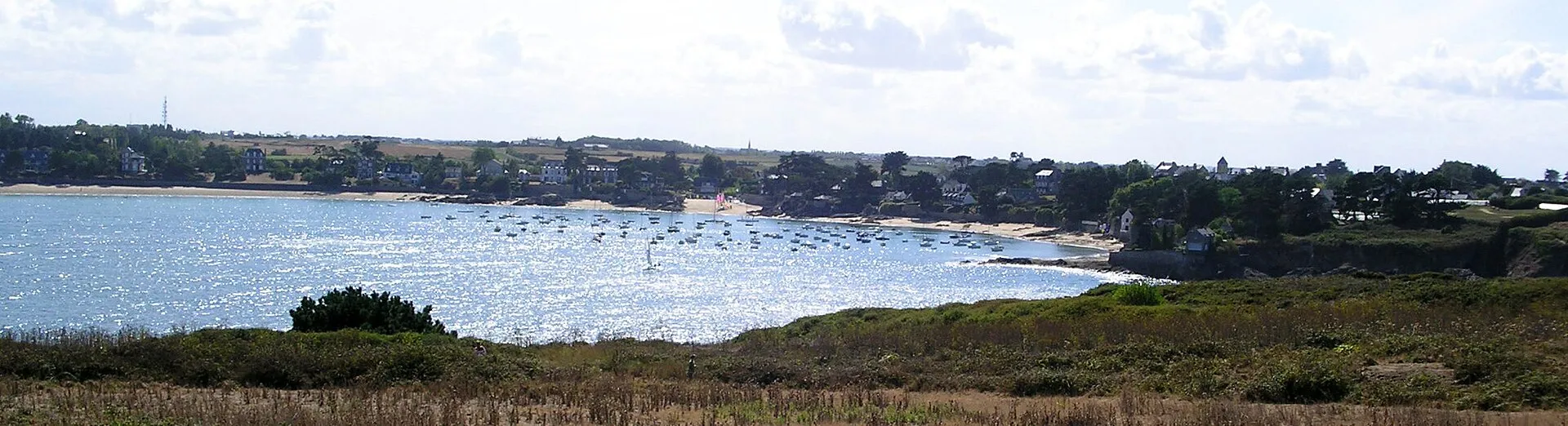
The visit pairs naturally with the neighbouring Rothéneuf tidal inlet, whose landscape transforms completely with the tide. The rest of the district and its beaches are covered on the Rothéneuf page. And if you are ranging further, the site slots easily into a day along the coast, between the surroundings of Saint-Malo and the places marked on the interactive map.
Written and kept up to date by a Saint-Malo local in love with this coast. The story behind this guide


Who carved the Rothéneuf sculpted rocks?
Abbé Adolphe Julien Fouré (1839-1910), a priest who withdrew from ministry after a stroke left him deaf. Living as a hermit at Rothéneuf, he carved the granite cliff from 1894 to 1907, bringing out more than three hundred figures: sailors, corsairs, sea monsters and characters from Saint-Malo legend.
Can you visit the sculpted rocks freely?
No: the site charges an entrance fee, and opening times should be checked on site before you come. The headland is exposed to spray and wind: wear decent shoes and keep to the laid-out paths.
Which tide is best for seeing the sculpted rocks?
High tide gives the finest staging: waves break at the foot of the site, beneath figures carved to face the open sea. The visit pairs very well with a walk around the nearby Rothéneuf tidal inlet.