Saint-Malo, corsair city: the story of the privateers and their captains
Updated on 31 July 2026
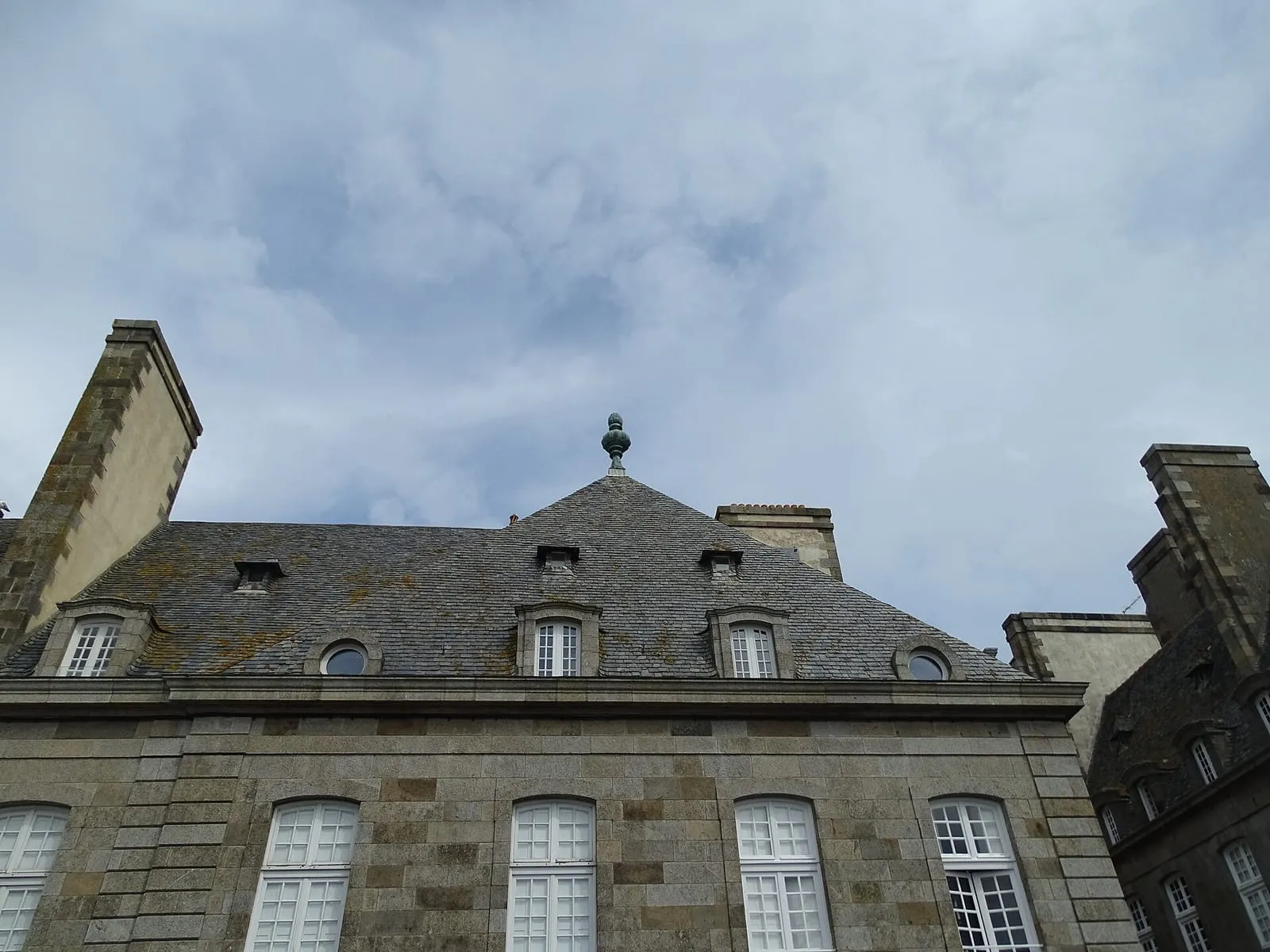

The nickname “corsair city” is no tourist-board invention: Saint-Malo earned it at sea, prize by prize, over nearly two centuries, from the reign of Louis XIV to the fall of Napoleon’s Empire. The city fitted out ships for the guerre de course, the state-licensed commerce raiding the French called privateering, made a considerable fortune at it, and that fortune left its mark everywhere: ramparts, forts, shipowners’ townhouses and country estates, all catalogued on our heritage page. This page tells the story behind the walls: what a corsaire actually was, who Duguay-Trouin and Surcouf were, and how privateering money shaped the city and its countryside.
A corsair is not a pirate: the lettre de course
The confusion has irritated the people of Saint-Malo for three centuries, so let us clear it up at once. A pirate attacked on his own account, outside any law, in any season and under any flag; caught, he ended on the gallows. A corsair was a private captain who made war with the king’s written permission: the lettre de course (the privateering commission) issued by the Admiralty, which entitled him to hunt the merchant ships of enemy powers, in wartime only.
The framework was surprisingly bureaucratic. A prize was not plundered at sea: it was sailed back to port with its crew, where an Admiralty court ruled on its validity (right flag, lawful war, papers in order). Sold at auction, its value was then divided by rules fixed in advance: a share for the king and the Admiralty, a share, the largest, for the armateur, the shipowner who had financed the vessel, and the rest distributed through the crew down to the youngest cabin boy. A captured corsair, moreover, was in principle treated as a prisoner of war, not as a criminal. Privateering was a regulated industry, with its investors, its risks and its dividends. Saint-Malo, a port rich in capital and seasoned sailors, ran that industry better than anyone.
A word about the neighbour, to complete the picture: Jacques Cartier, who sailed from this same port for Canada in 1534, was no corsair but an explorer, commissioned by King François I. His manor of Limoëlou, at Rothéneuf, can still be visited: Saint-Malo’s seafaring vocation long predates the privateers.
1693: the “infernal machine” blows up before the ramparts
Privateering had a price: it invited retaliation. In November 1693, an Anglo-Dutch squadron appeared off Saint-Malo with a radical plan: to blow the city up. The English pushed towards the walls a vessel packed with gunpowder, bombs and scrap iron, remembered ever since as the “infernal machine”. The craft struck a rock short of its target and exploded early: the blast was heard for miles around, ripped off roofs and shattered windows, but spared the ramparts. Local tradition holds that the only casualty was a cat. A second attack, in 1695, fared no better.
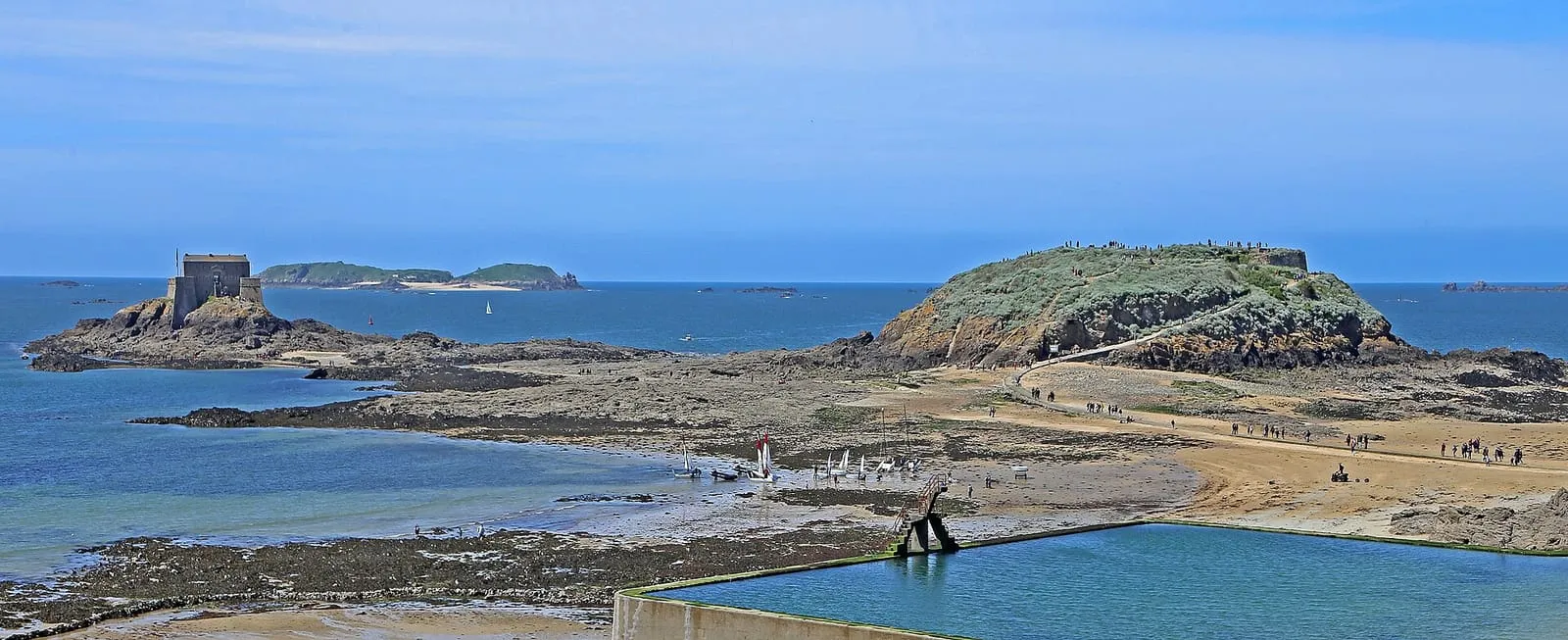
These alarms accelerated a project already under way: locking the roadstead. To Vauban’s designs, the Saint-Malo engineer Siméon Garangeau built a belt of forts whose guns crossed fire in front of the city: Fort National on its rock facing the Sillon, the Petit Bé beside the Grand Bé, the Conchée planted offshore on a wave-battered reef. The system was never broken: Saint-Malo was never taken from the sea.
Duguay-Trouin: from Saint-Malo raider to the king’s honours
René Duguay-Trouin (1673–1736) was a child of the system. Son of a Saint-Malo shipowner, at sea in his teens aboard the family’s vessels, he commanded his first corsair ship before he was twenty and piled up prizes with a regularity that eventually caught Versailles’ attention: he was made an officer of the royal navy, then ennobled.
His masterpiece remains the 1711 expedition against Rio de Janeiro, mounted like a business venture: financed largely by private shipowners, those of Saint-Malo foremost, with the king’s blessing. It forced the bay, took the city and released it only against a ransom. Duguay-Trouin came home a hero and went on to a flag officer’s career that carried him to the top of the hierarchy: lieutenant-general of the naval armies. He died in Paris in 1736; his statue, though, came back to stand watch on the ramparts of his city.
The “Republic of shipowners”: privateering money turned to stone
Behind every corsair stood a financier. A privateering campaign was set up like a company: the shipowner bought and fitted out the vessel, hired the captain, sold shares in the expedition to other notables, then waited for the return, which could lose everything or multiply it. Through the 17th and 18th centuries these shipowning families, the Magon clan first among them, held the city so firmly that people spoke of a “Republic of shipowners”: the same coffers funded privateering, the trade with Cádiz and the South Seas, and the French East India Company.
That money is still visible. Intra-Muros, the Hôtel Magon can be toured from its vaulted cellars up to the rooftop lookout: this “corsair’s mansion” is one of the very few great shipowners’ houses to have survived the destruction of 1944. And in the Clos-Poulet countryside, the profits of the chase settled among the fields: the malouinières, the shipowners’ country houses of austere granite, panelled and tiled inside with treasures from distant ports of call, are privateering profit invested in stone.
Surcouf: the last blaze, in the Indian Ocean
A century after Duguay-Trouin, Saint-Malo privateering flared one last brilliant time. Robert Surcouf (1773–1827) hunted English trade across the Indian Ocean, operating from the Île de France (today’s Mauritius) during the wars of the Revolution and the Empire. His most famous feat came in 1800: commanding the Confiance, he boarded and carried the Kent, a large English East Indiaman that was better armed and carried far more men. The exploit ran through the newspapers and founded the legend.
What followed was less romantic and every bit as malouin: home again, Surcouf became one of the richest shipowners in the port, fitting out ships first for privateering and then for trade, and ended his days as a notable of Saint-Servan. His statue on the ramparts shows him pointing towards England with an outstretched arm. The sculptor hardly needed to exaggerate.
What remains: statues, facades and low tide
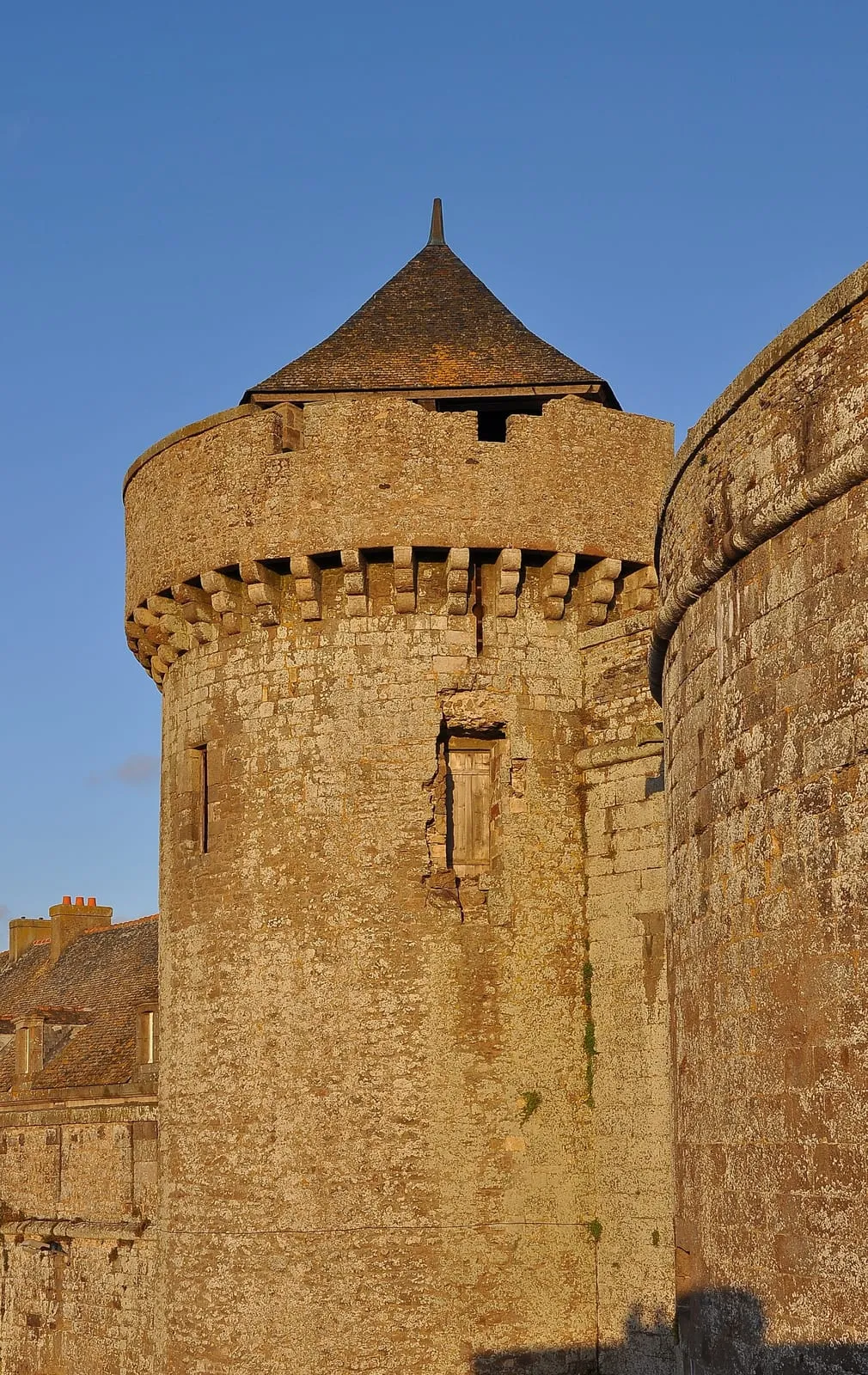
The corsair heritage is not gathered in a single monument: it is scattered through the city, and it makes an excellent thread to follow. On the ramparts, the statues of Duguay-Trouin and Surcouf punctuate the walkway, facing the roadstead they defended. Intra-Muros, the corsair’s mansion shows a merchant house from the inside. In Saint-Servan, the house known as Surcouf’s is recognised by its handsome granite facade, a few steps from the Solidor tower guarding the mouth of the Rance. It is a private home, to be admired from the street.
The defended roadstead, finally, reveals itself to the rhythm of the sea: at low tide in season, Fort National can be reached on foot from the Éventail beach, the Petit Bé can be approached on the big low tides, and the Conchée is admired from the wall-walk. Check the official SHOM tide times before any crossing: the flood closes the passages again in under an hour. To carry on, the malouinières of the Clos-Poulet are a quarter of an hour’s drive away, and the map places all these sites.
Written and kept up to date by a Saint-Malo local in love with this coast. The story behind this guide

.jpg)
What is the difference between a corsair and a pirate?
A corsair operated within the law: a lettre de course (privateering commission) issued by the Admiralty allowed him to attack enemy merchant ships, in wartime only. The captured ship was brought back to port, judged, sold, and the proceeds shared between the king, the shipowner and the crew. A pirate attacked on his own account, outside any law. He was hanged when caught, whereas a captured corsair was in principle treated as a prisoner of war.
Who was Robert Surcouf?
The last great corsair of Saint-Malo (1773–1827). He raided English trade in the Indian Ocean during the wars of the Revolution and the Empire, most famously capturing the Kent, a large English East Indiaman, by boarding in 1800. Back home, he became one of the wealthiest shipowners in the city. His statue stands on the ramparts; his house in Saint-Servan is private and can only be admired from the street.
Who was Duguay-Trouin?
René Duguay-Trouin (1673–1736), son of a Saint-Malo shipowner, was the most decorated corsair of Louis XIV's reign: in command before he was twenty, ennobled, he led the 1711 expedition that took Rio de Janeiro and released the city only against a ransom. He moved into the royal navy and ended as lieutenant-general of the naval armies. His statue now watches over the ramparts of Saint-Malo.
What is a malouinière?
The country house of Saint-Malo's shipowners, built in the 17th and 18th centuries in the Clos-Poulet countryside and along the Rance with the profits of privateering and long-distance trade. Austere granite, tall chimneys, walled gardens, and refined interiors. A few open to visitors, mostly in summer: La Chipaudière and Le Bos among them.
Where can you see the corsair heritage in Saint-Malo today?
Start on the ramparts, where the statues of Duguay-Trouin and Surcouf face the roadstead; then Intra-Muros, at the corsair's mansion (Hôtel Magon), a rare shipowner's house that survived 1944; out in the bay, where Fort National can be visited at low tide in season; and in the Clos-Poulet countryside, where the malouinières tell the story of the shipowners' fortune. The so-called Surcouf house in Saint-Servan is a private home, admired from the street.