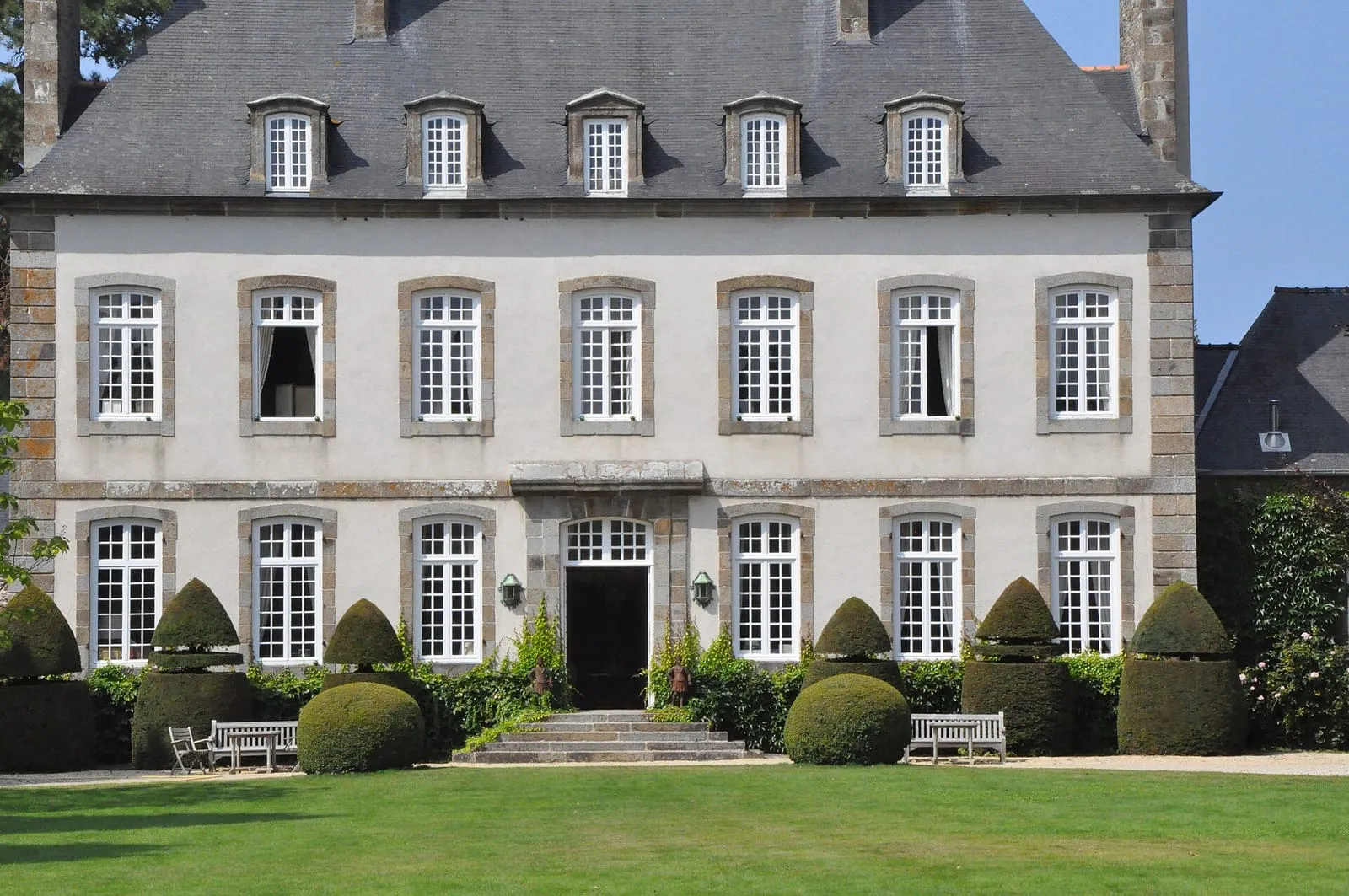
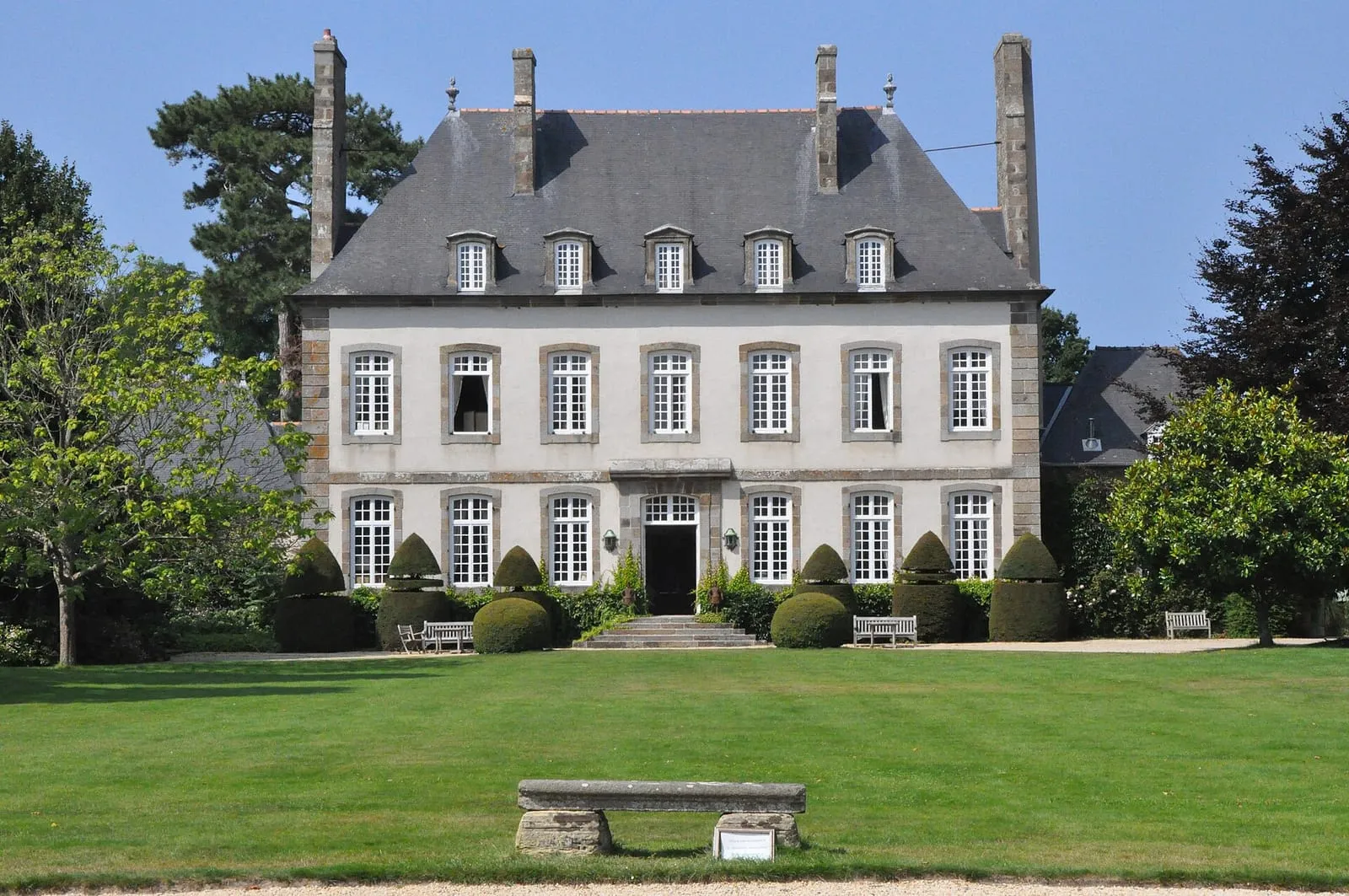
Saint-Malo’s fortune never fitted inside its ramparts. When privateering and long-haul trade (Cadiz, the Indies, the South Seas) had gorged the corsair city with gold in the 17th and 18th centuries, its shipowners did what cramped fortunes do: they built in the countryside. Thus were born the malouinières, country houses in a style unique in France, scattered across the Clos-Poulet hinterland and along the Rance: the rural side of Saint-Malo’s heritage.
Austere outside, lavish within
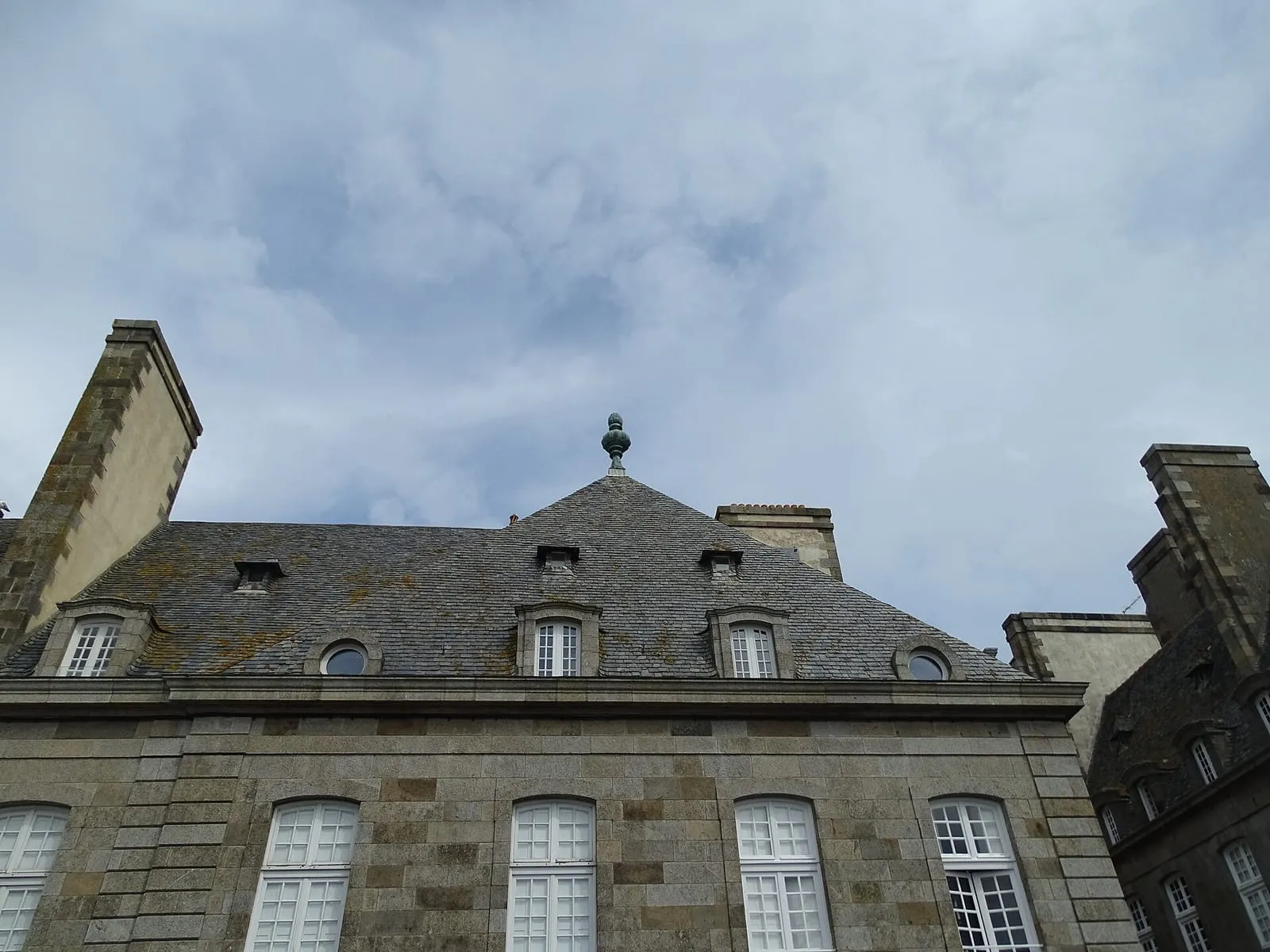
A malouinière is recognised at first glance: a symmetrical main house of bare granite, capped by a steep roof bristling with tall chimneys; enclosing walls, a formal garden, sometimes a chapel. The severity of the façade is a choice: that of temperamentally reserved merchants, quick to hide gold under slate. The interior tells the opposite story: painted panelling, faience brought home from ports of call, cabinets of mahogany and lacquer. The whole world carried back into a Clos-Poulet drawing room. Many were designed by the military engineers of the fortress, which explains their family resemblance to the elegant barracks of the age.
Visiting one: the ideal complement to the walled city
Around a hundred malouinières survive, nearly all private; a few open their doors, mostly in summer. La Chipaudière, the most celebrated, and Le Bos, on the Rance, are among the classic visits; La Ville-Bague at Saint-Coulomb and the Montmarin gardens, on the Rance’s left bank, round out the picture by season. Hours and conditions vary from house to house and year to year: check before setting out. The entries in the list below give the essentials, and the map places them all.
The right programme pairs them with the town: the morning in the lanes of Intra-Muros among the shipowners’ town mansions (the urban, vertical version of the same fortune, the corsair’s house first among them), the afternoon in the green of a malouinière. Same money, two stage sets: few heritages tell a prosperity so legibly.
On the malouinière road
Even without a guided tour, the drive rewards: the roads of the Clos-Poulet, the country between the Rance and Mont-Saint-Michel bay, pass at every bend a pillared gateway, a riding avenue, a dovecote showing above a boundary wall. The circuit combines naturally with the Rance valley (Le Bos and the Montmarin belong to it) or the road to Cancale through Saint-Coulomb (La Ville-Bague). A heritage to savour at low speed: it was built to be glimpsed from afar, and guessed at more than shown.
Built in 1725 for Auguste Magon de la Lande, shipowner, corsair and director of the French East India Company, this mansion is one of the few great shipowners' houses of the walled town to have come through the fire of 1944. The guided tour leads from the panelled salons to the vaulted cellars through which cargoes once passed, then up to the rooftops from which the return of the ships was watched: the whole machinery of a Saint-Malo merchant house, from hold to lookout. A distillation of the city's fortune in the privateering era. Guided tours; check days and times.
Saint-Servan
La Briantais park
Saint-Servan
South of Saint-Servan, a great public park overlooking the Rance: meadows, cedars and riding avenues surround a 19th-century château, heir to an older malouinière. This is where the Malouins take their Sunday stroll, before one of the finest views to be had over the estuary, the dam and Dinard. It is also a surprising vantage point for watching the tide travel back up the Rance: on the flood, the current turns before your eyes and the whole of the estuary slowly fills like a lake. Access to the park is free; the château itself opens only occasionally.
Le Bos malouinière
Saint-Servan
Above the hamlet of Quelmer and the La Passagère slipway stands an early-18th-century malouinière attributed to Garangeau, resolutely turned towards the Rance: the shipowners reached their houses by boat, riding the tide, faster than any horse and carriage could manage. The estuary was the highway of the day. The granite house is ordered between courtyard and garden, extended by a hornbeam walk and a view over the estuary which, once contemplated, explains the choice of site by itself. Private property open for guided tours in summer. Check days and times before coming.
Paramé – Rochebonne
La Chipaudière malouinière
Paramé – Rochebonne
The most famous of the malouinières, the country houses Saint-Malo's shipowners built for themselves once the fortunes of privateering and trade overflowed the ramparts. Raised around 1710 for François-Auguste Magon de la Lande, to plans attributed to Garangeau, Vauban's architect, it aligns its classical façade between courtyard and formal French garden, with the granite sobriety that marks the shipowners' quiet wealth. Three centuries on, the Magon family still lives here. Private property: the exteriors can be seen, with occasional open days, best checked before you go.
Rothéneuf
Limoëlou manor (Jacques Cartier museum)
Rothéneuf
The only surviving home of Jacques Cartier: the discoverer of Canada bought this Rothéneuf farm on returning from his voyages and enlarged it into a manor, where he lived until his death in 1557. Restored and furnished as in the 16th century, the house is visited in the company of a guide, among maps, sailing routes and the daily life of a Saint-Malo captain between two Atlantic crossings, a tangible way of grasping what setting out for the unknown once meant. The visit is fairly short and pairs very well with the neighbouring carved rocks to make a half-day in Rothéneuf.
Guided tours; days and times vary by season.
Cancale – Pointe du Grouin
La Ville Bague malouinière
Cancale – Pointe du Grouin
In Saint-Coulomb, at the heart of the Clos-Poulet, one of the most complete malouinières there is: a main house of 1715, a chapel, a dovecote and walled gardens compose the exact picture of the shipowners' countryside, a league from their counting houses. Far enough from the port to breathe, close enough to keep an eye on business. In summer the guided tour recounts wars and sea fortunes among the furniture and keepsakes of the families who followed one another here, and you leave with a clear sense of how these merchant dynasties lived. Check visiting days and times according to the season.
Rance valley
Montmarin estate
Rance valley
The only malouinière built on the left bank of the Rance, at Pleurtuit: raised in the 18th century for a shipowner who added a shipyard and a slipway on the estuary, proof that these country houses stayed turned towards the sea and its business. Its terraced gardens, listed as a “remarkable garden”, step down to the water, mixing French parterres with a scented garden; from the terraces you can follow the tide's comings and goings on the estuary. The place sums up what the maritime Rance was: Saint-Malo's second seafront, lined with residences and slipways. Open to visitors in season; check the hours.
What is a malouinière?
The country house of Saint-Malo's shipowners, grown rich on privateering and long-haul trade, built in the 17th and 18th centuries across the Clos-Poulet hinterland and along the Rance. The style is unmistakable: sober granite, tall chimneys, steep roofs, walled gardens. Discretion outside, refinement within.
Which malouinières can be visited?
A few open their doors, mostly in summer and on set slots: La Chipaudière and Le Bos are among the classic visits, with La Ville-Bague and the Montmarin gardens rounding out the picture by season. Hours and conditions vary from house to house and year to year: check before setting out. The entries below give the essentials.
Why did the shipowners build outside the walls?
Because the walled city was overflowing: tiny Intra-Muros crammed in offices and warehouses, and privateering fortunes wanted space and prestige. An hour's ride from the quays, close enough to watch one's ships and far enough to entertain, the Clos-Poulet gained a hundred of these houses in a century.