The Solidor tower: the keep that guards the mouth of the Rance
Updated on 31 July 2026
,_quartier_de_Saint-Servan,_Saint-Malo.jpg)
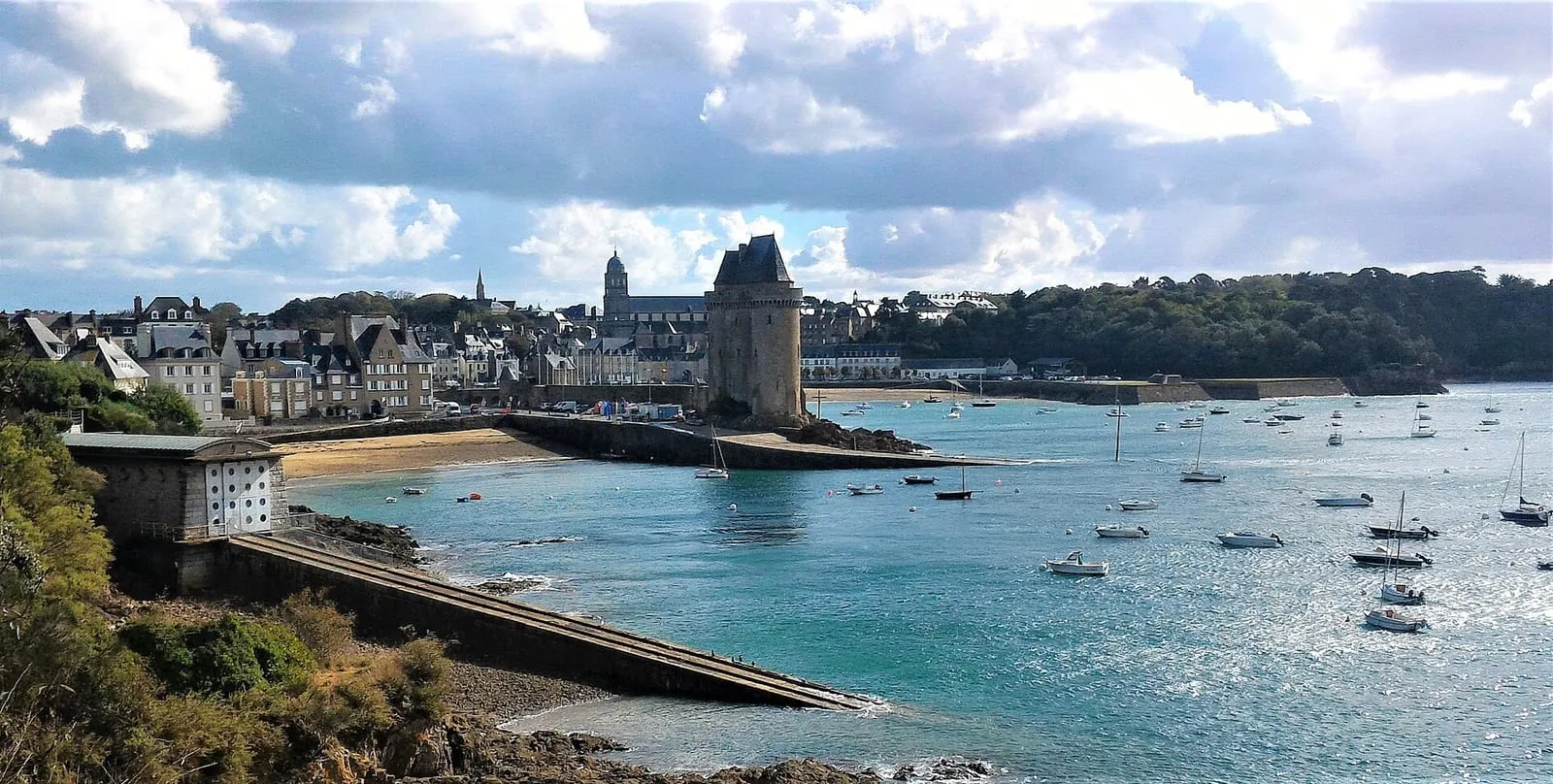
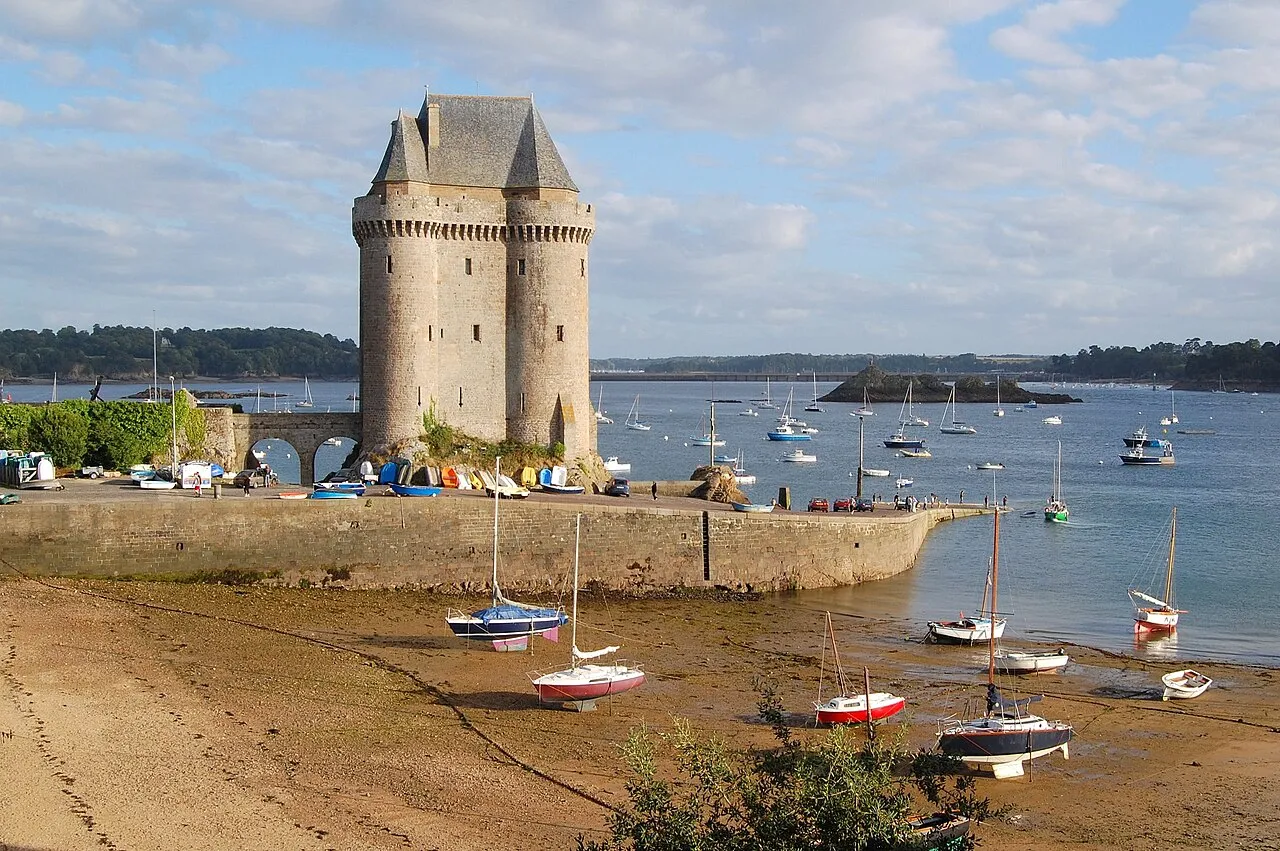
Before the corsairs, before Vauban, there was Solidor. Raised between 1369 and 1382 by Duke Jean IV of Brittany, the tower has guarded the mouth of the Rance for six centuries: three round towers bound by curtain walls into a single keep, planted on a rocky spur at the edge of Saint-Servan. It is one of the rare Saint-Malo monuments predating the shipowners’ great century, and one of the most photogenic: its slipway and cove compose a different picture at every tide.
The estuary’s political lock
The tower was not built against the sea but against men: by locking the passage of the Rance, the Duke of Brittany controlled the river’s trade, and kept an eye on a Saint-Malo that was fond of contesting his authority. The monument thus tells an often-forgotten truth: before it became the quiet river of the valley’s villages, the Rance was a frontier, a customs post and a stake of power. The keep later served as a prison, then long housed the Cape Horners museum, devoted to the great Cape Horn sailing ships. Visiting arrangements evolve, so check current opening with the tourist office.
The tide as a permanent show
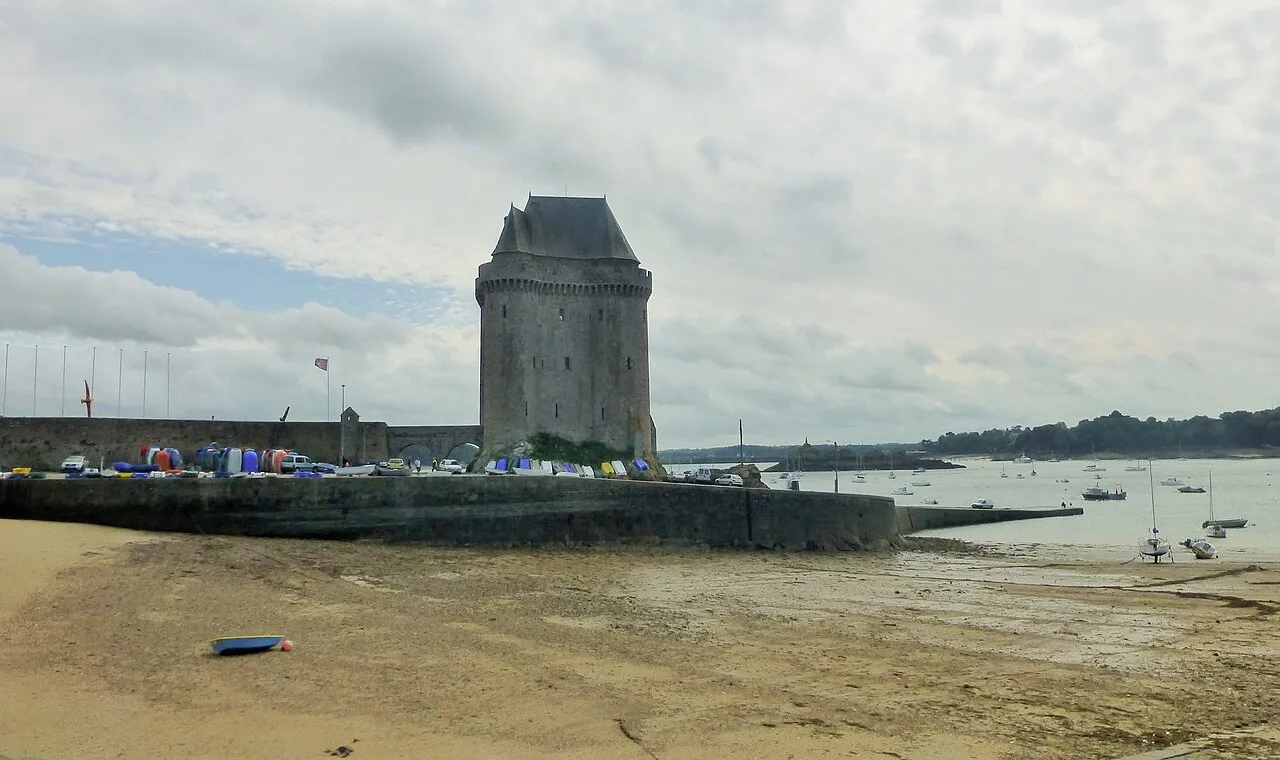
The foot of the tower is one of the best places in town to watch the tide at work. At low water, the Solidor cove drains and the boats heel over on the mud below the keep, the local photographers’ favourite shot, in the evening light that strikes the stone full on. At high water, everything floats, and the current surges into the estuary with a power that recalls why the tidal barrage, a kilometre upstream, was built precisely here. In between, the slipway serves as a barometer: its seaweed and its waterline tell the tide’s hour better than any watch.
Practicalities are simple: the outside is freely visited at any hour, the walk circles the monument, and the quarter’s terraces overlook the cove. Ordinary caution on the slipway, slippery with weed on its lower half; and for the whole coast, the day’s tide times are checked against the official SHOM sources.
Around the tower
Solidor is the gateway to Rance-side Saint-Servan: the Alet corniche and its panorama begin five hundred metres away, the village streets and their shops just behind, the Bas-Sablons on the far side of the headland. It is also the natural starting point of a day in the Rance valley: the tower as the overture, Saint-Suliac and Dinan as the logical sequel. Entry, access and exact position on the interactive map.
Written and kept up to date by a Saint-Malo local in love with this coast. The story behind this guide

.jpg)
Check the official tide times on maree.shom.fr ↗
Why was the Solidor tower built?
To control the Rance: raised between 1369 and 1382 by Duke Jean IV of Brittany, the tower locked the passage of the estuary. It watched over a then-rebellious Saint-Malo as much as over the sea. Three round towers bound by curtain walls form the keep, one of the rare Saint-Malo monuments predating the great corsair century.
Can you visit the Solidor tower?
The tower long housed the Cape Horners museum, devoted to the great Cape Horn sailing ships; visiting arrangements evolve. Check current opening with the tourist office before making the trip. The outside, however, is freely visited at any hour: the slipway, the cove and the foot of the keep make one of the town's finest scenes.
When is the best moment to see the tower?
Both tides, for two pictures: at low water, the cove's boats settled on the mud at the keep's foot, the local photographers' favourite; at high water, the tower with its feet in the sea and the current surging into the Rance. The evening light, which strikes the stone full on, settles the tie.